

Commentary
Alexey Malashenko
{
  "authors": [
    "Alexey Malashenko"
  ],
  "type": "commentary",
  "centerAffiliationAll": "",
  "centers": [
    "Carnegie Endowment for International Peace",
    "Carnegie Russia Eurasia Center"
  ],
  "collections": [],
  "englishNewsletterAll": "",
  "nonEnglishNewsletterAll": "",
  "primaryCenter": "Carnegie Russia Eurasia Center",
  "programAffiliation": "",
  "programs": [],
  "projects": [
    "Eurasia in Transition"
  ],
  "regions": [
    "Central Asia",
    "Tajikistan"
  ],
  "topics": [
    "Civil Society"
  ]
}
Source: Getty
An army mutiny is the only latest of many new threats to Tajikistan's veteran president. Russia is the only country he can rely on to support him and it will take advantage of his predicament.
Troubles are multiplying for Tajik president Emomali Rahmon. Islamic incursions are getting more frequent. Earlier this year, his special forces chief Colonel Gulmurad Khalimov defected to Islamic State (ISIS).
The latest challenge to Rahmon's twenty-year-old rule, however, came from within the ruling elite and very close to home. General Abduhalim Nazarzoda, recently sacked as deputy defense minister, staged an armed mutiny against the government in the capital, Dushanbe.
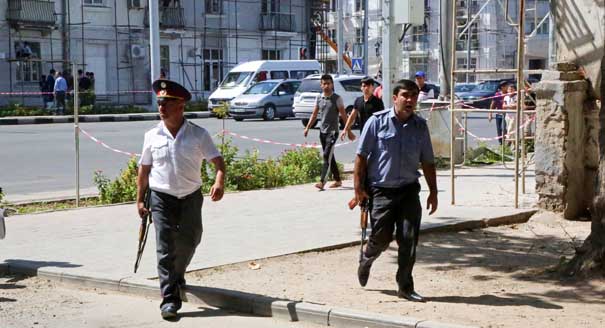
On September 4, Nazarzoda and his supporters attacked a police station and then clashed with government forces at a defense ministry building. Several dozen soldiers defected to join the rebel general. Nine people were reported killed. The rebels then retreated to hide in the Ramit Gorge, east of Dushanbe, with presidential soldiers in hot pursuit. There was more fighting the next day in the town of Vahdat, near the capital. Several streets in Dushanbe were shut down.
The mutiny came as the regime of Rahmon, who has been president of Tajikistan since 1994, is tightening the screws. Rahmon recently banned the country’s second most influential party, the Islamic Renaissance Party of Tajikistan or IRP.
The IRP had always been largely loyal to the regime, turning the other cheek when it was awarded just 1.6 percent of the vote in the 2015 parliamentary election, when it actually received many more votes. In that election, the pro-presidential People’s Democratic Party was given a massive parliamentary majority, with 51 out of 63 seats.
If the Tajik president's plan is to build a "power vertical" similar to the one in neighboring Uzbekistan, he is unlikely to succeed. Power in Tajikistan is too diffused and regional allegiances are too strong. Rahmon lacks clout, and the nation does not fear its president.
Moreover, Tajikistan's security services are not up to the job. After Colonel Khalimov's defection to ISIS, they were criticized for "not knowing how to work with believers" and for inflaming radicalism.
Rahmon's own efforts to control religion in public life have had the same counter-productive effects. In 2007, he infuriated Tajik Muslims with a law “on the regulation of traditions, ceremonies and celebrations.”
Rahmon's regime has largely enjoyed stability by default, with most Tajiks fearful of experiencing another round of the brutal civil war of the 1990s. However the population is emerging from its political apathy and a new generation is growing up that has no memory of the war. The departure from the political stage of the moderate IRP is leaving a space that will be filled by Islamic radicalism, as many members of the disbanded party go underground.
There are many possible explanations for Nazarzoda's rebellion, which range from a wounded ego to his desire to establish a caliphate. But external factors undoubtedly influenced his decision.
The influence of ISIS is growing in Tajikistan. Hundreds of Tajiks are fighting for the movement and more and more of them are infiltrating the country from its southern neighbor, Afghanistan.
Rahmon has only one reliable ally he can count on--Russia. Neither China nor the United States will intervene to help him.
Beijing is confident that no Tajik politicians, even the Islamists, would dare to damage relations with China, because of the country's enormous economic influence there. This is true not just for Tajikistan but for Central Asia in general.
Washington, meanwhile, has no interest in getting involved in the internal politics of yet another Muslim state, especially one that the U.S. public has never heard of. This stance is based on the calculation that Islamic radicals are unlikely to take power there in the foreseeable future.
This would leave Emomali Rahmon stranded in a sea of indifference, were it not for the support of Russia. Moscow blames foreign Islamic extremists, not internal politics, for the instability in Tajikistan. It wants to take advantage of the latest challenges to Rahmon’s regime in order to strengthen its own position in Tajikistan and in Central Asia as a whole. So Russian President Vladimir Putin has already voiced his support for his Tajik counterpart in fighting an external threat.
The notion of an external threat suits the Kremlin’s interests, as it justifies Russia’s military-political presence in Central Asia and the Moscow-led Collective Security Treaty Organization (CSTO). CSTO spokesman Vladimir Zainetdinov characterized the recent mutiny as “typical gang violence.”
President Rahmon is used to outsmarting his enemies, but this latest crisis puts him in a quandary. His political foes maintain that he “sits on Russian bayonets” and point to his reliance on the Russian military base established in Tajikistan in 2004. He himself has always trumpeted his independence from Russia and has refused Moscow's persistent invitation to join the Eurasian Economic Union.
The president now has to choose where he turns to for support or risk ending up facing one of his domestic opponents in a direct fight without any external backing. If, as some experts are predicting, Tajikistan is sliding towards a new civil war, the Tajik leader will not be able to cope without Russian assistance.
Former Scholar in Residence, Religion, Society, and Security Program
Malashenko is a former chair of the Carnegie Moscow Center’s Religion, Society, and Security Program.
Recent Work
Alexey Malashenko
Alexey Malashenko
Carnegie does not take institutional positions on public policy issues; the views represented herein are those of the author(s) and do not necessarily reflect the views of Carnegie, its staff, or its trustees.
Xi, Putin, and other regional leaders are back-slapping in Bishkek, but the SCO has yet to answer the most serious questions about continental Asia's economic future.

Evan A. Feigenbaum
A regime founded on force, coercion, and repression does not want its propaganda, with all its flaws of logic, omissions, and outright lies, to be competing with the most simple of all messages: Thou shalt not kill.

Leonid Bershidsky
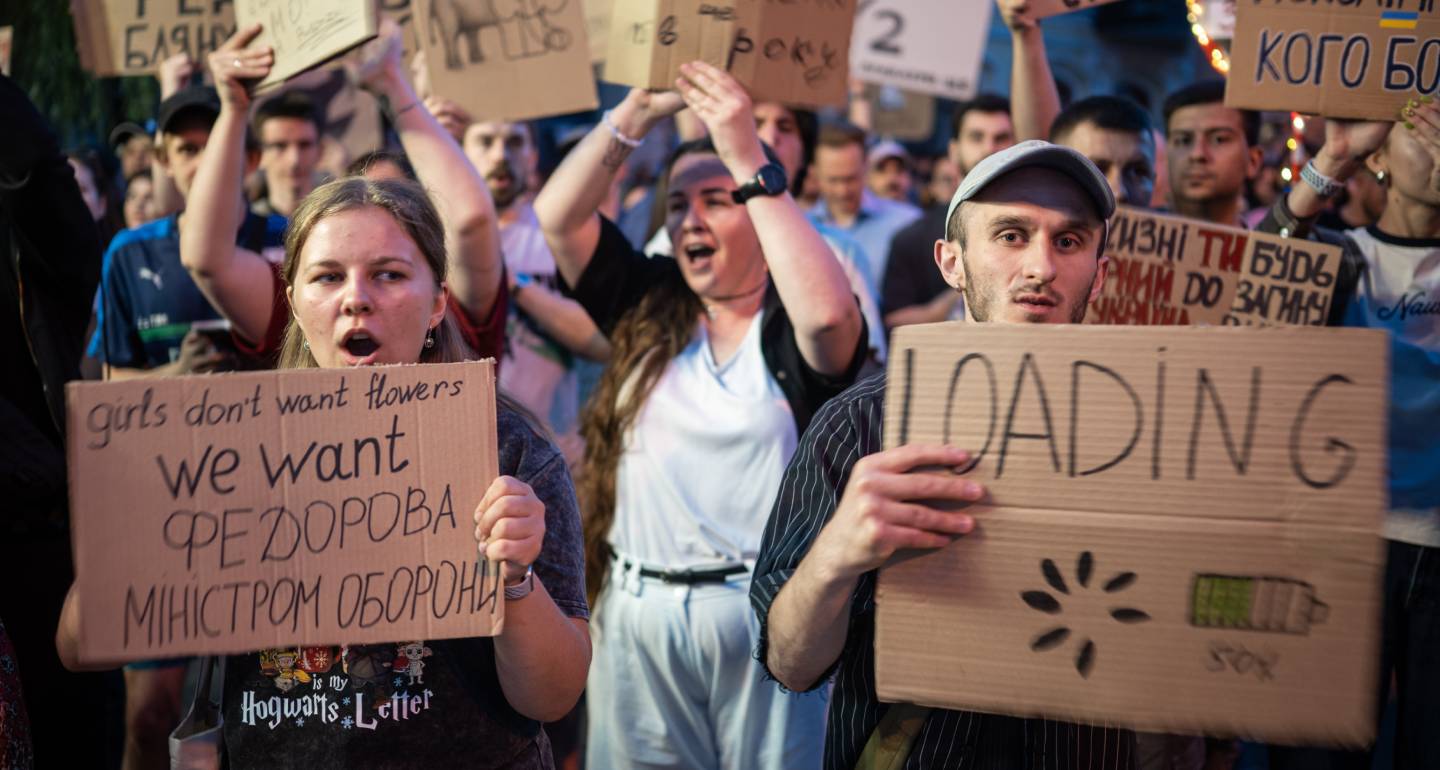
With his public call for new elections in Ukraine, ex-defense minister Mykhailo Fedorov has opened Pandora’s box.

Konstantin Skorkin
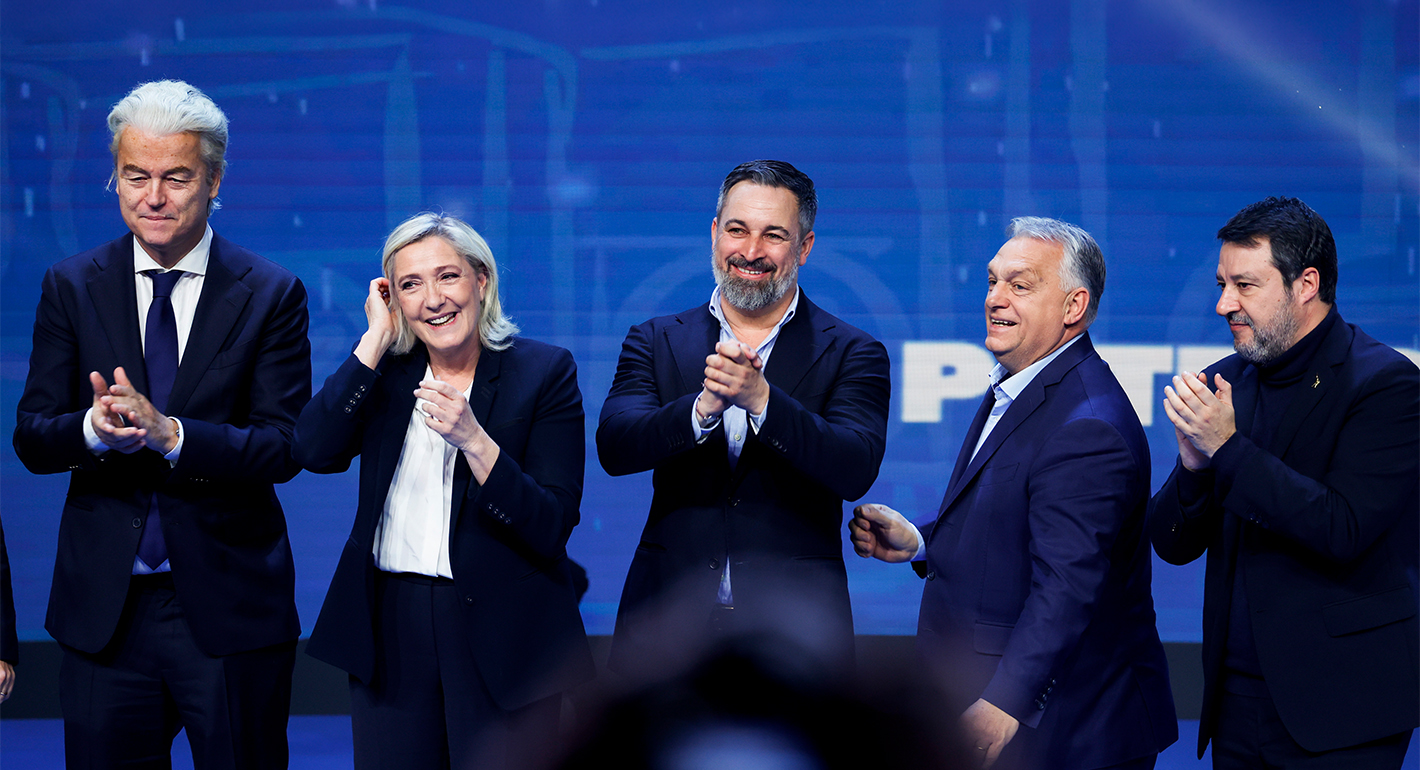
In supporting Europe’s far-right, MAGA and Russia both want the same thing: a weaker EU. Europe must defend itself without abandoning the openness these forces exploit.

Armida van Rij
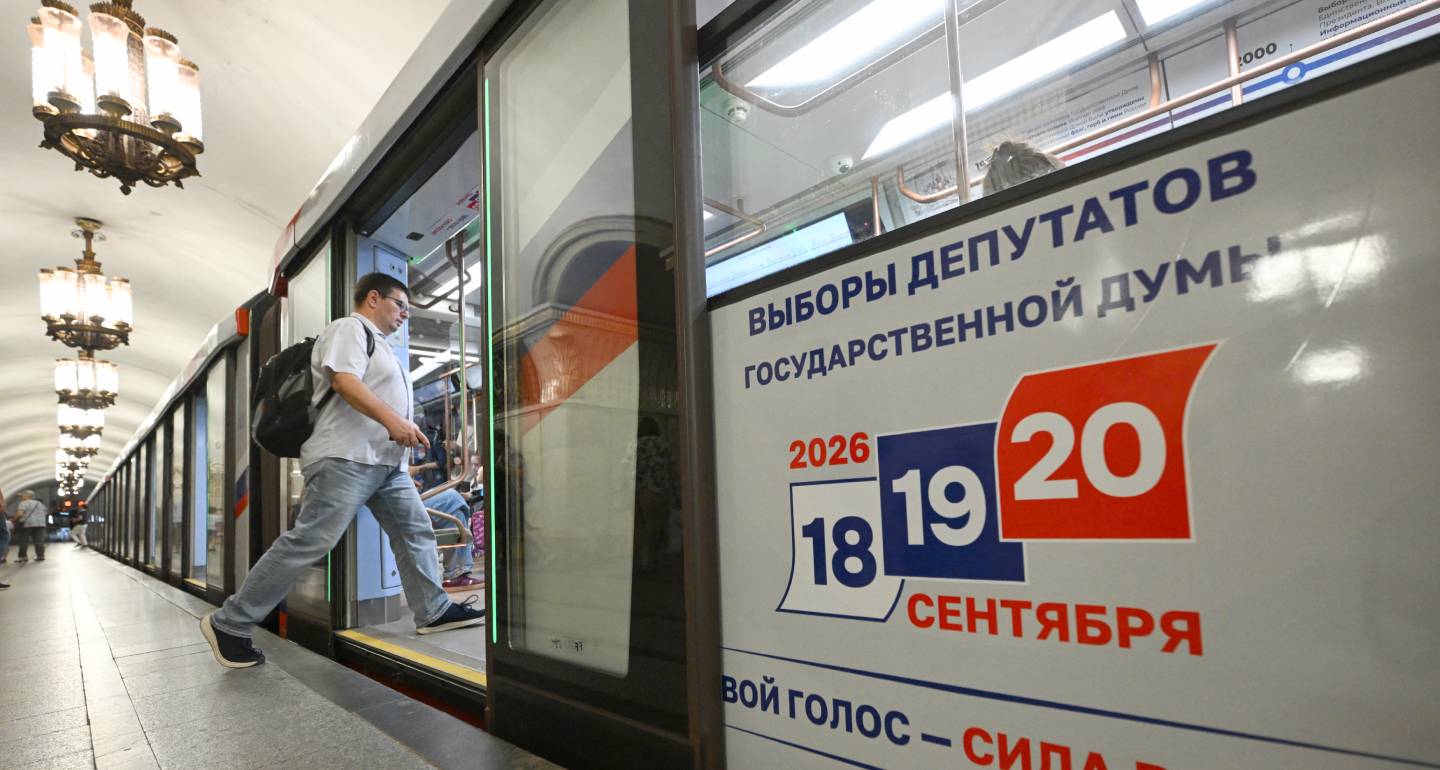
In the discussions made possible by the State Duma election campaign, one question is being asked more and more loudly. “What next?”

Andrey Pertsev