

In The Media
David Rothkopf
{
  "authors": [
    "David Rothkopf"
  ],
  "type": "legacyinthemedia",
  "centerAffiliationAll": "",
  "centers": [
    "Carnegie Endowment for International Peace"
  ],
  "collections": [],
  "englishNewsletterAll": "",
  "nonEnglishNewsletterAll": "",
  "primaryCenter": "Carnegie Endowment for International Peace",
  "programAffiliation": "",
  "programs": [],
  "projects": [],
  "regions": [],
  "topics": [
    "Civil Society",
    "Religion",
    "Foreign Policy"
  ]
}
Source: Getty
Great influence, as it turns out, emanates not from arsenals or banks, but rather, as it has since the dawn of time, from the human heart.
Source: Foreign Policy
Once, back when pterodactyls still filled the skies, I interviewed for a job working for a man in New York City with too much money and too much time on his hands. He wanted someone to help him decide whether he should buy a magazine and, if so, to work for said publication. I was just a kid still in graduate school when we began to talk, but I persuaded someone with a computer (which, typical for the era, was the size of a Volvo station wagon) into helping me do some projections. I provided these to the mogul in big blue binders full of perforated computer paper that virtually cried out to him that I was the future. In any event, he hired me. (And I proved so brilliant in my analysis that suggested he should not buy the magazine that I was soon again on the verge of unemployment.)
He was rich, though, and aimless. That was a good kind of rich if you were his employee and you were, as I was, young and poor and saw any work as good work.As it happened, he was fascinated with what he saw as life’s big issues: love, sex, money, and power. He wanted to understand the differences between “Eastern and Western” perspectives on these issues, so he brought me stacks of books by two philosophers, D.T. Suzuki and Bertrand Russell, and asked me to read them and write a paper about their views.
This was not a bad job, sitting around in an office on Park Avenue pondering big thoughts and periodically going out to get a hot dog from the Lebanese guy on the corner who brought his cart there daily. My boss had Picassos in his penthouse living room so who was I to question any of this?
Of course, when I finished the paper, proud of my philosophizing, I brought it to him. He didn’t even read it—which said everything you needed to know about his views on the subject. As he had explained to me earlier, while these were big issues, two of them—power and money—were “hard,” and two—love and sex—were “soft.” Two were important and two were for evenings and weekends. My assignment, it turned out, was a little like the modernist masterpieces in his Fifth Avenue apartment: conceived to ensure that his friends and colleagues would think he was sophisticated and thoughtful rather than the ruthless Wall Street animal that he was.
Later, working in Washington, I heard and saw the same lesson in action. Washington is different from New York. Power has the edge over money. But still, the big boys (yes, mostly boys) focused on the hard issues. The soft ones were for NGOs and talk-show hosts.
But the more I have seen the way that the world actually works, the more I have grown to realize the flaws in how the mogul framed my assignment. Because money is not separate from power; it is a source of it. That’s common knowledge in capitals worldwide. Look at the current U.S. presidential campaign. Primaries dominate the news, but the primary that matters most—the one that determines who can actually run for president—is the money primary in which the rich determine with their donations who is a “viable” candidate and who is just a wannabe.
But perhaps the mogul’s greatest flaw was not that he separated money from power, but that he separated love from power.
Love is perhaps the greatest source of power, far outstripping the cash, weapons systems, or institutional authority on which the so-called “powerful” rely. I’m not just talking about how it ranks in terms of the arithmetic of day-to-day power, but about how love motivates more actions, conflicts, disputes, and resolutions than political decrees or armed initiatives ever have. On that microscale, love perpetuates the species, binds families and communities together, heals wounds, motivates altruism, elevates us all. (The role of sex in all of that is equally powerful, sometimes more powerful.)
But there is more to love than just those things. Consider the fate of virtually every dictator who amassed the tools of the state to impose his or her will on the masses. They fell. What brought them down? People mobilized by their love of freedom, their love of justice, their love for their countries, their love for one another. Ideas and manifestos and revolutionary tactics may be mentioned in the course of such uprisings, but the glue that binds them together, the fuel that drives them forward, is love in its different forms. Ask a revolutionary—or anyone who has ever sought to drive change in the world—what the path is to such change. Good talking points or the strongest connection to the heart?
The world’s largest religions are built around love—for the deity, for one another. Once, when I was asked my philosophy of life at a conference at which I was speaking, I instinctively responded, “Love your children.” Because it seemed that if you respond to that powerful pull you become a better steward of the Earth, more focused on realizing a better future. (You often hear of mothers displaying great strength to save the children they love. You seldom hear the same for people acting on behalf of their employers or elected representatives.)
Even in great wars—in Vietnam or in today’s Middle East as we battle extremists—weapons are never enough, nor are the billions of dollars being spent. Winning “hearts and minds” is key because that is essential to social cohesion, to finding a common direction, to keeping the peace. Peace, in fact, depends on love. And if war is “hard power” at work, then it should be clear that love is harder still.
This perspective is worthwhile as we seek to understand and define power. To do so, it is worth pondering the difference in your life between common descriptions of power and what, to you and those around you, is truly powerful. Great influence, as it turns out, emanates not from arsenals or banks, but rather, as it has since the dawn of time, from the human heart. To succeed on a global scale you must understand, touch, reach, and respect those hearts just as you must do so closer to home. In fact, until those disciplines are mastered, true power, like true peace, will elude all those who seek it.
Former Visiting Scholar
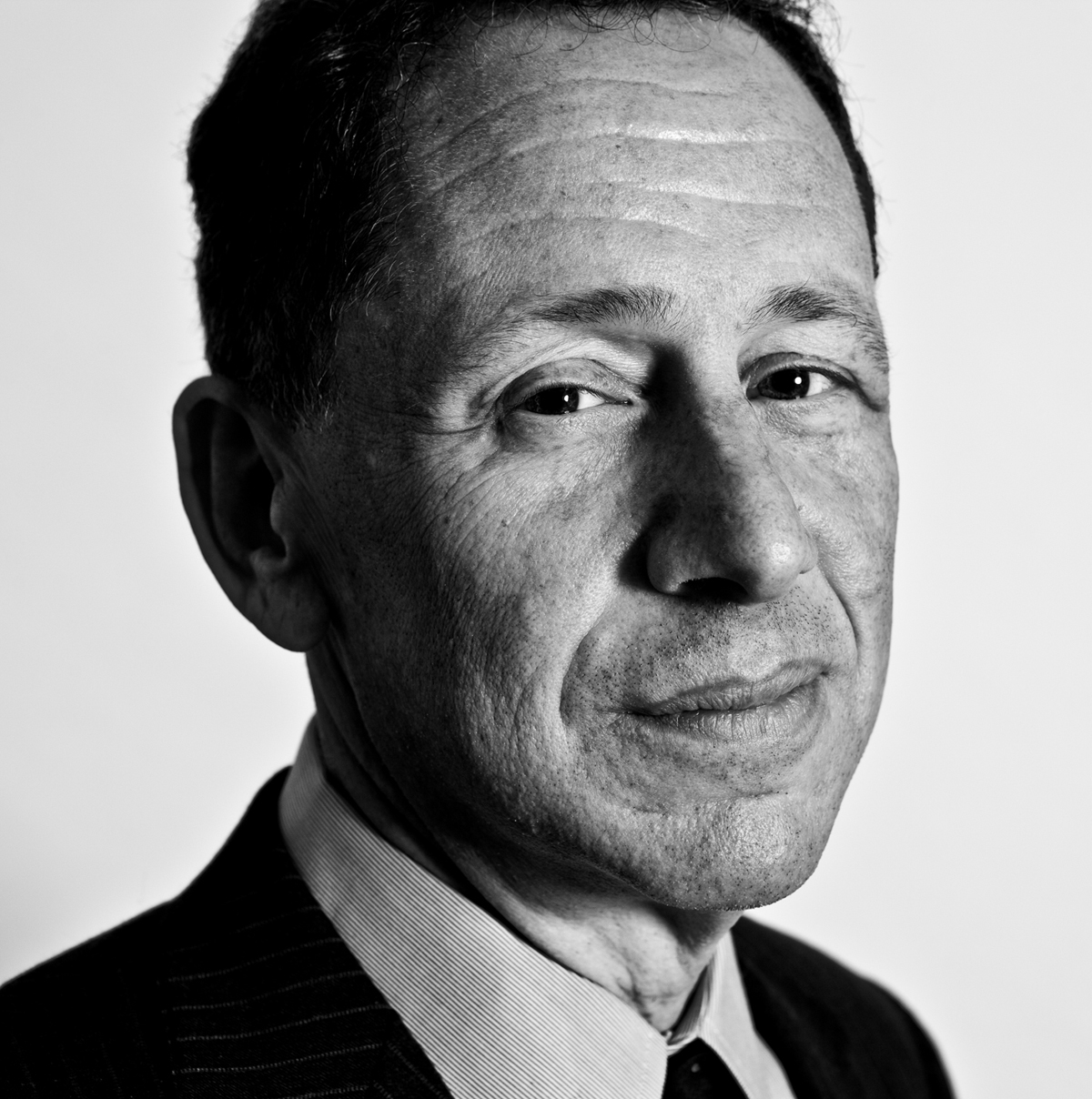
David Rothkopf was a visiting scholar at the Carnegie Endowment as well as the former CEO and editor in chief of the FP Group.
Recent Work
David Rothkopf
David Rothkopf
Carnegie does not take institutional positions on public policy issues; the views represented herein are those of the author(s) and do not necessarily reflect the views of Carnegie, its staff, or its trustees.

U.S. trading partners in Asia are closely watching the dispute for signs of how it may affect their own interests.

Barbara Weisel

The aftermath of the Ceuta crisis shows Europe has drawn the wrong lessons. Rather than doubling down on failed migration policies, the EU needs to address the underlying roots of such episodes.

Richard Youngs
By abandoning past U.S. pro-democracy policies and adopting several lines of pro-autocratic action, the Trump administration has fundamentally repositioned the United States vis-à-vis democracy in the world.

Thomas Carothers
Chinese strategists are once again debating whether American power is declining and whether U.S. hegemony is experiencing irreversible decay.
Wu Xinbo
Congress should ask tough questions about the agreement’s more unique features and whether they advance U.S. interests or compromise them.

Jane Darby Menton