

Article
- +1
Toby Dalton, Mark Hibbs, Nicole Grajewski, …
{
  "authors": [
    "Mark Hibbs"
  ],
  "type": "legacyinthemedia",
  "centerAffiliationAll": "dc",
  "centers": [
    "Carnegie Endowment for International Peace"
  ],
  "collections": [],
  "englishNewsletterAll": "ctw",
  "nonEnglishNewsletterAll": "",
  "primaryCenter": "Carnegie Endowment for International Peace",
  "programAffiliation": "NPP",
  "programs": [
    "Nuclear Policy"
  ],
  "projects": [],
  "regions": [
    "South Asia",
    "India"
  ],
  "topics": [
    "Nuclear Policy",
    "Nuclear Energy"
  ]
}
Source: Getty
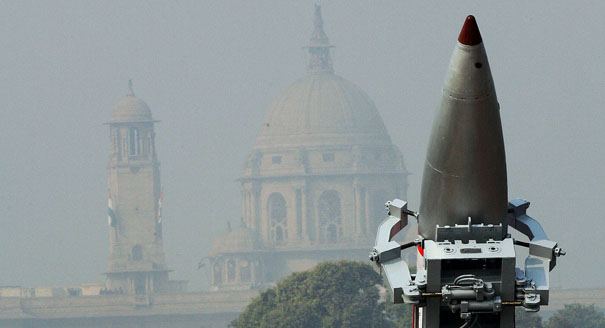
For India, challenges remain six years after a road map for NSG membership initially emerged.
Source: Nuclear Intelligence Weekly
A road map for admitting India into the NSG began to emerge six years ago. The United States announced it wanted India in, and thereafter led the way in setting up an internal “structured dialogue” toward that end. Washington anticipated that within a few years the matter would be agreed to by consensus—as had been India’s “singular exception” to the NSG guidelines in 2008.
The US, close allies, and India collaborated toward the goal of admitting India into several multilateral export control regimes, an important objective for India after years frozen out of international nuclear trade. The plan called for India first to join the Missile Technology Control Regime (MTCR), then the NSG, and finally the control arrangements for conventional and chemical weapons. India and its advocates hoped that a positive NSGIt didn’t work out as planned. After five years, the NSG “structured dialogue” hadn’t reached consensus conclusions because giving India full membership was trickier than carving out for India an exception to the NSG’s trade rules. Especially because the NSG right from its inception aimed to inhibit its members from assisting India in making nuclear weapons, the NSG’s members had to more deeply consider what Indian membership implied for the group’s rules and procedures, as well as for its identity.
NSG participants’ decisions over four decades to expand participation from seven to 48 states reflected in all cases two important aspirations that followed from the group’s export control and nonproliferation missions. The first is the goal to get all supplier states to adhere to the guidelines. The second is to reinforce good nonproliferation behavior, including in new participants. These rationales are consistent with five “factors” for membership that are listed in INFCIRC/539, an NSG document that explains how the group works. They are also consistent with the statement in INFCIRC/539 that “the NSG remains open to admitting further supplier countries in order to strengthen international nonproliferation efforts.”
In the case of India, the first of the two above-mentioned rationales powerfully applies. India is a state with nuclear arms and an important, ambitious, and indigenous civilian nuclear energy program. India produces and processes nuclear materials, it makes virtually every listed item needed for equipping nuclear reactors, and it is beginning to enter the global market as a supplier of these goods. Nearly all NSG members clearly see the value of including India in the group in light of these facts.
The second rationale—encouraging and reinforcing good nonproliferation behavior—is more problematic. Participants have questioned whether India is “like-minded” concerning the NSG’s mission to apply nuclear export controls in the interest of non-proliferation. There has been no snap answer, in part because for decades India viewed multilateral nuclear export controls as a neo-colonialist stick to beat developing countries with.
Part of the problem is that unlike all current NSG members, India is not a party to the Nuclear Non-Proliferation Treaty (NPT), and it has not subjected its nuclear activities to any multilateral restraints. One way out of this dilemma would be for India to meet specific criteria or approach certain benchmarks as a condition for membership. NPT membership is not a requirement for membership in the NSG, but “adherence” is a “factor” in INFCIRC/539, and many participants would favor India making binding legal commitments—including to NPT Articles I and VI and to the Comprehensive Nuclear Test Ban Treaty—that would bring India closer to
the global nonproliferation mainstream.
The NSG also needs to consider what admitting India would mean for the NSG’s own guidelines and procedures. Working-level participants warn that so far questions related to India’s possession of nuclear arms have not been answered. These include whether India would continue to be barred from access to enrichment and reprocessing technology because it is not an NPT party.
Notwithstanding these issues, India this spring began pressing the NSG’s members to quickly decide in its favor, especially as time began running out on the Seoul meeting deadline. That approach may have been counterproductive for India. Officials from China, which had urged that a decision about India take the NPT into account, suggested that China’s position last month hardened, providing other NSG members more space to raise their working-level concerns.
After Seoul, Indian officials singled out Beijing for blocking India’s NSG membership, raising the prospect that geopolitics will for the first time significantly factor in an NSG membership decision. High politics are not mentioned in INFCIRC/539 and many participants believe they should be peripheral. Likewise, Indian claims that without NSG membership India faces supply-chain interruptions for nuclear projects, and cannot meet climate change commitments (irrespective of whether these claims are true) are extraneous to the NSG’s export control and nonproliferation missions.
How the NSG handles Indian membership now is up to South Korea, which has inherited the rotating chairmanship until mid-2017, and the NSG’s previous chairman, from Argentina. They will continue discussion, including over possible criteria for membership and NSG procedures. If enough progress is made, the chairman will call an extraordinary plenary meeting to again consider India’s application. Getting answers to the process questions is important because members need to know how the group will function with India sitting at the table.
Two weeks ago UK voters, after a lengthy debate over the risks and benefits, elected to leave the European Union. They were swayed by politicians who expressed strong opinions and who brushed off the challenges Britain would face to make Brexit happen. In the aftermath, the UK appears directionless and paralyzed about how to go forward. Reflecting on this, NSG participants should instead be well-prepared for what happens should India join their ranks.
This piece originally appeared in Nuclear Intelligence Weekly.

Nonresident Senior Fellow, Nuclear Policy Program
Hibbs is a Germany-based nonresident senior fellow in Carnegie’s Nuclear Policy Program. His areas of expertise are nuclear verification and safeguards, multilateral nuclear trade policy, international nuclear cooperation, and nonproliferation arrangements.
Recent Work


Toby Dalton, Mark Hibbs, Nicole Grajewski, …
Mark Hibbs
Carnegie does not take institutional positions on public policy issues; the views represented herein are those of the author(s) and do not necessarily reflect the views of Carnegie, its staff, or its trustees.

A deep dive into the policy ecosystems behind battery development in China, South Korea, Japan, the European Union (including some of its member states), the United States, Canada, and India.



Milo McBride, Herbert Crowther, Darcie Draudt-Véjares, …

The nuclear relationship between China and the United States is increasingly shaped by widening perception gaps rather than deliberate strategic design.

Tong Zhao

A look at why states without nuclear weapons are seeking naval nuclear propulsion, whether they can legally and technically deliver it, what it will cost them, and what responsible stewardship of the capability would look like.

Jamie Kwong
Congress should ask tough questions about the agreement’s more unique features and whether they advance U.S. interests or compromise them.

Jane Darby Menton

With the growth in points of friction between the great powers, organizations like the SCO will continue to play a role in the strategic adaptation of the smaller powers caught between them.

Temur Umarov