

Paper
Renée DiResta, Rachel Kleinfeld, Margot Treadwell
{
  "authors": [
    "Rachel Kleinfeld"
  ],
  "type": "legacyinthemedia",
  "centerAffiliationAll": "dc",
  "centers": [
    "Carnegie Endowment for International Peace"
  ],
  "collections": [
    "Democracy and Governance"
  ],
  "englishNewsletterAll": "democracy",
  "nonEnglishNewsletterAll": "",
  "primaryCenter": "Carnegie Endowment for International Peace",
  "programAffiliation": "DCG",
  "programs": [
    "Democracy, Conflict, and Governance"
  ],
  "projects": [],
  "regions": [
    "North America",
    "United States"
  ],
  "topics": [
    "Political Reform",
    "Democracy",
    "Security",
    "Military",
    "Foreign Policy",
    "Global Governance"
  ]
}
Source: Getty
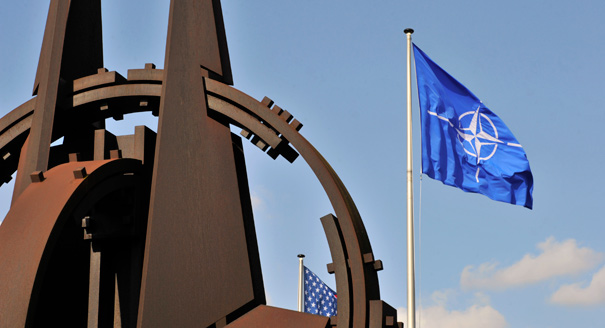
A reformed NATO, re-calibrated for the murky proxy warfare of today, as well as UN peacekeeping and democracy aid should be foreign policy priorities for the Trump administration.
Source: Hill
It’s been a busy week for President Trump. In less than seven days, he has learned that Russia is not our ally and that far from being obsolete, NATO is instead a “great alliance” and “the bulwark of international peace and stability” as he declared to NATO’s Secretary General during a meeting at the White House on April 12.
That offers hope. To really reduce innocent deaths and violence, Trump could add United Nations peacekeeping, and democracy support to his tutorial. Meanwhile, like a clock stuck on twelve, Trump was occasionally if unwittingly correct about the need for NATO reform.
NATO was originally formed to keep “Russians out, Americans in, and Germany down” as its first Secretary General pithily remarked. The world is now ready for a more muscular Germany, but NATO is still vitally necessary for the first two goals, as well as other security needs from fighting international terrorist organizations to countering piracy around Somalia.
Yet, NATO was fundamentally designed for an older style of warfare in which the Russians came barreling through the Fulda gap in tanks. NATO is simply not designed for today’s murky form of proxy warfare.
Prepositioning weapons in Eastern Europe may offer some deterrent, but weaponry is less decisive than willpower and more creative methods of intervention.
Wars today are likely to mimic the Ukraine — where Russian troops mingle with fifth-column separatists, or Syria, where Russian weapons and air support assist Assad’s troops and murkier forces from Iran and Hezbollah.
A united NATO may deter such incursions, but the West’s admonishment of Georgia’s President for egging Russia into war in 2008, the failure of Britain and the U.S. to uphold a red line in Syria in 2013, and the weak pushback on Russia’s seizure of the Crimea the following year have encouraged Russia to continue its strategy.
To do its primary job, NATO must recalibrate, creating tripwires and treaties that serve as deterrents to a new form of warfare that is likely to continue.
Meanwhile, war is no longer the great killer it once was. Battle deaths used to be in the millions, but today’s shadowy wars are far less deadly. On average, wars between states kill only about 3,000 people a year today, and despite an uptick in civil war deaths thanks to Syria, Iraq, and Afghanistan, civil wars now kill only about 90,000 people a year.
Meanwhile, Mexico’s drug cartels killed the same number of people as the violence in Iraq in 2015. More Nigerians and Indians died violently that year than Syrians, and more people died violent deaths in Brazil than in Iraq and Syria combined. The devastation of war is horrific, but 83 percent of violent deaths today occur outside of conflict zones.
From 2010 to 2015, three kinds of violence were responsible for the deaths of more than four times as many individuals as battle deaths from war: Homicide – often caused by organized crime; violence among organized groups of citizens, such as paramilitaries and gangs; and violence from terrorists and states killing their own citizens. And the people killed were more likely to be children and ordinary people, rather than professional soldiers or self-proclaimed rebels.
If Trump is truly concerned about the violent, unwarranted deaths of innocent children — and it seems he is — there is more he can do.
The much-maligned United Nations actually has a strong track record of keeping peace. A RAND study analyzing U.S. and UN missions from the 1960s through 2005 found that two-thirds of those UN peacekeeping missions were successful. They are also cheap: In 2005, the UN’s 17 peacekeeping operations, involving 70,000 troops, cost less than one month of U.S. led operations in Iraq. Despite its flaws, peacekeeping contributed to the fact that since the early 1990s, civil wars have been cut in half and from 1993 to 2003, deaths in civil wars reduced by fivefold.
Some of the greatest problems with peacekeeping stem from the Security Council’s imposed rules of engagement and the failure of the great powers to provide speedy money for troops. Some of the world’s best conflict scholars estimate that if the peacekeeping budget was increased to $800 million and stronger rules of engagement were mandated, major armed conflict might be halved. The deal-maker-in-chief could get better security for less cost by really focusing on reforming and strengthening the United Nations, building on the work of his predecessor.
Finally, state killings, terrorism and even homicide are all linked by a single thread: rotten governments that extract most of a country’s wealth, favor certain groups of citizens, and leave most of society to fend for themselves.
U.S. democracy assistance has a track record of helping people in such countries help themselves. That’s why Russia hates it and has been funding lobbying efforts in the U.S. to curb the paltry money the U.S. spends helping civil societies. Yet instead of doubling down, the Trump Administration and some Senators are letting Russia divide us internally.
Lifeless infants cradled in their father’s arms and grey-faced toddlers gassed to death should drive America and its allies closer together to fight the deaths of innocents. Seizing the moment to reform NATO and the UN and deepen democracy support could place Trump in the surprising role of statesman.
Senior Fellow, Democracy, Conflict, and Governance Program
Rachel Kleinfeld is a senior fellow in Carnegie’s Democracy, Conflict, and Governance Program, where she focuses on issues of rule of law, security, and governance in democracies experiencing polarization, violence, and other governance problems.
Recent Work
Renée DiResta, Rachel Kleinfeld, Margot Treadwell
Political Violence Researchers, Rachel Kleinfeld, ed., Dalya Berkowitz, ed.
Carnegie does not take institutional positions on public policy issues; the views represented herein are those of the author(s) and do not necessarily reflect the views of Carnegie, its staff, or its trustees.

The books, podcasts, and films that explain the world it made.

Andrew Leber

U.S. trading partners in Asia are closely watching the dispute for signs of how it may affect their own interests.

Barbara Weisel

The aftermath of the Ceuta crisis shows Europe has drawn the wrong lessons. Rather than doubling down on failed migration policies, the EU needs to address the underlying roots of such episodes.

Richard Youngs
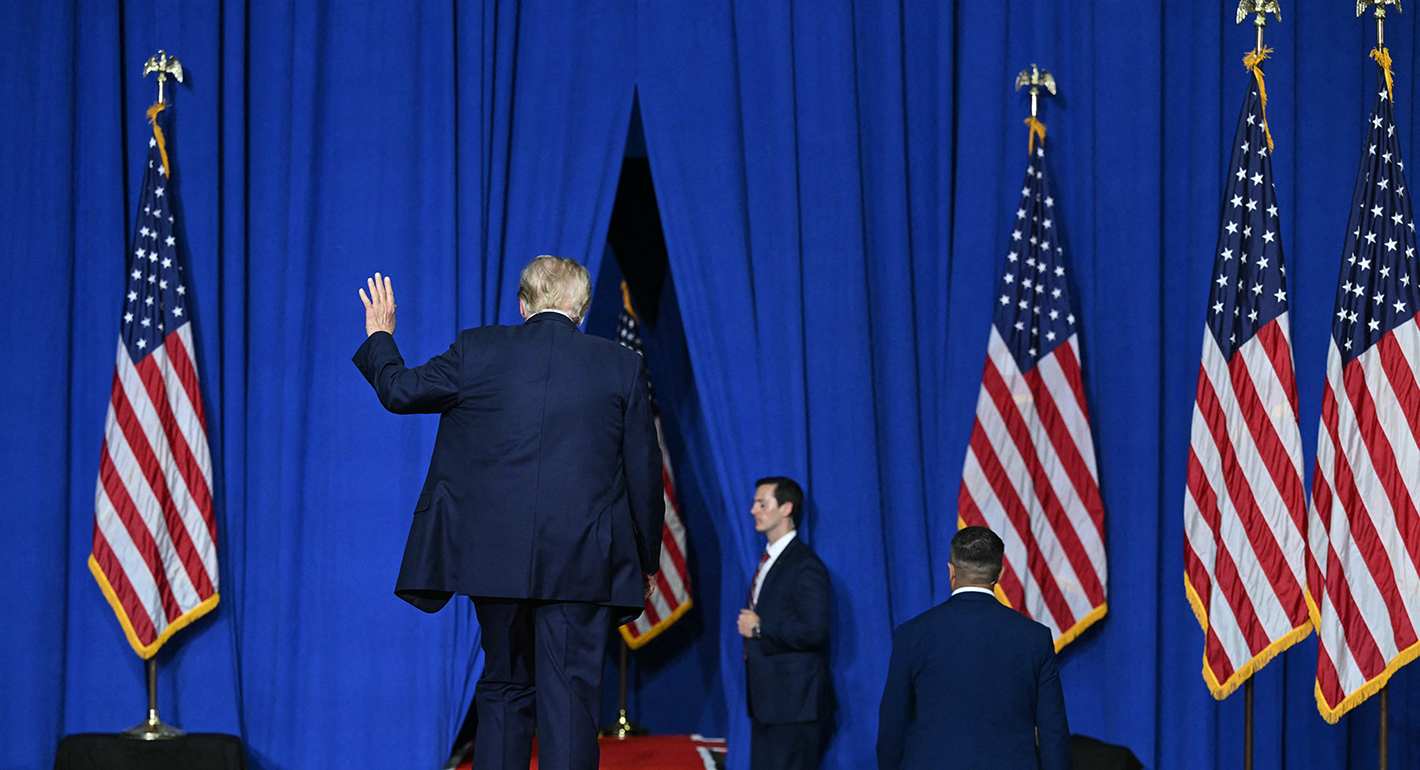
By abandoning past U.S. pro-democracy policies and adopting several lines of pro-autocratic action, the Trump administration has fundamentally repositioned the United States vis-à-vis democracy in the world.

Thomas Carothers
Chinese strategists are once again debating whether American power is declining and whether U.S. hegemony is experiencing irreversible decay.
Wu Xinbo