

Other
Michael D. Swaine
{
  "authors": [
    "Michael D. Swaine"
  ],
  "type": "legacyinthemedia",
  "centerAffiliationAll": "dc",
  "centers": [
    "Carnegie Endowment for International Peace",
    "Carnegie China"
  ],
  "collections": [],
  "englishNewsletterAll": "asia",
  "nonEnglishNewsletterAll": "",
  "primaryCenter": "Carnegie China",
  "programAffiliation": "AP",
  "programs": [
    "Asia"
  ],
  "projects": [],
  "regions": [
    "East Asia",
    "China",
    "North America",
    "United States"
  ],
  "topics": [
    "Foreign Policy",
    "Security",
    "Military"
  ]
}
Source: Getty
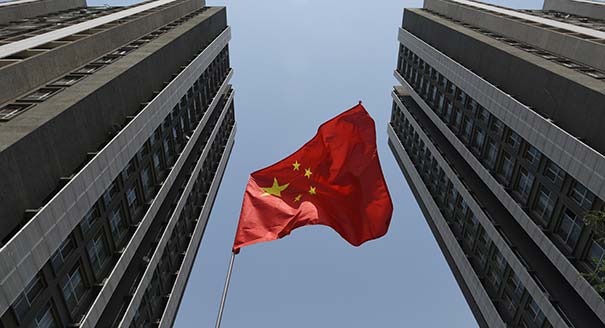
Many Sinologists have labored for years to disabuse lay readers of the notion that contemporary China is a modern-day imperial dynasty bent on dominating Asia and beyond.
Source: New York Times
To the Editor:
Judith Shapiro’s review (June 18) of two recent books by Howard W. French (“Everything Under the Heavens”) and Graham Allison (“Destined for War”) uncritically reinforces two prevailing myths about modern China. Many Sinologists have labored for years to disabuse lay readers of the notion that contemporary China is a modern-day imperial dynasty bent on dominating Asia and beyond. But Shapiro (channeling French) buys into this delusion without any qualms.
Similarly, many international relations specialists have incisively challenged Allison’s flawed application of the so-called Thucydides’s Trap to Sino-United States relations, yet Shapiro sees the argument as confirmation of French. The overall result is yet another simplistic affirmation of the “China threat” thesis.
MICHAEL D. SWAINE
WASHINGTON
This letter to the editor was originally published in the New York Times.

Former Senior Fellow, Asia Program
Swaine was a senior fellow at the Carnegie Endowment for International Peace and one of the most prominent American analysts in Chinese security studies.
Recent Work
Michael D. Swaine
Michael D. Swaine
Carnegie does not take institutional positions on public policy issues; the views represented herein are those of the author(s) and do not necessarily reflect the views of Carnegie, its staff, or its trustees.

It signals a new era of tech diffusion and warfare.

Steve Feldstein

With its public finances in shambles, the far right polling at 35 percent ahead of the 2027 presidential election, and a growing protest movement, is France’s crisis a threat to the EU’s geopolitical awakening?

Rym Momtaz, ed.

Russia’s AI-driven propaganda campaigns operate in a fragmented, chaotic, and often illogical manner. That’s not necessarily a problem for the Kremlin, though: It’s much easier to mimic genuine public debate that way.

Ilya Klishin

Ahead of a tough winter for Ukraine, Donald Trump’s swing back toward Russia bodes ill. But instead of panicking, Kyiv’s European allies are focusing on action.
Rym Momtaz

Without a ceasefire with Ukraine on attacking each other’s energy infrastructure—to which the Kremlin is unlikely to agree—the diesel agreement between Putin and Trump is largely for show, rather than representing a genuine increase in the volumes of Russian diesel on the global market.

Sergey Vakulenko