

Commentary
Only collective security can protect fragile economic models.
Andrew Leber
{
  "authors": [
    "Richard Sokolsky",
    "Aaron David Miller"
  ],
  "type": "legacyinthemedia",
  "centerAffiliationAll": "",
  "centers": [
    "Carnegie Endowment for International Peace",
    "Carnegie China"
  ],
  "collections": [],
  "englishNewsletterAll": "",
  "nonEnglishNewsletterAll": "",
  "primaryCenter": "Carnegie Endowment for International Peace",
  "programAffiliation": "",
  "programs": [],
  "projects": [],
  "regions": [
    "North America",
    "United States",
    "East Asia",
    "North Korea"
  ],
  "topics": [
    "Security",
    "Foreign Policy",
    "Nuclear Policy",
    "Arms Control"
  ]
}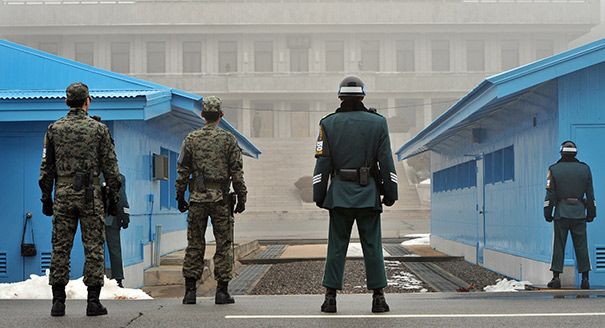
Source: Getty
There’s no reason the United States cannot pursue a diplomatic track while at the same time deterring, defending, and containing the North Korean nuclear threat to America and its allies.
Source: Washington Post
On Wednesday, after North Korea fired a missile over Japan, President Trump announced that “talking to Pyongyang was not the answer.” Minutes later, his secretary of defense told reporters that “we’re never out of diplomatic solutions.”
As a presidential candidate, Donald Trump was open to negotiations “There’s a 10 percent or a 20 percent chance that I can talk him out of those damn nukes,” he said last June. He was right then and wrong now, and not just because talking is better than fighting. There are several reasons he should give diplomacy a chance.
Trump inherited a failed North Korea policy from both his immediate predecessors. And while it’s certainly not his fault that North Korea became a nuclear power, the tactics that his administration have assembled to deal with the challenge don’t appear to be working. Sanctions have been toughened; China has been recruited to pressure North Korea (and has cooperated up to a point); and Japan and South Korea have been bucked up.
Yet Kim Jong Un remains defiant and has shown no interest in negotiations or compromise. There’s little to indicate the same course will change his mind. Perhaps nothing will. But the U.S. approach of issuing threats, such as the warning that we’re “locked and loaded” to unleash “fire and fury,” have led to more North Korea nukes, more missile tests (and likely another nuclear test), an operational ICBM and further rounds of incendiary rhetoric that increase the risk of war through miscalculation.
As worrisome as they may be, North Korean missile tests do not in themselves pose a threat to the security of the United States or its allies. Only an actual North Korean attack on the United States, its allies, or American territory would justify the use of overwhelming U.S. military force and garner the support of South Korea, Japan, most countries around the world and the Congress and American public. Nobody, except maybe the president, thinks that the use of force in a preventive strike against North Korean missiles and test sites is a serious and credible option. The defense secretary and the chairman of the Joint Chiefs of Staff don’t believe it; and neither do Kim or the Chinese. That’s because the odds of success for such an attack are low and the risk of North Korean retaliation against South Korean, Japanese and U.S. forces stationed there, which could kill hundreds of thousands and render untold destruction, is high. To be effective, threats have to be credible to the target of the threat — and threatening to conduct an attack that would have far more serious consequences for the United States and its allies than for North Korea is not credible.
The notion that talking to your enemy legitimizes that country’s bad behavior is nonsense. The United States over the years talked to plenty of evil leaders, even psychopaths (see Joseph Stalin and Mao Zedong), because it served American security interests. As the hawkish Moshe Dayan, the great Israeli military and political leader said, “If you want to make peace, you don’t talk to your friends. You talk to your enemies.” Moreover, the United States record of diplomacy with North Korea is not nearly as bad as most Americans think. Under the 1994 U.S.-North Korea Agreed Framework, for example, North Korea closed a nuclear reactor and plutonium reprocessing facility under international inspection and also halted construction of two reactors that, according to U.S. estimates, could have produced enough fissile material for 30 nuclear bombs. The North Koreans subsequently cheated on this agreement, but the history of U.S.-DPRK nuclear diplomacy is one of both countries failing to keep their commitments and missing opportunities to sustain negotiations.
To paraphrase John Lennon, the United States needs to give diplomacy a chance. For eight years, the Obama administration put more emphasis on “strategic patience” — sanctions, pressure and isolation to secure a North Korean commitment to complete, verifiable and irreversible denuclearization — than on engagement and negotiations with the North. To be fair, the Obama team faced a leadership transition in North Korea beginning in 2011 that added another layer of complexity to engagement with the North. Nonetheless, even after Kim consolidated power and it had become clear that strategic patience was a bankrupt strategy, the Obama administration remained timid, perhaps even fearful, of negotiating with North Korea. It never really learned the lesson from the negotiations with Iran: Pressure has to be accompanied by outreach.
We have no illusions that Kim will give up his nukes or reaffirm a previous commitment he made to denuclearization. Nukes guarantee Kim’s relevance on the world stage and more importantly his survival. And while no U.S. president should formally recognize North Korea as a nuclear weapons state, that is the bitter and unavoidable reality. A Trump-Kim summit now would be a disaster and play into Kim’s hands.
Instead, what’s required is discreet exploratory discussions between U.S. and North Korean officials, close to and empowered by Kim and Trump, to test what’s possible: to identify a way to defuse the current cycle of threats and counterthreats; to break the momentum of North Korea’s missile testing program; to preempt or prevent war; and to explore the possibility of some quid pro quo that would freeze Kim’s missile production and nuclear and missile testing in exchange for sanctions relief, adjusting U.S. military exercises with South Korea to make them less threatening to North Korea, or exploring whether more permanent peace arrangements can be reached to foster security and stability on the Korean Peninsula. There’s no reason the United States cannot pursue a diplomatic track while at the same time deterring, defending and containing the North Korean nuclear threat to America and its allies.
The truth is that no one can give Kim what he wants except the United States — guarantees of regime survival and acceptance of North Korean sovereignty as an independent state. All of this would need to be coordinated with our allies (South Korea and Japan) and China, too. But the stakes are high — the North Korean nuclear challenge is a vital national interest like no other. Jack Kennedy was right: “Let us never negotiate out of fear; but let us never fear to negotiate.”

Nonresident Senior Fellow, Russia and Eurasia Program
Richard Sokolsky is a nonresident senior fellow in Carnegie’s Russia and Eurasia Program. His work focuses on U.S. policy toward Russia in the wake of the Ukraine crisis.

Senior Fellow, American Statecraft Program
Aaron David Miller is a senior fellow at the Carnegie Endowment for International Peace, focusing on U.S. foreign policy.
Carnegie does not take institutional positions on public policy issues; the views represented herein are those of the author(s) and do not necessarily reflect the views of Carnegie, its staff, or its trustees.

Only collective security can protect fragile economic models.

Andrew Leber
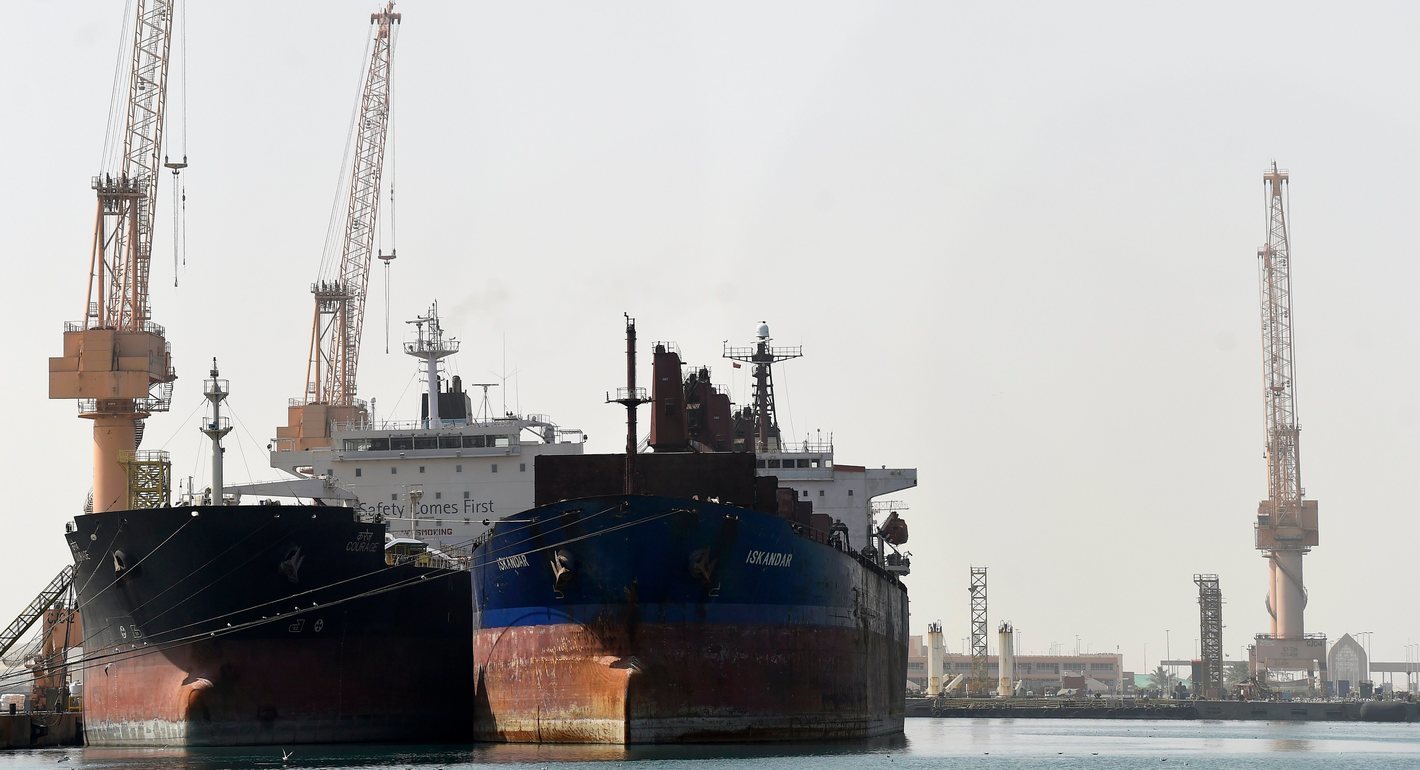
In a volatile Middle East, the Omani port of Duqm offers stability, neutrality, and opportunity. Could this hidden port become the ultimate safe harbor for global trade?
Giorgio Cafiero, Samuel Ramani
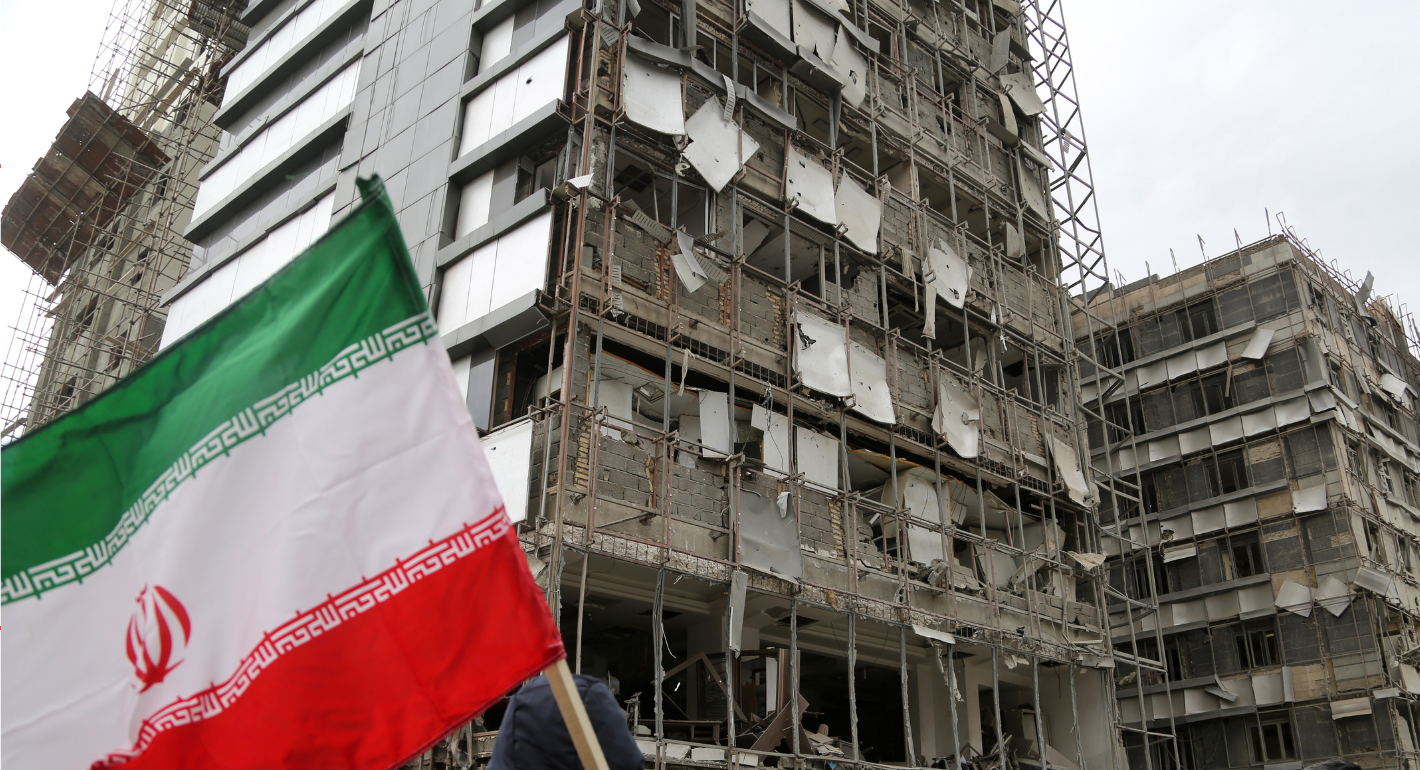
Europe’s reaction to the war in Iran has been disunited and meek, a far cry from its previously leading role in diplomacy with Tehran. To avoid being condemned to the sidelines while escalation continues, Brussels needs to stand up for international law.

Pierre Vimont

South Korea’s rapid demographic transition previews governance challenges many advanced and middle-income economies will face. This paper argues that aging is not only a care issue but a structural governance challenge—reshaping welfare, productivity, and fiscal sustainability, and reorganizing responsibilities across the state, private sector, and society.

Darcie Draudt-Véjares

In 2021, the U.S. government began to consider how to address climate migration. The outcomes of that process offer useful takeaways for other governments.

Jennifer DeCesaro