

Paper
Christopher S. Chivvis, Rohan Mukherjee, Milan Vaishnav
{
  "authors": [
    "Milan Vaishnav"
  ],
  "type": "legacyinthemedia",
  "centerAffiliationAll": "dc",
  "centers": [
    "Carnegie Endowment for International Peace"
  ],
  "collections": [],
  "englishNewsletterAll": "ctw",
  "nonEnglishNewsletterAll": "",
  "primaryCenter": "Carnegie Endowment for International Peace",
  "programAffiliation": "SAP",
  "programs": [
    "South Asia"
  ],
  "projects": [
    "India Elects 2019"
  ],
  "regions": [
    "South Asia",
    "India"
  ],
  "topics": [
    "Political Reform"
  ]
}
Source: Getty
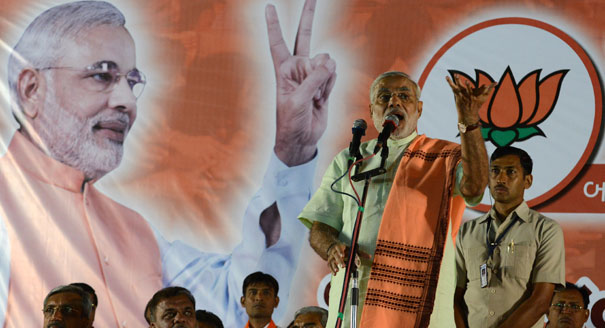
Unable to campaign on the economic growth it had expected, the BJP is crafting an alternative narrative for 2019 emphasizing economic stability, efforts to curb black money, and the absence of high-level corruption.
Source: Indian Express
Step foot in Delhi these days and you are immediately struck by a feeling of cognitive dissonance. On the one hand, India is experiencing a kind of political dominance that even many within the ruling Bharatiya Janata Party (BJP) had not anticipated. On the other hand, strip away the confident veneer and an underlying sense of anxiety is palpable within the government and among its supporters. Dominance and doubt are joined together in an uncomfortable embrace.
The air of political dominance is conspicuous, even from afar. Despite the occasional setback—the 2015 Delhi and Bihar assembly elections are the two most obvious—the BJP is methodically expanding its political footprint. The party is now a major player in the northeast, assuming the gravitational pull its national rival, the Indian National Congress, once possessed. When talk turns to political churn in Odisha, Tamil Nadu, and West Bengal, it is the BJP which is seen as making inroads, either directly or through proxies. At an individual level, Prime Minister Narendra Modi remains exceedingly popular; three years into his government, even while his administration might stumble, his personal standing remains sky-high. The saturation of the political space Modi has achieved is unlike anything we have witnessed since the heyday of Indira Gandhi.
For the first time in history, the BJP claims the top three political positions in the country, having placed two longstanding karyakartas into the presidency and vice-presidency. The BJP’s once-tenuous position in the Rajya Sabha is a thing of the past; last month, its seat tally surpassed that of the Congress. If current political trends hold, the BJP-led National Democratic Alliance (NDA) will stitch up a majority in the upper house by mid-2018. Meanwhile, the map of state-level political power has taken on a distinct saffron hue: the BJP’s MLAs number nearly 1,400, compared to just over 800 for the Congress. In 2004, the NDA was in power in a paltry six states; today, it governs 18 states—the same number the Congress held in the early 1990s.
Giving the ruling dispensation a boost is the wounded state of the opposition. Bihar Chief Minister Nitish Kumar’s decision to ditch the Mahagathbandhan in favor of his old BJP allies is as insightful a prelude to 2019 as one is likely to see. Returning Bihar to the NDA column strikes both an electoral as well as a psychological blow, for Kumar was arguably the opposition’s most compelling face. Just as the BJP was looking vulnerable in its bastion of Gujarat, the Congress leadership there has come unraveled just months before assembly polls. In Rajasthan, where anti-incumbency could in theory thwart the reelection hopes of the BJP government of Vasundhara Raje, continued uncertainty among Congress rank-and-file as to whether political power rests with the old guard or the new is setting up an inevitable factional feud.
But this electoral dominance does not tell the full story. Beneath this aura of supremacy is a nagging feeling of vulnerability, nudged along by the amassing clouds on the economic horizon. The economic scenario, exemplified by anemic first quarter GDP growth figures, betrays the promises of sound economic stewardship the BJP had continually boasted on the campaign trail. While the macro picture has stabilized, there are concerns with the micro.
Demonetization, while helpful in recapturing the economic narrative, has not produced the short-terms gains its backers had hoped for. While some degree of disruption was inevitable with the introduction of a Goods and Services Tax (GST), the current economic outlook is also plagued by flagging exports and a moribund domestic investment cycle, which remains bogged down by the “twin balance sheet” problem—a challenge the government belatedly realized it could not simply grow its way out of.
Unable to bank on the stellar economic numbers it had expected, the BJP is crafting an alternative narrative for 2019 that goes something like this. Theirs was a government with an absence of high-level corruption of the sort that tarnished their predecessor. Bolstering its claim is the “bold” action Modi has taken to curb the black money scourge; demonetization is framed as a binary choice: either you’re with us or with the black money hoarders. Even the GST is being artfully framed as a mechanism for squeezing fraudsters. While the government cannot boast rapid growth, it will play up the crisis it inherited and the stabilization it has engineered.
This stabilization, it will argue, has been accompanied by establishing the key pillars of economic reform: from Aadhaar to a new bankruptcy law, and GST to Jan Dhan Yojana. On the world stage, India is back—both as a destination for investment and as a regional power broker. The surgical strike and recently concluded Doklam dispute perfectly fit this notion of muscular nationalism. The overarching framework for this narrative is the concept of “New India”—in Modi’s words, tantra se lok nahin, lok se tantra chalein (democracy will be driven by people, not the other way round).
It’s no coincidence that Modi’s timeline for delivering on the core tenets of New India is the year 2022, well into a putative second-term. For now, dominance carries the day; but doubts about performance can only be deferred so far.
This article was originally published in the Indian Express.

Director and Senior Fellow, South Asia Program
Milan Vaishnav is a senior fellow and director of the South Asia Program and the host of the Grand Tamasha podcast at the Carnegie Endowment for International Peace. His primary research focus is the political economy of India, and he examines issues such as corruption and governance, state capacity, federalism, and electoral behavior. He also conducts research on the Indian diaspora.
Recent Work

Christopher S. Chivvis, Rohan Mukherjee, Milan Vaishnav



Sophia Besch, Eric Ciaramella, Steve Feldstein, …
Carnegie does not take institutional positions on public policy issues; the views represented herein are those of the author(s) and do not necessarily reflect the views of Carnegie, its staff, or its trustees.

Ex-president Gurbanguly Berdimuhamedov remains interested in politics, but his son Serdar, Turkmenistan’s current president, is becoming increasingly independent and willing to break with his father’s legacy. If their covert rivalry goes too far, both risk losing power.

Galiya Ibragimova

A notable degree of participative democracy has firmly arrived in Europe. But to have more far-reaching impact, democratic deliberation needs to move into a radically new phase.

Richard Youngs
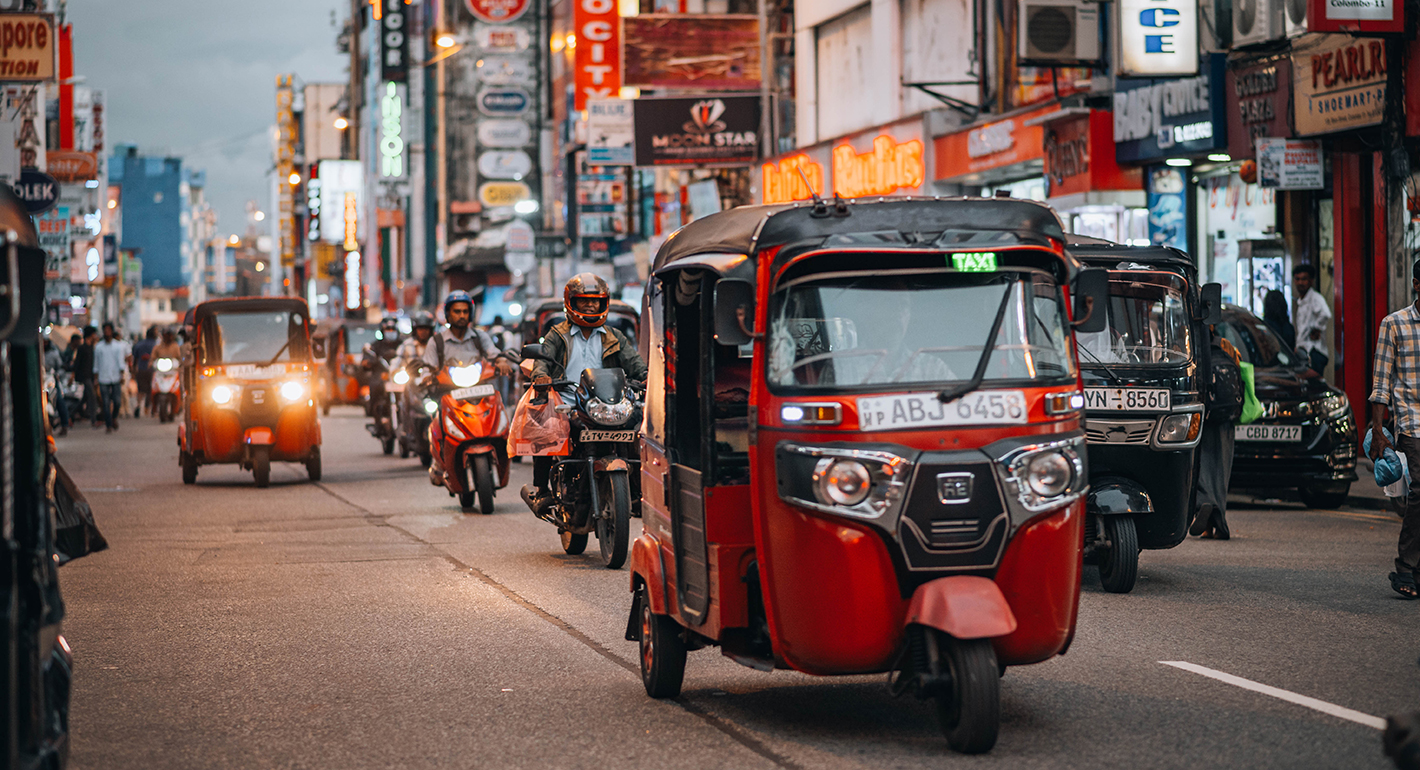
Economic recovery has brought Sri Lanka a modicum of stability, but domestic strains and great-power rivalry could test how long it lasts.
Avinash Paliwal

A deep dive into the policy ecosystems behind battery development in China, South Korea, Japan, the European Union (including some of its member states), the United States, Canada, and India.



Milo McBride, Herbert Crowther, Darcie Draudt-Véjares, …

Sergei Kiriyenko used Russia’s parliamentary vote to further hone his strategy of corporate mobilization that is designed to maximize votes for United Russia.

Andrey Pertsev