

Commentary
Despite public disputes over trade and immigration, the strategic partnership’s foundations remain sturdy.
Sameer Lalwani
{
  "authors": [
    "Rafael Sattarov"
  ],
  "type": "commentary",
  "centerAffiliationAll": "",
  "centers": [
    "Carnegie Endowment for International Peace",
    "Carnegie Russia Eurasia Center"
  ],
  "collections": [],
  "englishNewsletterAll": "",
  "nonEnglishNewsletterAll": "",
  "primaryCenter": "Carnegie Russia Eurasia Center",
  "programAffiliation": "",
  "programs": [],
  "projects": [
    "Eurasia in Transition"
  ],
  "regions": [],
  "topics": [
    "Economy"
  ]
}
Source: Getty
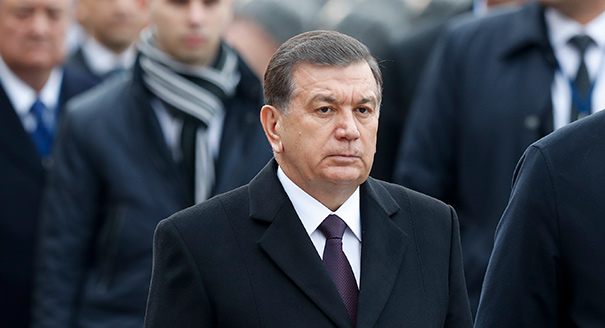
The new leadership in Uzbekistan wants to replace the Soviet-era political-economic model, but Uzbek technocrats are still unable to effectively challenge the entrenched security chiefs. President Shavkat Mirziyoyev is studying the experiences of Russia, Kazakhstan, and South Korea in hopes of bringing Westernized, apolitical economic specialists to Uzbekistan.
A year ago, it seemed unthinkable that Shavkat Mirziyoyev would inherit the Uzbek presidency from the late Islam Karimov without an overt struggle or the fracturing of the Uzbek elite. There was even less faith that the new president would be able to quickly overhaul the country’s bureaucracy.
The challenge of leading post-Karimov Uzbekistan has been compared to that facing the USSR after Stalin or Spain after Franco. Yet Mirziyoyev has been able to quietly, yet radically, reshuffle the Uzbek leadership, forming three new groups: family, former exiles, and the new technocracy. He will depend on these groups as he solidifies his role as the country’s leader.
During his three decades in power, Islam Karimov adhered to an old Soviet model in which stability remained his first priority, rarely removing senior bureaucrats from their posts. Under his rule, formal positions were meaningless and close personal relationships with the president were vital. Having spent more than a decade working in Karimov’s system, Mirziyoyev has a clear understanding of how to strengthen his own power base.
First of all, he has turned to family members. According to the Central Asian political tradition, the children of authoritarian leaders often end up wielding power themselves. Shavkat Mirziyoyev has only daughters, so the leader’s protégés are his two sons-in-law. Mirziyoyev appointed his eldest son-in-law, Oybek Tursunov, as head of the Uzbekistan presidential administration. Mirziyoyev’s younger son-in-law, Otabek Shahanov, has been appointed deputy head of the president’s security service.
The influence of the president’s two sons-in-law will only grow in the near future as they begin to curate relationships with the bureaucratic and business elite. They will control appointments and the redistribution of property. The surnames Shahanov and Tursunov have already appeared in the dispute concerning the ownership of Uzbekistan’s largest wholesale market, Abu Sahiy, which belongs to Islam Karimov’s son-in-law.
A lack of social mobility has led to a small talent pool in Uzbekistan, forcing Mirziyoyev to rely on old bureaucrats, choosing the less bad over the worst. Mirziyoyev has yet to form his own team. He has taken steps to return to office formerly exiled Uzbek leaders, many of whom were blacklisted by Karimov. Although it is a stretch to call many of these old bureaucrats “technocrats,” their return should help the president strengthen a technocratic coalition to counterbalance the entrenched security bosses (or siloviki as they are known in Russian).
Prime Minister Abdulla Aripov is a classic example of a previously exiled bureaucrat reclaiming power. Aripov became deputy prime minister in 2002. In the fall of 2012, the Uzbek Prosecutor General’s Office opened a criminal case against him, alleging abuse of power for issuing licenses to Uzdunrobita (a subsidiary of MTS-Uzbekistan) for the installation of additional rebroadcasting transmitters. He avoided serious legal repercussions, spending 2012–2016 doing academic research. Now, thanks to Mirziyoyev, he soared back to the post of prime minister.
These former bureaucrats are meant to help Mirziyoyev temporarily compensate for a talent shortage, share out administrative power, and eventually clear the path for new technocrats. Lasting political alliances are rare in Uzbekistan, so despite serving as prime minister for many years, Mirziyoyev had no loyal team available and now needs to form one at a moment’s notice.
Although Uzbekistan’s new leader is working to replace the Soviet-era political-economic model, Uzbek technocrats are still unable to effectively challenge the siloviki. However, Mirziyoyev is studying the experiences of Russia, Kazakhstan, and South Korea in hopes of bringing Westernized, apolitical economic specialists to Uzbekistan.
Mirziyoyev’s first steps baffled supporters who wanted to strengthen the role of technocrats to counterbalance the siloviki. The president fired Rustam Azimov, the former minister of finance, who effectively played the role of prime minister under Karimov. It was Azimov who usually represented the country at international summits, developed a network of contacts with international financial institutions, and generally had the reputation of being a modern leader, a rarity in Uzbekistan.
After Karimov’s death, there were signs that leading politicians would do a deal whereby Mirziyoyev would become president and Azimov would become prime minister. However, as Mirziyoyev’s power solidified, Azimov was sent away to head a poultry farm development project. Evidently, Mirziyoyev’s desire to remove a potential rival lay behind Rustam Azimov’s departure.
The technocrats and the security sector bosses have different visions for the country, with the former believing in the need for economic change and greater transparency.
In several respects, Mirziyoyev is attempting to show that he is ready to rely on technocrats. He has appointed several well-respected deputy ministers, such as Sherzod Shermatov, a Yale alumnus who was appointed first deputy minister for the development of information technology and communications, and Saidkamol Hodzhaev, the new deputy head of the Central Bank.
Mirziyoyev has also sent a warning signal to the security sector by making accusations of corruption in the Prosecutor General’s Office, the police, and other law enforcement agencies. There have been calls from high officials for an end to government bureaucracy and to interference by law enforcement agencies in business.
Overall, Mirziyoyev is trying to make the Uzbek administration more open in a way that would have been unthinkable under Karimov. He is bringing bureaucrats into the light, forcing them to give briefings and make appearances at the new international press club and on talk shows. Slowly, they are growing accustomed to public life, no longer as frightened of online criticism. The citizens of the country are also enjoying the discussion, although current topics of debate are mild and uncontroversial.
The success or failure of the reforms remains to be seen, and the new president has not articulated a clear strategy for the further development of the country, nor a clear readiness for systemic reform. He may well resort to Karimov’s tried and tested authoritarian measures. But for now, he is certainly engaged in a serious effort to trim Uzbekistan’s over-powerful security sector and balance it with a team of economic experts.
Rafael Sattarov
Carnegie does not take institutional positions on public policy issues; the views represented herein are those of the author(s) and do not necessarily reflect the views of Carnegie, its staff, or its trustees.

Despite public disputes over trade and immigration, the strategic partnership’s foundations remain sturdy.

Sameer Lalwani

With its public finances in shambles, the far right polling at 35 percent ahead of the 2027 presidential election, and a growing protest movement, is France’s crisis a threat to the EU’s geopolitical awakening?

Rym Momtaz, ed.

Russian strikes are weakening the economy sustaining Ukraine’s war effort. Closing the growing funding gap will require more European support and politically contentious reforms in Kyiv.

Balázs Jarábik
Economic recovery has brought Sri Lanka a modicum of stability, but domestic strains and great-power rivalry could test how long it lasts.
Avinash Paliwal

Policy proposals on sovereign debt must both match the scale of the challenge and be implementable within existing political constraints.
David McNair