

Article
Garima Mohan
{
  "authors": [
    "Garima Mohan"
  ],
  "type": "other",
  "centerAffiliationAll": "",
  "centers": [
    "Carnegie Endowment for International Peace",
    "Carnegie India"
  ],
  "collections": [],
  "englishNewsletterAll": "",
  "nonEnglishNewsletterAll": "",
  "primaryCenter": "Carnegie India",
  "programAffiliation": "",
  "programs": [],
  "projects": [],
  "regions": [
    "Europe"
  ],
  "topics": [
    "Foreign Policy"
  ]
}
Source: Getty
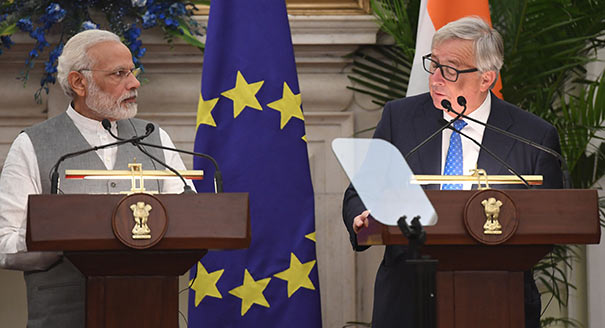
The European Union wants to partner with key players in Asia on shaping the rules around connectivity, and provide a comprehensive response to the Belt and Road Initiative challenge.
Source: German Marshall Fund of the United States
Europe’s initial enthusiasm about the Belt and Road Initiative (BRI) is tempering. BRI is undermining the EU’s internal cohesion, has the potential to impact European security, and is creating stiff competition for European companies on trade, investments, and market access in Europe and Asia. European policymakers are also beginning to realize the impact of BRI beyond the European continent — notably on the power balance and stability in Asia. Asian markets are important export destinations for Europe, and a majority of its sea-borne trade transits through the Indo-Pacific.
Europe, therefore, has a clear interest in maintaining a rules-based order and unhindered trade flows in the Indian and Pacific Oceans. Even though Europe is still grappling with the new “Indo-Pacific” framing, its interests converge with the Quad countries. Member states like France and Britain have already begun to reassess their security role in the Indo-Pacific. And the EU wants to partner with key players in Asia on shaping the rules around connectivity, and provide a comprehensive response to the BRI challenge.
This article was originally published by the German Marshall Fund of the United States.
Former Nonresident Fellow, Carnegie India
Garima Mohan was a nonresident fellow at Carnegie India. Her research focuses on the foreign and security policies of rising powers, particularly that of India, and on Europe-India relations.
Recent Work
Garima Mohan
Carnegie does not take institutional positions on public policy issues; the views represented herein are those of the author(s) and do not necessarily reflect the views of Carnegie, its staff, or its trustees.
The Bureau of Industry and Security needs to adjust its focus and practices to maintain its position as the U.S. government’s primary champion of international technological competition.

Geoffrey Irving
Despite myriad challenges and occasional stumbles, the new Hungarian government is moving ahead with energy and conviction to uproot years of illiberalism and corruption and rebuild Hungarian democracy.

Thomas Carothers

European Commission President Ursula von der Leyen is about to give her annual address on the state of the EU. Here’s what she won’t—but should—say.

Rym Momtaz

Radical-right parties are expected to do well in upcoming elections in four of the EU's biggest member states. If successful, they could prevent the union from addressing key challenges ahead.

Stefan Lehne

The books, podcasts, and films that explain the world it made.

Andrew Leber