

Article
C. Raja Mohan, Darshana M. Baruah
{
  "authors": [
    "C. Raja Mohan"
  ],
  "type": "legacyinthemedia",
  "centerAffiliationAll": "dc",
  "centers": [
    "Carnegie Endowment for International Peace",
    "Carnegie India"
  ],
  "collections": [],
  "englishNewsletterAll": "ctw",
  "nonEnglishNewsletterAll": "",
  "primaryCenter": "Carnegie India",
  "programAffiliation": "SAP",
  "programs": [
    "South Asia"
  ],
  "projects": [],
  "regions": [
    "South Asia",
    "India"
  ],
  "topics": [
    "Foreign Policy"
  ]
}
Source: Getty
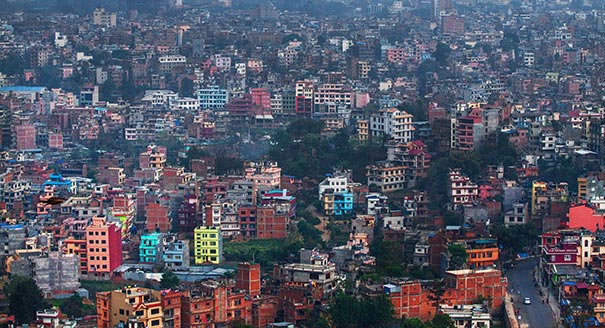
Standing up against India has unfortunately become an important part of Nepal’s definition of sovereignty.
Source: Indian Express
“I will not reach any deal that would go against the national interest of Nepal,” K P Sharma Oli, the prime minister of Nepal, reportedly assured parliamentarians in Kathmandu earlier this week, before heading out to India. That such questions should be asked and answered is a definitive sign of the current unhealthy state of India’s relations with Nepal.
This is certainly not unique. Until recently, Delhi’s chattering classes framed every official engagement between India and the US in terms of Washington’s arm twisting and Delhi’s surrender of national sovereignty. Even when it was a clear case of advancing India’s self-interest, Delhi’s political and bureaucratic classes were reluctant to move forward for the fear of it being perceived as “pro-American”. Delhi’s preference for public posturing against Washington meant there was little room for practical give and take with America.
This tendency has certainly diminished in the last few years, thanks to conscious efforts at building greater mutual respect, understanding and trust. That precisely is what is needed between Kathmandu and Delhi. As in India-US ties, the initiative to reduce suspicion and generate political comfort must come from the larger nation.
Power asymmetry certainly produces defensiveness in the weaker party. If a large country like India was afflicted for long with a “small country syndrome,” it should not be surprising that Nepali elites are afflicted by a more acute version of it. Although asymmetry is certainly an important feature of India-Nepal relations, it does not fully explain the problem between Delhi and Kathmandu. Take for example Nepal’s engagement with China, where the asymmetry is much larger. When Oli heads to Beijing, soon after his visit to Delhi, few in Kathmandu are likely to worry about Oli surrendering Nepal’s interests. In fact, there will be much expectation that Beijing will help Nepal “stand up” against India.
Whether we like it or not, standing up against India has unfortunately become an important part of Nepal’s definition of sovereignty. For most of Delhi’s neighbours, the deep intimacy and interdependence with India is at once the basis for a special relationship and profound resentment.
It is easy to be critical of this tendency or bemoan the “anti-India” sentiments among the neighbourhood elites. It is not for Delhi to decide whether this is rational. Instead, Delhi must try and understand the sources of this negative tradition and address the problem purposefully. One place to start is history.
Delhi inherited from the Raj, the sense of paramountcy over the Subcontinent. The idea of protectorates worked well for both the Raj and the feudal regimes and tribal federations along the Subcontinent’s periphery. The Raj offered economic subsidies and assured non-interference in the internal affairs of these regimes. In return, the feudal and tribal chieftains agreed to assist the Raj in fending off the forays of rival powers into the Subcontinent.
This mutually beneficial arrangement, however, was unsustainable for independent India in the second half of the 20th century. One reason was the big power shift in the region. The notion of an exclusive sphere of influence for India in the Subcontinent was the casualty. The Raj was more than dominant in the Subcontinent and had the power to prevent rival powers from encroaching the glacis surrounding fortress India. The partition of the Subcontinent, the US-Soviet Cold War and the emergence of a unified and strong China under communists introduced extraordinary constraints on Indian policy.
But Delhi refused to adapt to the new circumstances. If the Raj’s hegemony was based on a partnership with friendly feudals, Delhi was torn between aligning with the monarchies and responding to the democratic aspirations of the people in the peripheral states. One way or another, India was inevitably sucked into the internal affairs of its neighborus, including Nepal. The most recent case was India’s involvement in Nepal’s constitution-making.
If Oli rode the backlash on an intensely nationalist platform, his visit this week provides a major opportunity for Delhi to put the relationship with Nepal back on a new set of rails. Three broad imperatives stand out for Delhi. First, is to acknowledge Nepal’s sovereignty and promise to conduct relations on that basis. Delhi needs to shift from underlining “the special relationship” with Nepal to one based on “sovereign equality”. That would inevitably mean that India should stop meddling in Nepal’s internal affairs and focus more on the state-to-state relationship. This is not a favour from Delhi to Nepal. It is in India’s interest to have a strong and sovereign Nepal on its northern frontiers.
Second, instead of demanding an “India first policy” from Oli, Prime Minister Narendra Modi must affirm that India’s strong support for a “Nepal first” policy. Situated between the world’s two fastest growing economies, Nepal has every reason to benefit from its location. Oli should have no problem recognising the unique nature of Nepal’s relationship with India marked by the national treatment given to Nepali citizens, an open border, and easiest access to the sea. Even more important, Oli, elected with a strong mandate, is in a good position to build a confident Nepal that can depoliticise economic cooperation with India.
Third, while the Indian security establishment has long claimed a special political relationship, Delhi’s economic policies have prevented the full development of the natural economic complementarity between the two countries. The rotting trade infrastructure on the long and open border, Delhi’s cumbersome procedures for administering economic assistance and the inability to implement infrastructure projects in reasonable time, have all added to India’s woes in Nepal.
The suggestion that the two sides must focus on the already committed projects and the ones that promise early returns to the people on both sides of the border is a good one. An emphasis on projects relating to cross-border trade, transport and tourism could be the beginning of a solid economic foundation for a sustainable political partnership with sovereign Nepal.
This article was originally published in the Indian Express.
Former Nonresident Senior Fellow, Carnegie India
A leading analyst of India’s foreign policy, Mohan is also an expert on South Asian security, great-power relations in Asia, and arms control.
Recent Work

C. Raja Mohan, Darshana M. Baruah


Alexander Gabuev, Paul Haenle, C. Raja Mohan, …
Carnegie does not take institutional positions on public policy issues; the views represented herein are those of the author(s) and do not necessarily reflect the views of Carnegie, its staff, or its trustees.

Ahead of a tough winter for Ukraine, Donald Trump’s swing back toward Russia bodes ill. But instead of panicking, Kyiv’s European allies are focusing on action.

Rym Momtaz

Funding Ukraine remains a priority for European leaders. As Russia’s war of aggression heads into another winter, two feasible options to mobilize support for Kyiv should be fast-tracked.


Vladyslav Rashkovan, Gregory P. Wilson

While the EU and European governments are embracing the much-lauded middle-power moment, this entails three difficult conundrums.

Richard Youngs
The middle power moment will not be defined by sovereign states alone, and California stands out for its potential contributions to international cooperation.


Ian Klaus, Stewart Patrick

Much has been said of the changes Brussels is trying to make to the EU enlargement process. Here’s why gradual integration might—or might not—be the answer.

Dimitar Bechev