

Commentary
Ahead of a tough winter for Ukraine, Donald Trump’s swing back toward Russia bodes ill. But instead of panicking, Kyiv’s European allies are focusing on action.
Rym Momtaz
{
  "authors": [
    "Tristan Volpe",
    "Nicholas Miller"
  ],
  "type": "other",
  "centerAffiliationAll": "dc",
  "centers": [
    "Carnegie Endowment for International Peace"
  ],
  "collections": [
    "Iranian Proliferation",
    "U.S. Nuclear Policy"
  ],
  "englishNewsletterAll": "ctw",
  "nonEnglishNewsletterAll": "",
  "primaryCenter": "Carnegie Endowment for International Peace",
  "programAffiliation": "NPP",
  "programs": [
    "Nuclear Policy"
  ],
  "projects": [],
  "regions": [
    "North America",
    "United States",
    "Middle East",
    "Saudi Arabia"
  ],
  "topics": [
    "Security",
    "Foreign Policy",
    "Nuclear Policy",
    "Arms Control"
  ]
}
Source: Getty
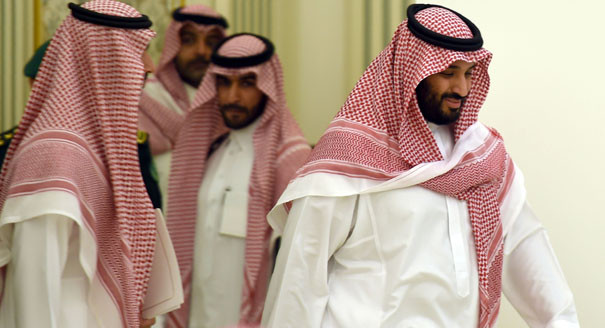
Saudi Arabia took concrete steps to adopt a nuclear hedge strategy against Iran, and explore options to forestall a looming arms race in the Middle East over the buildup of nuclear latency.
Source: Washington Quarterly
Over the last decade, Saudi officials repeatedly hinted that if Iran acquired nuclear weapons, Riyadh would be forced to respond in kind. As the late King Abdullah bin Abdulaziz reportedly warned U.S. officials in 2010, “if Iran succeeds in developing nuclear weapons, everyone in the region would do the same, including Saudi Arabia.” The following year, former Saudi Director of General Intelligence Prince Turki al-Faisal publicly stated that in the event of an Iranian bomb, “It is our duty toward our nation and people to consider all possible options, including the possession of these [nuclear] weapons.” Saudi officials made similar threats between 2013 and 2015 during the negotiations that led to the Joint Comprehensive Plan of Action (JCPOA) between the P5 + 1 and Iran, including declaring that Saudi Arabia would develop dual-use enrichment technology to hedge against Iran. These threats initially rang hollow: not only did the Kingdom lack both the technical capacity and economic rationale for building fuel enrichment plants—having no power reactors it needed to fuel—it also risked incurring the wrath of the international community.
However, after the completion of the 2015 Joint Comprehensive Plan of Action (JCPOA), the landmark Iranian nuclear deal, a more coherent Saudi nuclear hedging strategy came into focus. Instead of making empty threats, Saudi Arabia began to invest in its latent capacity to produce nuclear weapons by, as one analyst wrote, “building the physical infrastructure, developing the human capital, and acquiring the necessary technology for large-scale nuclear power programs,” all under the guise of an ostensibly peaceful energy diversification plan. The Saudis knew Iran would be able to mass produce and stockpile enriched uranium once the physical constraints over its uranium enrichment program expired in 15 years under the terms of the JCPOA; the nuclear deal effectively bought Riyadh, as another analyst assessed, “a decade during which they [could] continue with their nuclear push to better prepare themselves for Tehran’s rise.” As Prince Turki al Faisal admitted in January 2016, Saudi Arabia jumpstarted “a very extensive training and skills acquisition program” in the nuclear sector so that “by the time 15 years from now has passed – when supposedly [the JCPOA] will be coming to an end – we should be in full stride in terms of human capacity for our own development of peaceful uses of nuclear energy.” President Donald Trump’s decision to withdraw the United States from the JCPOA in April 2018 only accelerated this countdown clock for the Saudis.
Over the last year, Saudi Arabia took a concrete step toward realizing this hedge strategy by soliciting bids to build the first of its 16 planned nuclear power reactors, including from the U.S.-based Westinghouse. As part of this process, U.S. officials including Energy Secretary Rick Perry met with the top echelon of Saudi leadership in December 2017 and throughout the winter of 2018 to discuss negotiations over a nuclear cooperation agreement, which is required by U.S. law in order to transfer nuclear materials, equipment, or components.
This article was originally published in the Washington Quarterly.

Former Nonresident Fellow, Nuclear Policy Program
Tristan Volpe was a nonresident fellow at the Carnegie Endowment for International Peace and assistant professor of defense analysis at the Naval Postgraduate School.
Nicholas Miller
Dartmouth College
Carnegie does not take institutional positions on public policy issues; the views represented herein are those of the author(s) and do not necessarily reflect the views of Carnegie, its staff, or its trustees.

Ahead of a tough winter for Ukraine, Donald Trump’s swing back toward Russia bodes ill. But instead of panicking, Kyiv’s European allies are focusing on action.

Rym Momtaz

Without a ceasefire with Ukraine on attacking each other’s energy infrastructure—to which the Kremlin is unlikely to agree—the diesel agreement between Putin and Trump is largely for show, rather than representing a genuine increase in the volumes of Russian diesel on the global market.

Sergey Vakulenko

Despite its flop at the box office, the film raises important questions for the climate community to answer.

Leonardo Martinez-Diaz

Funding Ukraine remains a priority for European leaders. As Russia’s war of aggression heads into another winter, two feasible options to mobilize support for Kyiv should be fast-tracked.


Vladyslav Rashkovan, Gregory P. Wilson

Russian strikes are weakening the economy sustaining Ukraine’s war effort. Closing the growing funding gap will require more European support and politically contentious reforms in Kyiv.

Balázs Jarábik