• Research
  • Emissary
  • About
  • Experts
Carnegie Global logoCarnegie lettermark logo
DemocracyIran
  • Donate
{
  "authors": [
    "Judy Dempsey"
  ],
  "type": "legacyinthemedia",
  "centerAffiliationAll": "dc",
  "centers": [
    "Carnegie Endowment for International Peace",
    "Carnegie Europe"
  ],
  "collections": [],
  "englishNewsletterAll": "ctw",
  "nonEnglishNewsletterAll": "",
  "primaryCenter": "Carnegie Europe",
  "programAffiliation": "EP",
  "programs": [
    "Europe"
  ],
  "projects": [],
  "regions": [
    "Europe",
    "Western Europe",
    "Germany",
    "Iran"
  ],
  "topics": [
    "EU"
  ]
}
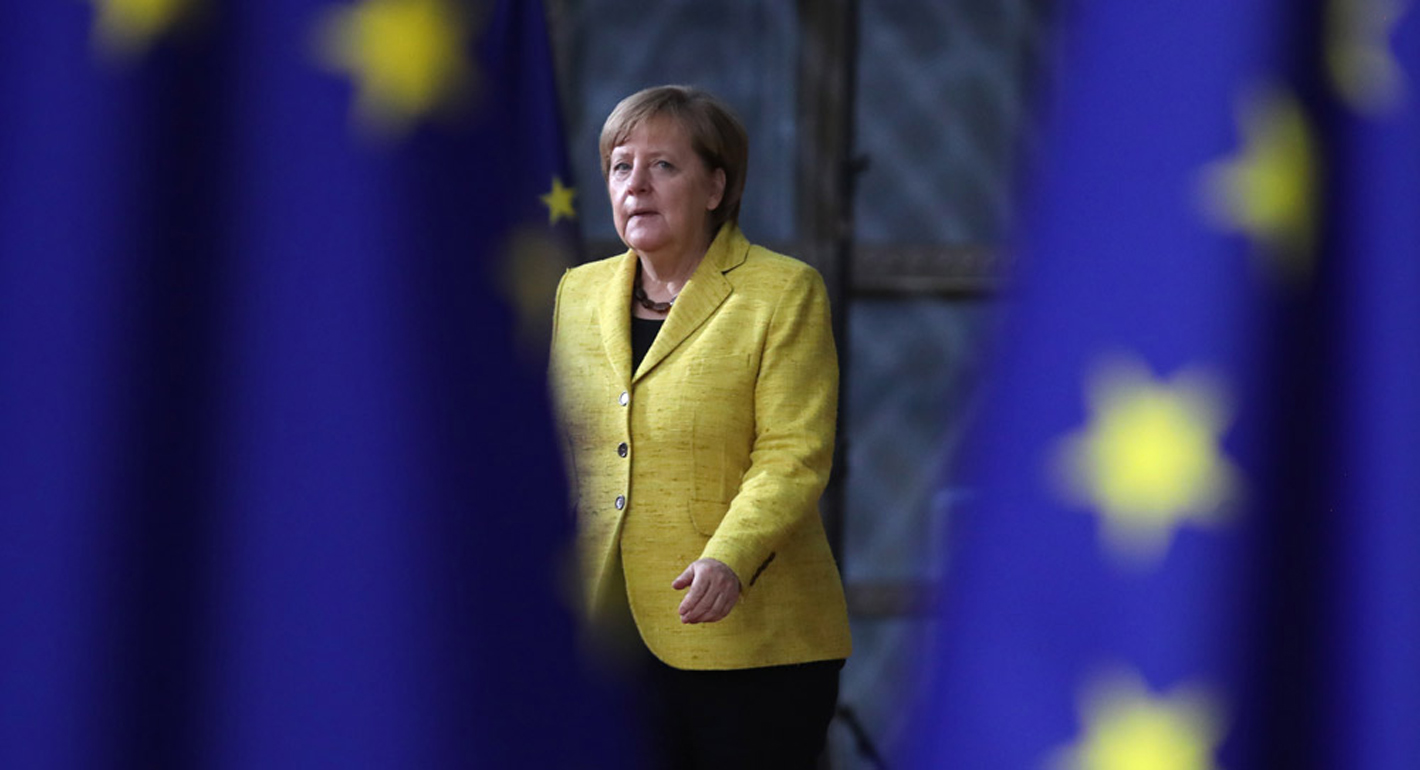
Source: Getty

In The Media
Carnegie Europe

What Angela Merkel’s Departure Means for Germany and Its Allies

Merkel’s decisions to step down as leader of her party and to not run for reelection in 2021 will have repercussions for Germany, Europe, and the transatlantic relationship.

Link Copied
By Judy Dempsey
Published on Oct 31, 2018
Program mobile hero image

Program

Europe

The Europe Program in Washington explores the political and security developments within Europe, transatlantic relations, and Europe’s global role. Working in coordination with Carnegie Europe in Brussels, the program brings together U.S. and European policymakers and experts on strategic issues facing Europe.

Learn More

Source: Axios

German Chancellor Angela Merkel’s decisions to step down as leader of the Christian Democratic Union (CDU) party in December and to not run for re-election in 2021 will have repercussions for Germany, Europe and the transatlantic relationship.

The big picture: Merkel’s leadership has been marked by her commitments to decency, multilateralism and diplomacy. Even in the face of the far-right-wing Alternative für Deutschland (AfD), Germany's center will still hold, but her replacement will probably shift the CDU rightward.

Domestic politics will dominate Germany in the coming months.The CDU has been thrown into a leadership struggle to be settled in December.

  • Merkel herself will probably be spared criticism over her party leadership and her 2015 decision to allow 1 million refugees to enter Germany. But her successor will be charged with the difficult task of uniting the party, giving it some direction and winning back voters who defected to the anti-immigrant AfD.
  • If a new leader shifts the CDU further to the right, the party will risk losing voters to the Greens, the center-left environmentalist party that currently opposes the federal parliament and has been attracting disappointed voters.

Merkel has been a linchpin for the EU, keeping it united during the euro crisis and pushing all 28 member states to impose sanctions on Russia after its illegal 2014 annexation of Crimea and invasion of eastern Ukraine.

  • Merkel will still hold sway after December, but her authority will no doubt diminish.
  • Several EU leaders think it’s time to reconsider the sanctions.
  • Finally, unless Merkel has a change of heart, French President Emmanuel Macron can forget about winning support from Berlin for his ambitious reforms to further economically and politically integrate the EU. Merkel has so far kept Macron and the EU in waiting mode.

The transatlantic alliance will also be tested. There are two trends running throughout Europe:

  • An anti-Trump sentiment that feeds into anti-Americanism, particularly from left-wing parties.
  • A pro-Trump camp comprising populist and nationalist movements that embrace anti-immigrant and anti-globalist policies. It’s not surprising they have sympathies with Trump, who criticized Merkel’s support of refugees, free trade and the Iran nuclear deal.

What’s next: Unless Merkel feels liberated from the daily management of the CDU to make bold moves for Europe’s future, don’t expect any major EU integration or security initiatives from Berlin — at least not before European parliamentary elections are held next spring and a new European Commission has been chosen.

This article was originally published by Axios.

About the Author

Judy Dempsey

Nonresident Senior Fellow, Carnegie Europe

Dempsey is a nonresident senior fellow at Carnegie Europe

    Recent Work

  • Commentary
    Europe Needs to Hear What America is Saying

      Judy Dempsey

  • Commentary
    Babiš’s Victory in Czechia Is Not a Turning Point for European Populists

      Judy Dempsey

Judy Dempsey
Nonresident Senior Fellow, Carnegie Europe
Judy Dempsey
EUEuropeWestern EuropeGermanyIran

Carnegie does not take institutional positions on public policy issues; the views represented herein are those of the author(s) and do not necessarily reflect the views of Carnegie, its staff, or its trustees.

More Work from Carnegie Endowment for International Peace

  • Commentary
    Europe Doesn’t Like War—for Good Reasons

    The wars in Ukraine and the Middle East are existential threats to Europe as a peace project. Leaders and citizens alike must reaffirm their solidarity to face up to today’s multifaceted challenges.

      Marc Pierini

  • Commentary
    Strategic Europe
    Win or Lose, Orbán has Broken Hungary’s Democracy

    Hungarians head to the polls on April 12 for an election of national and European consequence. Three different outcomes are on the cards, each with their own implications for the EU.

      Zsuzsanna Szelényi

  • Article
    Rewiring the South Caucasus: TRIPP and the New Geopolitics of Connectivity

    The U.S.-sponsored TRIPP deal is driving the Armenia-Azerbaijan peace process forward. But foreign and domestic hurdles remain before connectivity and economic interdependence can open up the South Caucasus.

      • Areg Kochinyan

      Thomas de Waal, Areg Kochinyan, Zaur Shiriyev

  • Commentary
    Diwan
    Hezbollah’s Wartime Strategy

    The party’s objectives involve tying together the Lebanese and Iranian fronts, while surviving militarily and politically at home. 

      Mohamad Fawaz

  • U.S. President Donald Trump (C) oversees "Operation Epic Fury" with (L-R) Central Intelligence Agency Director John Ratcliffe, U.S. Secretary of State Marco Rubio and White House Chief of Staff Susie Wiles at Mar-a-Lago on February 28, 2026 in Palm Beach, Florida. President Trump announced today that the United States and Israel had launched strikes on Iran targeting political and military leaders, as well as Iran’s ballistic missile and nuclear programs. (Photo by Daniel Torok/White House via Getty Images)
    Paper
    Operation Epic Fury and the International Law on the Use of Force

    Assessing U.S. compliance with the international laws of war is essential at a time when these frameworks are already fraying.

      • Federica D'Alessandra

      Federica D’Alessandra

Get more news and analysis from
Carnegie Endowment for International Peace
Carnegie global logo, stacked
1779 Massachusetts Avenue NWWashington, DC, 20036-2103Phone: 202 483 7600Fax: 202 483 1840
  • Research
  • Emissary
  • About
  • Experts
  • Donate
  • Programs
  • Events
  • Blogs
  • Podcasts
  • Contact
  • Annual Reports
  • Careers
  • Privacy
  • For Media
  • Government Resources
Get more news and analysis from
Carnegie Endowment for International Peace
© 2026 Carnegie Endowment for International Peace. All rights reserved.