

Commentary
Despite its flop at the box office, the film raises important questions for the climate community to answer.
Leonardo Martinez-Diaz
{
  "authors": [
    "Ariel (Eli) Levite",
    "Jonathan Shimshoni"
  ],
  "type": "other",
  "centerAffiliationAll": "dc",
  "centers": [
    "Carnegie Endowment for International Peace"
  ],
  "collections": [
    "U.S. Nuclear Policy"
  ],
  "englishNewsletterAll": "ctw",
  "nonEnglishNewsletterAll": "",
  "primaryCenter": "Carnegie Endowment for International Peace",
  "programAffiliation": "NPP",
  "programs": [
    "Nuclear Policy"
  ],
  "projects": [],
  "regions": [
    "United States"
  ],
  "topics": [
    "Security",
    "Military",
    "Foreign Policy"
  ]
}
Source: Getty
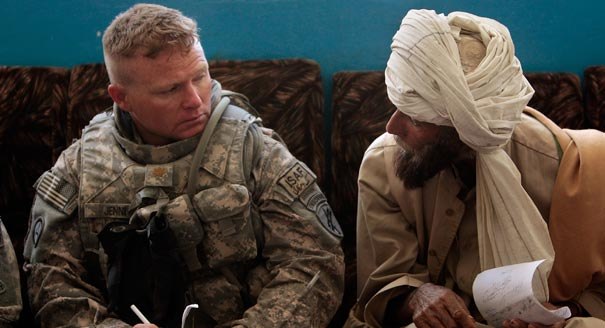
This article explores the centrality of the social dimension in contemporary conflict, examining its pivotal role in the strategies of rivals of the West, from ISIS, Hizbullah and Hamas to China and Russia, and the shortfall of Western responses.
Source: Global Politics and Strategy
Some 40 years ago, Michael Howard reminded us that strategy should comprise four dimensions – operations, technology, logistics and society. In his 1979 article for Foreign Affairs, ‘The Forgotten Dimensions of Strategy’, he chastised strategists who failed to consider all four in an integrated fashion and to identify which is dominant in a particular situation, warning that doing so could result in poorly formulated and even dangerous strategies. Howard argued that the social dimension was mostly forgotten in the twentieth century, even though Carl von Clausewitz, writing more than 200 years earlier, had underscored the importance of popular passions (‘the people’) as one of the three elements of war that together formed his ‘remarkable trinity’. The oversight is all the more noteworthy given the decisive role played by societies in shaping the outcomes of a number of strategic encounters, the war in Vietnam being a prominent twentieth-century example.
Howard's admonition came in the midst of the Cold War, at the heart of which lay strategies that threatened to annihilate all of humankind. That conflict provides a dramatic example of how technological advances (in this case, nuclear weapons) can blind the West from seriously considering the social dimension when formulating strategy. Howard's observation is no less relevant today, in a conflict environment characterised by a new set of technologies, including high-accuracy and autonomous conventional weapons, sensors, communications, computing and artificial intelligence.
While the social dimension has long been deeply ingrained in warfare and strategy, its centrality to twenty-first-century conflict has become extreme. Virtually all the actors now challenging the West – large and small, state and non-state, from al-Qaeda and Hamas to China and Russia – have adopted multifaceted strategies with society at their core. Indeed, these could be called society-centric strategies.
Those Western powers most directly engaged in military confrontation – especially the United States and Israel, but also France, the United Kingdom and other NATO members, as well as Australia – have made important adaptations to address these challenges. Yet none of them has fully come to terms with the rise of society-centric conflict. This shortfall, while understandable, can have serious unintended consequences, among them the preparation of misguided strategic assessments and the pursuit of impractical goals, resulting in unmet expectations, frustration, and civil–military and political friction. This essay explores the evolution, manifestations and logic of society-centric warfare, and reflects on its implications for apposite Western strategy formulation.
This article was originally published in Global Politics and Strategy

Senior Fellow, Nuclear Policy Program, Technology and International Affairs Program
Levite was the principal deputy director general for policy at the Israeli Atomic Energy Commission from 2002 to 2007.
Jonathan Shimshoni
Massachusetts Institute of Technology
Jonathan (Yoni) Shimshoni served for 25 years with the IDF, in both field command and staff positions, culminating his career as Director of Planning for the Planning Division (J-2) with the rank of Brigadier General. He received his Ph.D. in Public Policy from the Woodrow Wilson School at Princeton, with a specialty in security policy. Yoni has taught at Princeton and has pursued research on strategic issues at MIT; he has published within the Cornell Studies in Security Affairs and in International Security on conventional deterrence, technology and doctrinal innovation, as well as in the leading Israeli daily (“Haaretz”). Yoni has served on several committees of the Israeli National Security Council and in the IDF reserves has continued to work extensively on challenging security issues – related to economics, technology, strategy and doctrine. In addition to these security and policy related endeavors, Yoni was Managing Partner of PWC Consulting in Israel and has led the establishment and management of a start-up company. He will be spending this coming year (2018-19) at the Woodrow Wilson Center in Washington, continuing research begun at SSP on societal warfare in the 21st century.
Carnegie does not take institutional positions on public policy issues; the views represented herein are those of the author(s) and do not necessarily reflect the views of Carnegie, its staff, or its trustees.

Despite its flop at the box office, the film raises important questions for the climate community to answer.

Leonardo Martinez-Diaz

Funding Ukraine remains a priority for European leaders. As Russia’s war of aggression heads into another winter, two feasible options to mobilize support for Kyiv should be fast-tracked.


Vladyslav Rashkovan, Gregory P. Wilson

Russian strikes are weakening the economy sustaining Ukraine’s war effort. Closing the growing funding gap will require more European support and politically contentious reforms in Kyiv.

Balázs Jarábik

In an interview, Rozina Ali discusses her new book on the rise and manifestations of Islamophobia in the United States.

Michael Young

While the EU and European governments are embracing the much-lauded middle-power moment, this entails three difficult conundrums.

Richard Youngs