

Commentary
- +5
Zaha Hassan, Sarah Yerkes, Yasmine Farouk, …
{
  "authors": [
    "Federiga Bindi"
  ],
  "type": "legacyinthemedia",
  "centerAffiliationAll": "dc",
  "centers": [
    "Carnegie Endowment for International Peace"
  ],
  "collections": [
    "European Foreign Policy in a New Transatlantic Context"
  ],
  "englishNewsletterAll": "ctw",
  "nonEnglishNewsletterAll": "",
  "primaryCenter": "Carnegie Endowment for International Peace",
  "programAffiliation": "EP",
  "programs": [
    "Europe"
  ],
  "projects": [],
  "regions": [
    "North America",
    "United States",
    "Western Europe",
    "United Kingdom",
    "Iran"
  ],
  "topics": [
    "Security",
    "Foreign Policy",
    "Global Governance"
  ]
}
Source: Getty
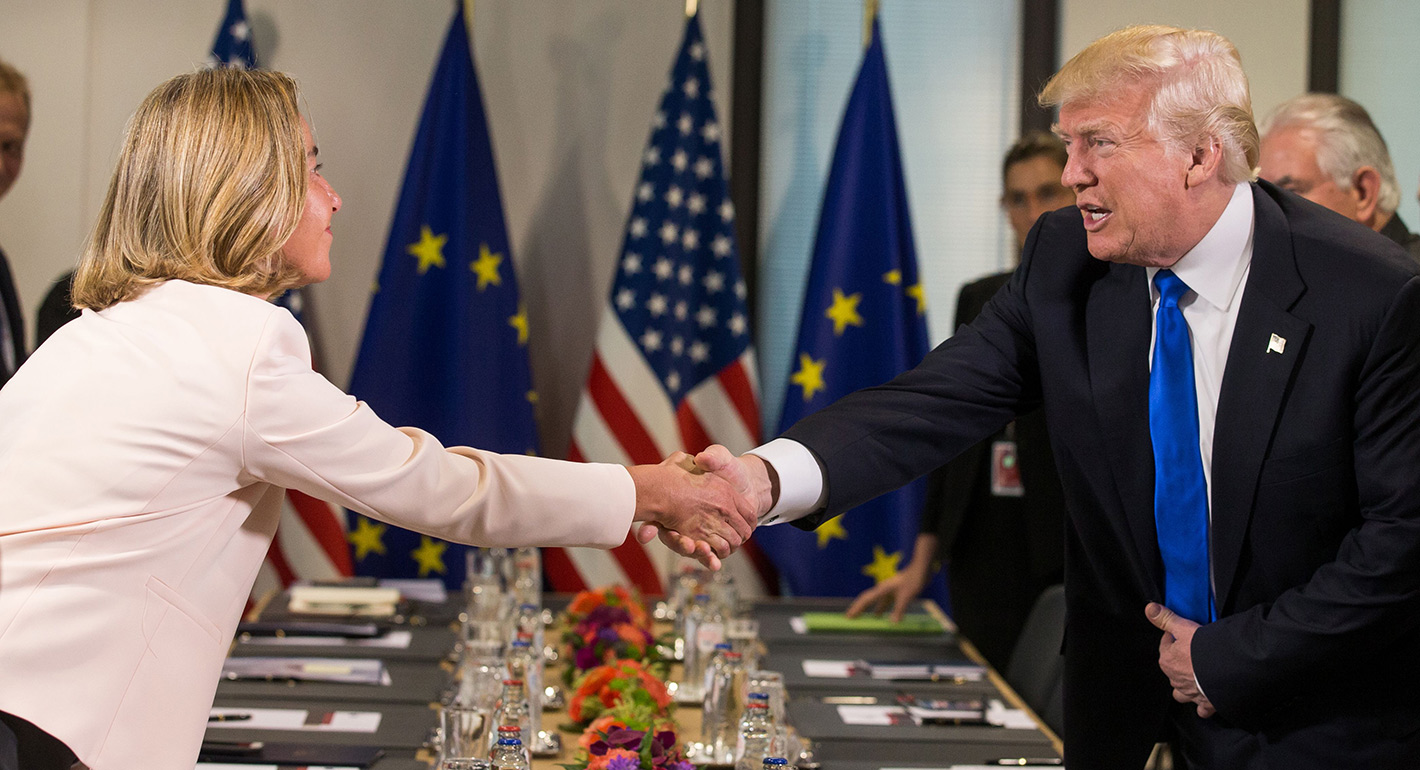
The UK has traditionally played a prominent role in European defense, serving as the bridge to Washington. The combined effect of Brexit and Trump will created new challenges and consequently new opportunities.
Source: eSharp
Back from his last European trip, President Donald Trump tweeted against President Emanuel Macron for supporting a strengthened European security cooperation. Washington seems to have finally taken notice that the European Union is reinforcing its defense and security cooperation. The current US administration has neglected the EU, in the assumption that Brexit would jeopardize it. They in fact did not realize how, without London, the US’ leverage on the EU will dramatically decrease, leaving Brussels finally able to strengthen in defense and security.
The UK has traditionally played a prominent role in European defense, serving as the bridge to Washington. When France launched the idea of a European Defense Community (EDC), including a European army, but then failed to ratify the treaty, the UK proposed to transform the Brussels Pact into the Western European Union (WEU), consequently including Germany in NATO. The US was meanwhile pushing for the UK to join the EEC. That finally happened in 1973, just about when the Europeans started to cooperate in foreign policy, with the European Political Cooperation (EPC).
The fall of the Berlin Wall - interpreted in the US as a victory against the USSR - made the Europeans agree that a reunited German was to be embedded in a more integrated European Community, including in particular a common currency and a common foreign and defense. However, Operation Desert Storm (1991) divided the Europeans, opposing London to the others. The Maastricht Treaty’s (1992) ended up creating the Common Foreign and Security Policy (CFSP), a far less integrated policy than initially proposed, much to Washington’s relief.
As the Europeans started talking about a European security and defense identity (ESDI), Bill Clinton – who just like his predecessors wanted the Europeans to pay more but opposed any EU defense pact rivaling NATO - pushed for speedy NATO enlargement to the East. Madeline Albright led the charge with her “three Ds”: no decoupling (of European Security and Defense Policy from NATO); no duplication (of capabilities); and no discrimination (against non-NATO members).
In June 1999, the EU announced its decision to absorb the WEU into a new European Security and Defense Policy. The former NATO General Secretary, Javier Solana, was appointed Secretary General of the WEU, and High Representative for the Common Foreign and Security Policy (CFSP). In December 2002, NATO and the EU negotiated “Berlin Plus,” an agreement governing the sharing of assets between the EU and NATO for crisis management and peacekeeping operations.
Following 9.11, the George W. Bush administration went quickly at odds with the European allies on issues such as missile defense, climate change, and relations with Russia and the Balkans. The Anglo-American attack on Iraq in 2003 created deep divisions among Europeans – opposing in particular French President Jacques Chirac and British Prime Minister Tony Blair. Trying to bring reconciliation, in December 2003, the EU agreed on a European Security Strategy entitled “A Secure Europe in a Better World.” France, Germany, Belgium, and Luxembourg also proposed the creation of an independent EU civil-military planning cell outside of the NATO framework. The UK opposition made it only possible for the creation of a small planning cell of 30-something people within the EU Military Staff in Brussels. An independent military HQ for the EU was again proposed in 2008 and 2011, but both times it was stopped by a British veto.
One of the outcomes of the Strategy, was the European Defense Agency (EDA, 2004). Then, in December 2007, the Lisbon Treaty was signed, creating the High Representative for European Union Foreign Affairs and Security Policy (EUHR) and an EU diplomacy called the European External Action Service (EEAS). Soon afterward, London and Paris signed the Lancaster House Treaties (2010) to save on new armament programmes by pooling existing equipment, resources, and training infrastructures. However, a key rationale for the British government was to develop regional defense ties outside the EU. In fact, British governments had been gradually disengaging from the CSDP (especially the EDA) since the mid-2000s, while constantly recalling the centrality of NATO and the “Special Relationship” with Washington as the cornerstones of the UK’s security.
In 2012, eleven EU Member States (Austria, Belgium, Denmark, France, Germany, Italy, Luxembourg, Netherlands, Poland, Portugal and Spain) called for a new defense policy, including a European Army and more majority-based decisions in defense and foreign policy (in order to “prevent one single member state from being able to obstruct initiatives”), as well as a new military structure for EU-led operations. Once again, the British Prime Minister David Cameron announced his veto on any increased EU role in coordinating defense.
However, as the Brexit referendum shocked the EU and weakened London, security and defense were used as a pivot for relaunch by the European Commission. The EU Global Strategy was officially presented a few days after the referendum. An EU-NATO Joint Declaration, relaunching EU-NATO cooperation, was signed a couple of weeks after. In September 2016, EU Commission President Jean-Claude Juncker called for a European Defense Fund. Despite London’s opposition, this time the EU ministers agreed to move forward in the field of defense, and approved the Implementation Plan on Security and Defense in November 2016. In June 2017, the Commission launched the European Defence Fund and proposed a regulation on the European Defence Industrial Development Programme (EDIDP).
Most notably, in December 2017, twenty-five member states (all but the United Kingdom, Denmark, and Malta) agreed to create a Permanent Structured Cooperation (PESCO) on security and defense and soon afterward adopted a roadmap for its implementation. By providing enhanced coordination and collaboration in the areas of investment, capability development, and operational readiness, PESCO will reinforce the EU’s strategic autonomy to act alone and will act as a catalyst for the European defense industry, making of the EU one of the biggest defense research investors. With PESCO injecting substantial funding in European defense procurement and R&D, US military goods exports to Europe may substantially decrease in the mid and long term. Distracted by its domestic drama, Washington did not take notice.
Together, the U.K. and the U.S. have constantly advocated for more NATO, rather than more EU security. The combined effect of Brexit and of Trump’s neglect for Brussels, have created new challenges - and consequently new opportunities - which the EU was quick to grab. For the last seventy years, the Europeans have tried to integrate in security and defense. While the failure of the EDC was a French-Italian affair, any subsequent attempt to integrate was stopped by London, acting in parallel with Washington. Trump’s reaction was late and, most of all, counter-effective. This time, several factors suggest that the EU may be able to achieve its goals.
The approach that the EU is using for PESCO is pragmatic and shares many similarities with the one successfully employed for the Single Market: eliminate waste, costs and useless duplications in intra-European trades, while increasing efficiency. Yet the Single Market could have not been achieved without Jacques Delors, or without the support he enjoyed from France. In her speech at the European Parliament, Angela Merkel vigorously supported a strengthened European defense. But Germany has always been lukewarm in taking direct responsibilities in EU defense (and defense in general) and Merkel will soon be gone. In fact, whether the EU will be successful in the field of security and defense, it will ultimately depend on what France will do. In particular, much will depend on who will be the new EUHR.
According to Macron: “Europe can no longer rely solely on the United States for its security. We must guarantee our own security and sovereignty.” As the only EU nuclear power and UN Security Council Permanent Member after Brexit, France has a vested interest in promoting EU defense and security, as this will amplify its role and influence in world affairs, a goal France has never ceased to pursue. With Brexit, France will recuperate in the security domain the prominent role it had in the early days of European integration. However, just like in 1954 France destroyed its own brainchild, one can never be sure of what Paris’ next moves will be.
Former Nonresident Scholar, Europe Program
Federiga Bindi was a nonresident scholar in the Europe Program at the Carnegie Endowment for International Peace working on European politics, EU foreign policy, and transatlantic relations.
Recent Work


Zaha Hassan, Sarah Yerkes, Yasmine Farouk, …
Federiga Bindi
Carnegie does not take institutional positions on public policy issues; the views represented herein are those of the author(s) and do not necessarily reflect the views of Carnegie, its staff, or its trustees.
A leak of Russian gas price data helps establish that China is paying Russia far less than Central Asian countries and Gazprom’s former European customers.

Sergey Vakulenko

The EU can impose sanctions but struggles to enforce them without the United States. With Washington increasingly disinterested in backing European interests, the bloc must now fend for itself.


Nicu Popescu, Tiago Antunes
Global and rising powers will need to engage with Africa’s priorities and agency in order to secure the continent’s increasingly attractive partnerships.

Fonteh Akum
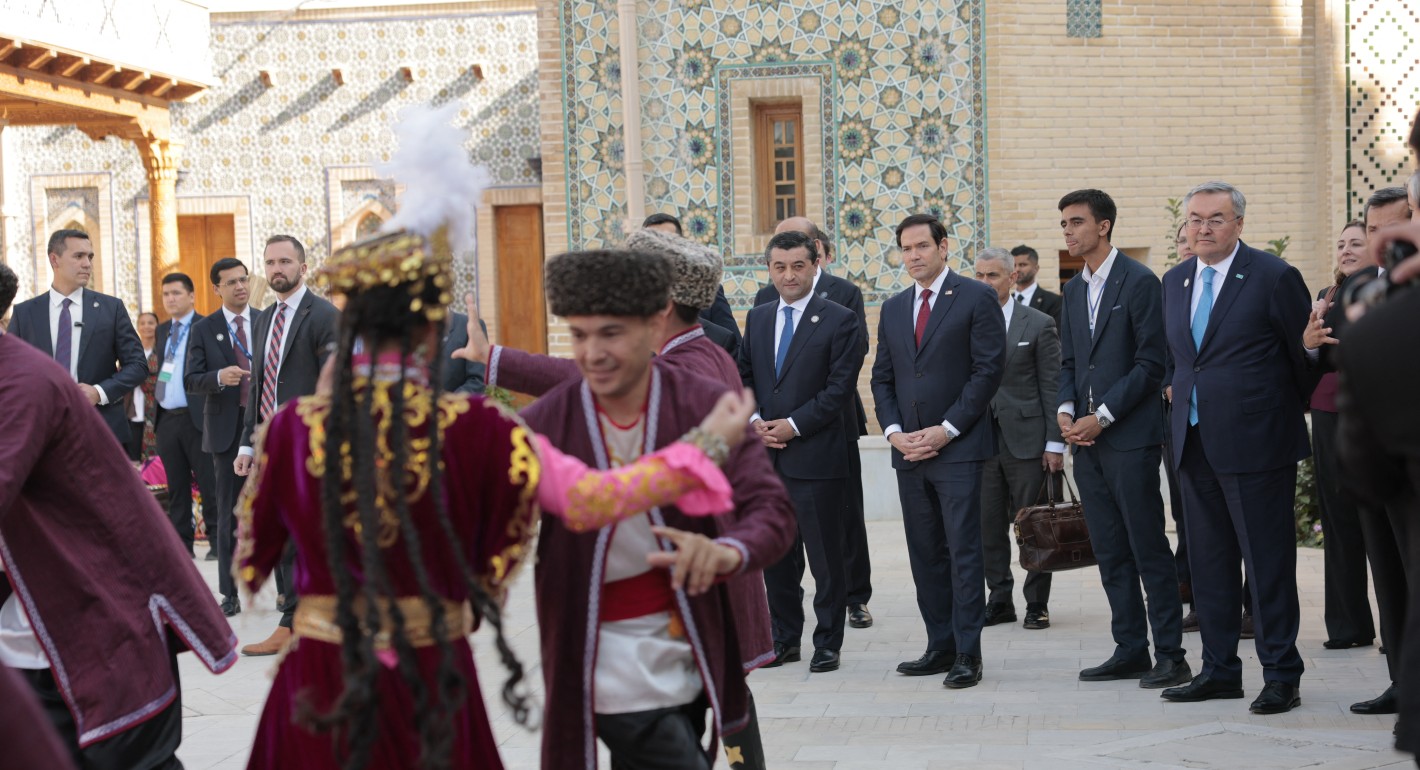
Rubio’s recent visit brought welcome attention, but more capital requires governance changes that may be a hard sell for regional governments.

Jennifer B. Murtazashvili

America’s foreign-policy objectives have grown more demanding while Americans have demanded greater focus on their own affairs.
Stephen Wertheim