

Commentary
Trump has promised Belarus a massive potash deal. But Minsk is seeking something greater: restored Western transit and greater room for maneuver from Russia.
Balázs Jarábik
{
  "authors": [
    "Richard Sokolsky",
    "Aaron David Miller"
  ],
  "type": "legacyinthemedia",
  "centerAffiliationAll": "",
  "centers": [
    "Carnegie Endowment for International Peace",
    "Malcolm H. Kerr Carnegie Middle East Center"
  ],
  "collections": [],
  "englishNewsletterAll": "",
  "nonEnglishNewsletterAll": "",
  "primaryCenter": "Carnegie Endowment for International Peace",
  "programAffiliation": "",
  "programs": [],
  "projects": [],
  "regions": [
    "North America",
    "United States",
    "Middle East",
    "Syria",
    "Levant"
  ],
  "topics": [
    "Political Reform",
    "Security",
    "Military",
    "Foreign Policy"
  ]
}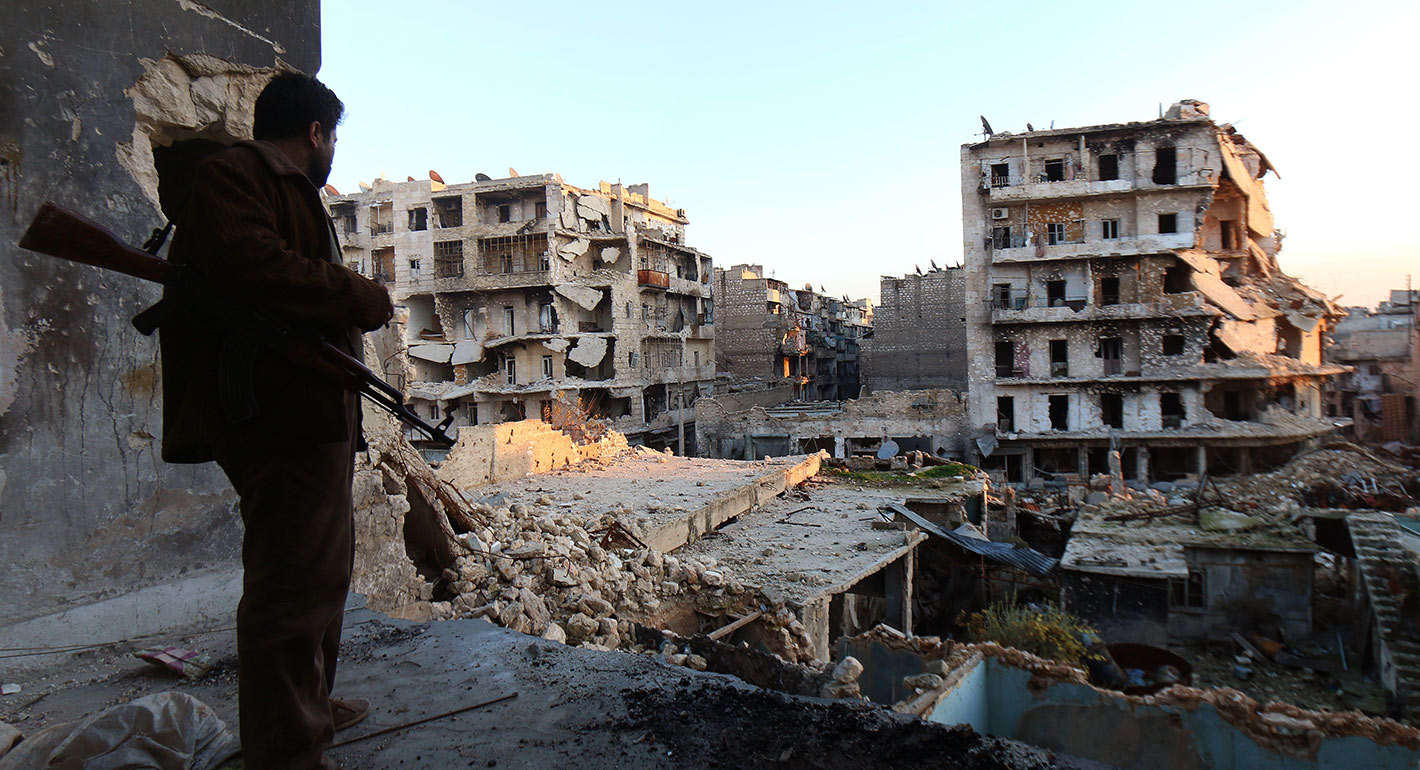
Source: Getty
Although the president’s failure to consult with Congress and allies in making the decision to withdraw from Syria was diplomatic malpractice, critics’ fears about the withdrawal are overblown.
Source: Los Angeles Times
Much of America’s foreign policy establishment, on both the right and the left, has been in an uproar over President Trump’s decision to withdraw 2,000 U.S. troops from Syria. If Trump’s critics are to be believed, it amounts to one of the worst foreign policy blunders in American history, a catastrophe for the nation’s interests and influence in the Middle East. Although the president’s failure to consult and coordinate with Congress and allies in making the decision was a head-spinning case of diplomatic and political malpractice, on balance, critics’ fears about the withdrawal are overblown.
Here are five reasons why.
Islamic State now controls 1% of the territory it once held in Syria and Iraq. It has lost thousands of fighters and recruitment is down. Syria is not Iraq in 2011, where Islamic State militants advanced when there were no countervailing forces. The group’s fighters still confront thousands of determined Kurdish forces, and Syria, Iran, Israel, Turkey and Russia share a common interest in preventing an Islamic State resurgence. Jihadist attacks in northeast Syria will continue and could certainly contribute to keeping Syria unstable. But a continued U.S. military presence won’t change that, or eliminate the risk of a terrorist attack on the United States. Wiping out Islamic State was never realistic — the political, economic and sectarian grievances that inspire its fighters cannot be eliminated by military means alone, and the Trump administration refuses to invest in the kind of stabilization efforts that might address those issues.
It’s true that the foothold that Iran and its Lebanese proxy, Hezbollah, have established in Syria threatens Israeli security. But Israel is capable of defending itself and is doing so by attacking Iranian and Hezbollah targets in Syria. “Our enemies understand our intelligence and air superiority,” said the Israel Defense Forces chief of staff after Trump’s announcement.
As for the Kurds, U.S. officials always made it clear that Washington viewed its partnership with these fighters as transactional, temporary and tactical. It simply isn’t in U.S. interests to help carve out the autonomous enclave the Kurds seek in northeast Syria. That fight could lead to a direct military confrontation with Syrian President Bashar Assad’s forces or with our NATO ally Turkey, which sees the Syrian Kurds, allied as they are with the militant Kurdistan Workers Party, or PKK, as a mortal enemy. The major actors, including Turkey, have an interest in avoiding an all-out battle with the Kurds, who, in the wake of Trump’s decision, have begun to seek reconciliation with the Assad regime.
The United States doesn’t have vital interests in Syria. This was true under President Obama just as it is under Trump. Yes, the Syrian war is a proxy conflict between the U.S. and Iran and Russia, and yes the war has had a horrific toll — hundreds of thousands of civilians killed, a massive refugee crisis, whole cities destroyed, terrorists sent around the world — but neither the White House, Congress nor the American public, after protracted wars in Iraq and Afghanistan, support a huge military and economic investment in Syria.
Syria is not a major source of oil. It does not pose an existential threat to Israel. The terrorist threat it poses to the United States has been inflated and is better handled by means other than military action. The country is so broken and dysfunctional that neither Russia nor Iran will be able to use its influence there as a springboard to establish hegemony in the Middle East.
Iran and Russia will dominate Syria as they have done for years. Both countries have always had a greater strategic stake in Syria than the U.S. and thus were more willing to accept a high price to protect their interests there. Now both will struggle with the difficulties of pacifying and reconstructing a war-torn state. With American forces in place, Putin and the Iranians could leave some of the dirty work of confronting the remnants of Islamic State to Washington; no longer. And with the U.S., a common adversary, gone, tensions between Iran and Russia could rise. The more Syria becomes a burden for Russia and Iran, the better for the United States.
Any damage to the U.S. stems from our own reckless rhetoric and confused policy in Syria — we never committed to ousting Assad, pushing out Iran or helping the Syrian Kurds realize their political goals. Other U.S. allies and partners will judge America’s support based on how the U.S. responds to them individually, not on how Washington has behaved in a country where it has no vital interests.
Two U.S. presidents have failed to come up with an effective policy toward Syria and the Syrian civil war. Withdrawing 2,000 U.S. forces from a battlefield in which other powers have the will and resources to prevail may make Syria even messier than it is now. But keeping U.S. military forces in place with no serious, long-term strategy or attainable objectives to guide them would not make the situation significantly better. Syria was never America’s to win or lose, and getting out now is not a catastrophe.
This article was originally published in the Los Angeles Times.

Nonresident Senior Fellow, Russia and Eurasia Program
Richard Sokolsky is a nonresident senior fellow in Carnegie’s Russia and Eurasia Program. His work focuses on U.S. policy toward Russia in the wake of the Ukraine crisis.

Senior Fellow, American Statecraft Program
Aaron David Miller is a senior fellow at the Carnegie Endowment for International Peace, focusing on U.S. foreign policy.
Carnegie does not take institutional positions on public policy issues; the views represented herein are those of the author(s) and do not necessarily reflect the views of Carnegie, its staff, or its trustees.

Trump has promised Belarus a massive potash deal. But Minsk is seeking something greater: restored Western transit and greater room for maneuver from Russia.

Balázs Jarábik

Before the next wave of EU enlargement takes place, the union needs to grapple with thorny questions of how power is distributed among its members.


Emil Sondaj Hansen, Ditte Brasso Sørensen

The real test may come after the leaders leave the room.



Sheena Chestnut Greitens, Oriana Skylar Mastro, Yukon Huang, …

The Horn of Africa countries are among those facing a new security calculus.


Andrew Leber, Lesley Anne Warner

The European far right might fail to steer EU policy in the direction Russia wants, but they will create enough chaos inside Europe to benefit the Kremlin.

Dimitar Bechev