

Paper
- +3
Rajesh Bansal, Anirudh Burman, Rudra Chaudhuri, …
{
  "authors": [
    "Srinath Raghavan"
  ],
  "type": "legacyinthemedia",
  "centerAffiliationAll": "",
  "centers": [
    "Carnegie Endowment for International Peace",
    "Carnegie India"
  ],
  "collections": [],
  "englishNewsletterAll": "",
  "nonEnglishNewsletterAll": "",
  "primaryCenter": "Carnegie India",
  "programAffiliation": "",
  "programs": [],
  "projects": [],
  "regions": [
    "United States",
    "South Asia",
    "India"
  ],
  "topics": [
    "Foreign Policy"
  ]
}
Source: Getty
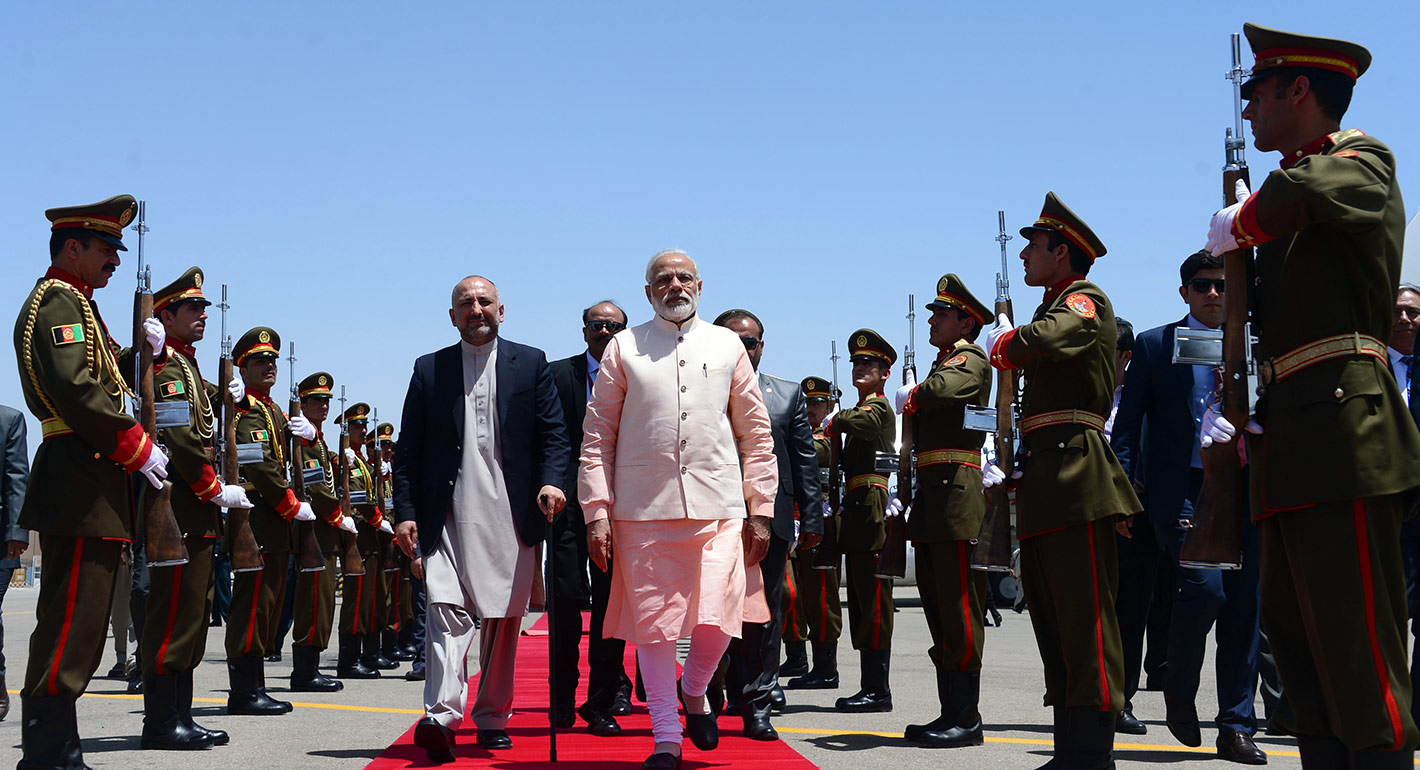
Instead of reacting with injured innocence, New Delhi should undertake a clear-eyed appraisal of the situation in Afghanistan as well as its own approach.
Source: Print
U.S. President Donald Trump’s mocking comments on India’s contributions to Afghanistan have elicited sharp responses. Spokespersons of the BJP and the Congress took to Twitter, pointing out the scale, range and significance of India’s developmental assistance to the war-ravaged country. All this is true, but beside the point. Trump’s comments and the underlying stance towards Afghanistan underscore the extent to which the Modi government’s policy on Afghanistan has been based on wishful thinking. Instead of reacting with injured innocence, New Delhi should undertake a clear-eyed appraisal of the situation in Afghanistan as well as its own approach.

Nonresident Senior Fellow
Srinath Raghavan is a nonresident senior fellow at Carnegie India. His primary research focus is on the contemporary and historical aspects of India’s foreign and security policies.
Recent Work


Rajesh Bansal, Anirudh Burman, Rudra Chaudhuri, …
Srinath Raghavan
Carnegie does not take institutional positions on public policy issues; the views represented herein are those of the author(s) and do not necessarily reflect the views of Carnegie, its staff, or its trustees.

In an interview, Ian Lustick and Eli Clifton discuss their new book on why a prominent ally has so much influence in America.

Michael Young

Germany, India, and other middle powers can’t build frontier AI alone, and they risk being cut off if they depend on the United States or China. The way through is to build the capacity for a frontier sprint while hoping never to use it.


Anton Leicht, Sam Winter-Levy

Trump has promised Belarus a massive potash deal. But Minsk is seeking something greater: restored Western transit and greater room for maneuver from Russia.

Balázs Jarábik

The real test may come after the leaders leave the room.



Sheena Chestnut Greitens, Oriana Skylar Mastro, Yukon Huang, …

The Horn of Africa countries are among those facing a new security calculus.


Andrew Leber, Lesley Anne Warner