

Commentary
European Commission President Ursula von der Leyen is about to give her annual address on the state of the EU. Here’s what she won’t—but should—say.
Rym Momtaz
{
  "authors": [
    "Richard Sokolsky",
    "Yuri Lee"
  ],
  "type": "legacyinthemedia",
  "centerAffiliationAll": "",
  "centers": [
    "Carnegie Endowment for International Peace"
  ],
  "collections": [],
  "englishNewsletterAll": "",
  "nonEnglishNewsletterAll": "",
  "primaryCenter": "Carnegie Endowment for International Peace",
  "programAffiliation": "",
  "programs": [],
  "projects": [],
  "regions": [
    "North America",
    "United States",
    "East Asia",
    "South Korea",
    "North Korea"
  ],
  "topics": [
    "Nuclear Policy",
    "Arms Control",
    "Global Governance",
    "Foreign Policy"
  ]
}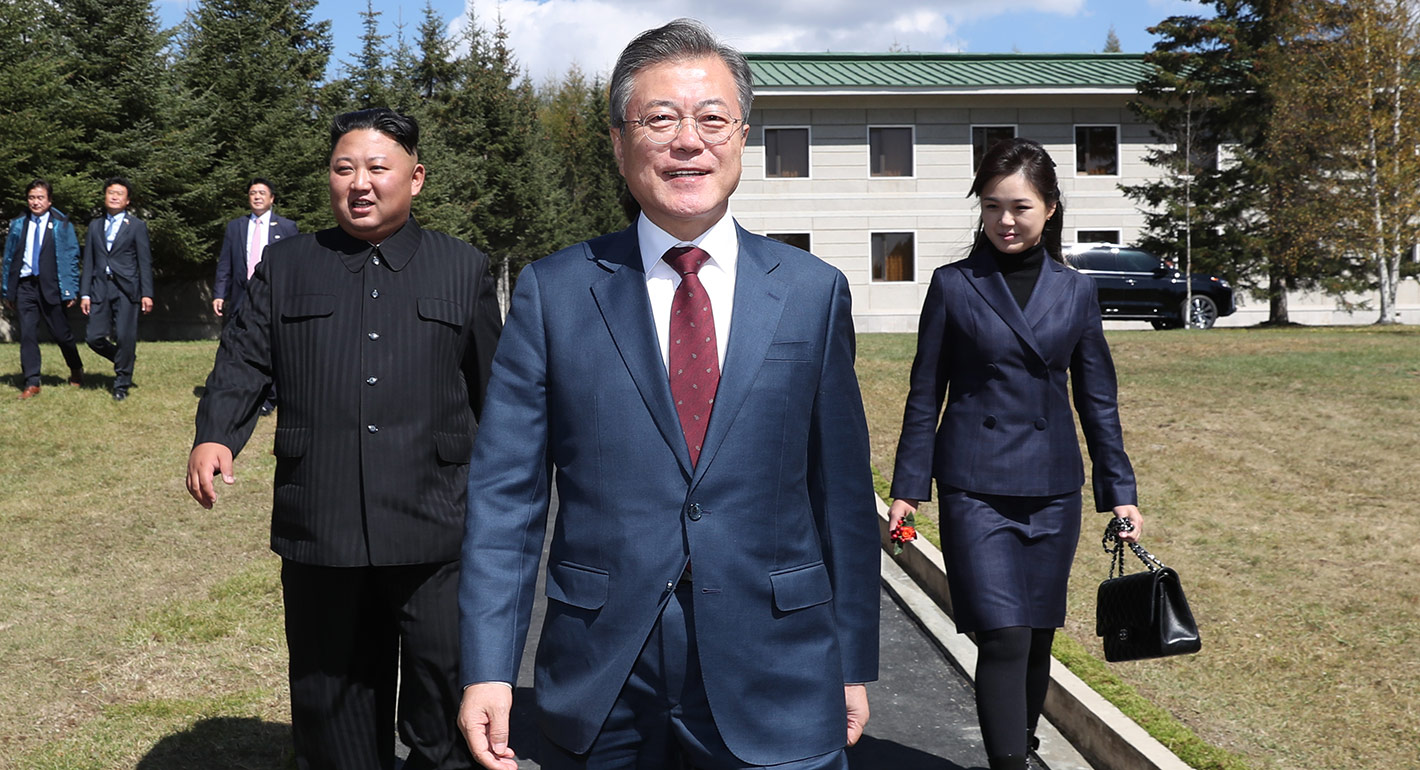
Source: Getty
In the event a peace and security regime for the Korean Peninsula leads to North Korean agreement to reduce its conventional weapons and equipment, Kim may want to convert portions of the North’s defense industries to production of civilian goods.
Source: 38 North
Kim Jong Un is committed to North Korea’s economic development and has prioritized this goal over military modernization. In the event a peace and security regime for the Korean Peninsula leads to North Korean agreement to reduce its conventional weapons and equipment, Kim may want to convert portions of the North’s defense industries to production of civilian goods. Re-purposing these facilities for civilian uses could give a boost to North-South normalization and reconciliation as well as present opportunities for closer North-South economic cooperation and possibly multinational participation in the conversion program. To date, Pyongyang and Seoul have not given much thought to cooperative North Korean defense conversion. But if inter-Korean relations move forward this subject could assume greater importance on their agenda for normalization and reconciliation.

Nonresident Senior Fellow, Russia and Eurasia Program
Richard Sokolsky is a nonresident senior fellow in Carnegie’s Russia and Eurasia Program. His work focuses on U.S. policy toward Russia in the wake of the Ukraine crisis.
Yuri Lee
Yuri Lee is a research freelancer supporting 38 North Director Joel Wit. Prior to her freelance work, she was a Research and Program Intern at the US-Korea Institute at Johns Hopkins School of Advanced International Studies. She currently works at Asian Americans Advancing Justice, a legal advocacy nonprofit dedicated to protecting the rights of immigrant communities and communities of color. She holds a B.A. in History from Dartmouth College.
Carnegie does not take institutional positions on public policy issues; the views represented herein are those of the author(s) and do not necessarily reflect the views of Carnegie, its staff, or its trustees.

European Commission President Ursula von der Leyen is about to give her annual address on the state of the EU. Here’s what she won’t—but should—say.

Rym Momtaz

Understanding the climatic pain points is necessary for policymakers hoping to minimize the war’s negative environmental consequences.



Alejandro Martin Rodriguez, Joy Arkeh, Sarah Yerkes

Huawei pushed hard to enter the Egyptian data centers market, until the Americans made a better offer.

Angie Omar

Radical-right parties are expected to do well in upcoming elections in four of the EU's biggest member states. If successful, they could prevent the union from addressing key challenges ahead.

Stefan Lehne

The books, podcasts, and films that explain the world it made.

Andrew Leber