

Commentary
Ulrich Kühn
{
  "authors": [
    "Ulrich Kühn"
  ],
  "type": "other",
  "centerAffiliationAll": "dc",
  "centers": [
    "Carnegie Endowment for International Peace"
  ],
  "collections": [],
  "englishNewsletterAll": "ctw",
  "nonEnglishNewsletterAll": "",
  "primaryCenter": "Carnegie Endowment for International Peace",
  "programAffiliation": "NPP",
  "programs": [
    "Nuclear Policy"
  ],
  "projects": [],
  "regions": [],
  "topics": [
    "Nuclear Policy"
  ]
}
Source: Getty
Policymakers are under the false impression that they are coming too late and that there is no time for regulating new dual-use technologies. But that impression is misleading.
Source: EU Non-Proliferation and Disarmament Consortium
IFSH Hamburg has a rich history of researching arms control and dual-use technologies – one that dates back to the early 1970s. Now, with the financial support of the German Foreign Office we are able to significantly expand our research and tackle such diverse topics as autonomous weapons, cyber security or artificial intelligence. We just hired eight senior researchers from three different continents. For me, the big question is how to steer the potential impact of those enabling technologies on peace and security in the 21st century, and to do so in a cooperative fashion. Aside from emerging technologies, we are trying to help overcome the deep crisis in arms control policies by developing new concepts for verification and negotiation. My goal is to establish a “Hamburg School” of thought on all these issues so that Hamburg becomes a leading hub for innovative and creative thinking on arms control and emerging technologies.
To be honest, we do not know yet. Some technologies, such as additive manufacturing might have a far-ranging impact on work procedures comparable to the assembly line but may also have only marginal ramifications in the realm of nonproliferation. Other technologies such as machine learning might provide the basis for fully autonomous weapons systems that could significantly change how humanity thinks about and conducts war. Then again, certain technologies such as hypersonic glide vehicles might only occupy a niche in military planning. What I do not like is the current hype around emerging tech. Technologies have always emerged and we have seen many technological leaps forward. We have also seen technologies stagnating for decades – AI being one example. Perhaps most importantly, policy-makers are under the false impression that they are coming too late and that there is no time for regulating new dual-use technologies. But that impression is misleading. It took states over 40 years to come up with a regulatory frame for missiles – the Missile Technology Control Regime. Sometimes political processes simply take time.
There are a couple of things the EU can do, both in the realm of regulating as well as advancing emerging technologies. The Commission’s Horizon 2020 “Future and Emerging Technologies” programme for instance aims at supporting Europe’s science base by funding specific projects on nanotechnologies, quantum technologies and others. Here, more and sustained funding could help Europe close the gap with players
such as the United States and China. At the same time, export control mechanisms need to be taken seriously. They have to be inclusive and streamlined – and by inclusive I mean industry has to be on board and early on. The difficulty will be finding the sweet spot between regulating the dual-use character of certain enabling technologies and at the same time benefitting from those technologies, in both the civilian and military realms.
This interview was originally published by the EU Non-proliferation and Disarmament Consortium.

Former Nonresident Scholar, Nuclear Policy Program
Ulrich Kühn was a nonresident scholar at the Carnegie Endowment for International Peace, and the head of the arms control and emerging technologies program at the Institute for Peace Research and Security Policy at the University of Hamburg.
Recent Work
Ulrich Kühn
Ulrich Kühn
Carnegie does not take institutional positions on public policy issues; the views represented herein are those of the author(s) and do not necessarily reflect the views of Carnegie, its staff, or its trustees.

The nuclear relationship between China and the United States is increasingly shaped by widening perception gaps rather than deliberate strategic design.

Tong Zhao

A look at why states without nuclear weapons are seeking naval nuclear propulsion, whether they can legally and technically deliver it, what it will cost them, and what responsible stewardship of the capability would look like.

Jamie Kwong
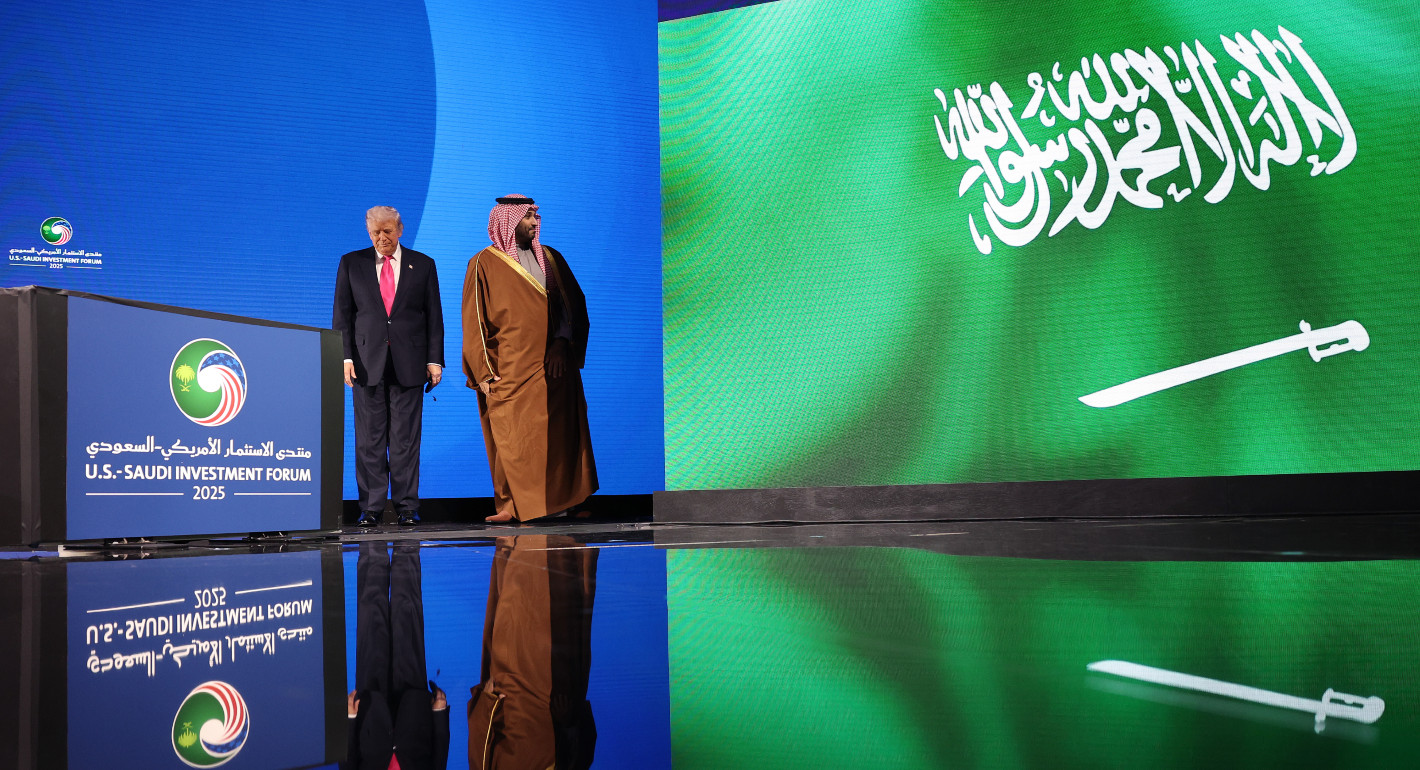
Congress should ask tough questions about the agreement’s more unique features and whether they advance U.S. interests or compromise them.

Jane Darby Menton

Nuclear and maritime communities face a long and challenging journey to deploy commercial nuclear applications at sea.

Jamie Kwong, Toby Dalton
A look at how public opinion influences the credibility of coercive nuclear threats,and how it enables and constrains strategies of nuclear coercion.

Lauren Sukin, Samuel Seitz