What to Expect From the Summit
Last year’s informal Xi-Modi summit in the Chinese city of Wuhan was largely hailed as a step in the right direction for the two Asian giants. But there are mounting doubts over what can be achieved during the upcoming meeting in India. Frictions include New Delhi’s decision to rescind Kashmir’s autonomous status, border skirmishes, and the United Nations’ listing of Masood Azhar (the leader of Jaish-e-Mohammed, that claimed by India as a militant group behind the February 2019 suicide bombing that killed Indian troops in Kashmir) as a terrorist.
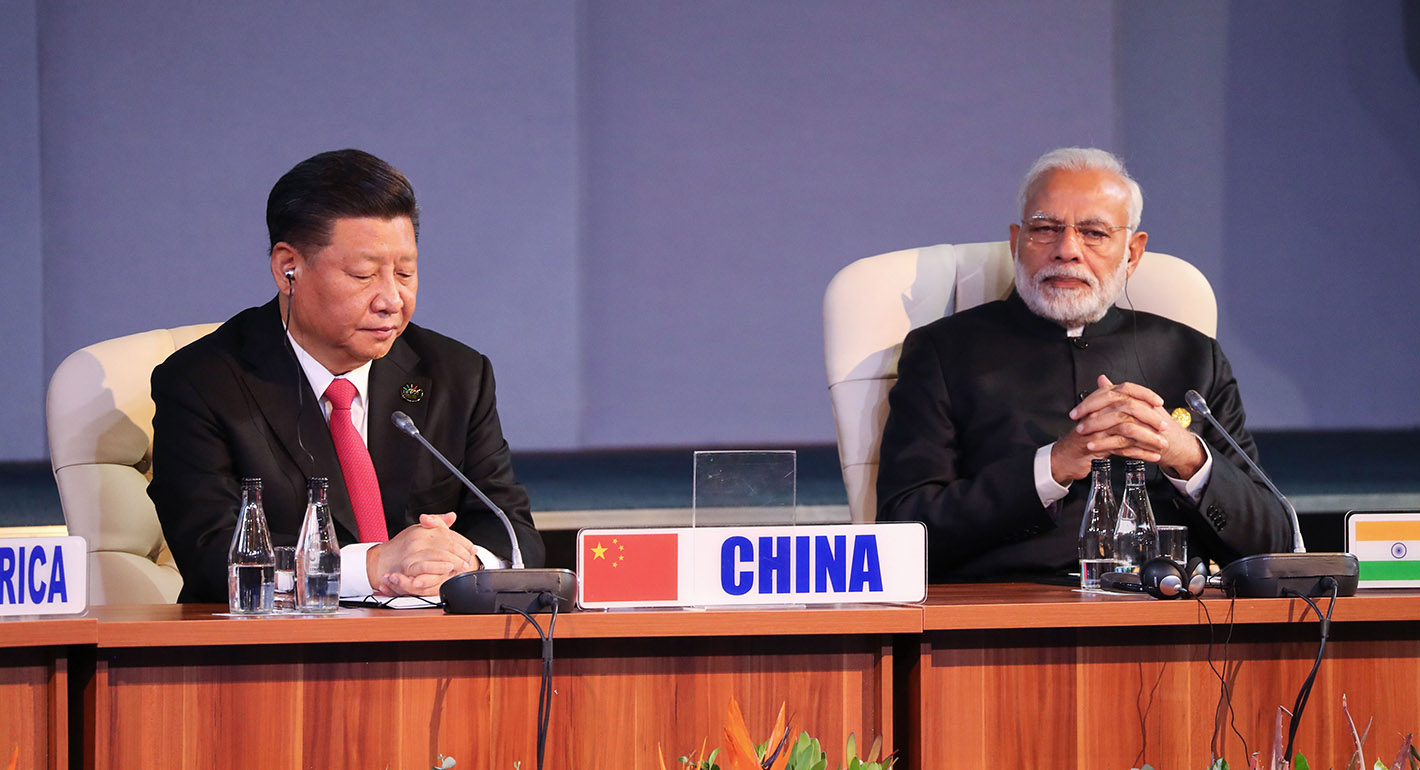
Yet Xi and Modi have shown their determination to reset bilateral ties after the Donglang/Doklam standoff (a border showdown between Indian and Chinese forces in 2017) and to build stable, constructive ties. The Mamallapuram meeting can still give the two leaders an opening to work through some issues. The two leaders’ desire to engage, rather than confront each other, is evident from their willingness to meet despite recent diplomatic strains.
This is also the first time the two leaders will have met since Modi’s landmark reelection in May 2019. It could be an opportunity for them to set a warmer tone for their relationship early in Modi’s second term.
In addition, the meeting will let Xi and Modi clarify their stances on issues of common concern and avoid suspicion and misperceptions. The gathering could improve understanding, if not trust, between the two neighbors. Finally, the two leaders will likely explore how to overcome lingering difficulties and better cooperate on several issues, a process that began during the Wuhan meeting, including on maintaining global free trade and promoting globalization.
Why Informal Is the Way to Go
Keeping the meeting informal has its merits. Xi and Modi are both strong leaders with the power to make bold policy decisions to improve China-India relations. Given his party’s success in India’s recent election, Modi’s mandate is now even stronger.
Flexibility is another advantage. One-on-one talks allow leaders to build personal relationships. The two leaders’ unscripted conversations during the Wuhan meeting, where they were often only accompanied by translators, showed the benefits of this supple dynamic. This format offers more time for the leaders to exchange views. Formal or state visits often take a lot of time and resources to plan. Such gatherings involve various government institutions and a host of bureaucrats. Informal visits like this one, however, can be arranged quickly and allow both sides to be flexible. To use a Chinese terminology on policy making practice, such exchanges between senior leaders reflect a sense of dingceng sheji, or top floor planning. Other levels of dialogues and negotiations, such as the two countries’ Strategic Economic Dialogue meeting in September, are parallel mechanisms to deal with specific issues and projects.
How China Views India
Looking at the relationship more broadly, China sees India, the largest country in South Asia, as aspiring to play a leading role in Asia and in the wider world. New Delhi’s pursuit of greater influence beyond South Asia through the Act East policy, and New Delhi’s appeal for a permanent seat on the UN Security Council, reveal these ambitions. To realize its aspirations, India has relied on economic development and global geopolitical engagement.
New Delhi has tended to lean toward aligning itself with one particular country: the United States. But it has also left its options open, to some degree . On one side of things, India is a member of the Quad, an informal group that consults on regional security and also includes Australia, Japan, and the United States. At the same time, like China, India is part of the BRICS, the G20, and the Shanghai Cooperation Organization. As such, New Delhi’s relations with Beijing include both competitive and cooperative elements.
How China-India Ties May Evolve
Going forward, Beijing and New Delhi will need to keep balancing cooperation and competition. On the one hand, the two countries have incentives to work together on trade and economics to reach their developmental goals: China is looking to overcome the middle income trap, while India is keen to maintain its high growth rate.
Given U.S. President Donald Trump’s America First posture and a growing worldwide affinity for protectionism, China and India see each other as big markets to invest in. At their recent Strategic Economic Dialogue, the two countries created several working groups to seek out areas for collaboration. They included infrastructure, energy, high-tech innovation in areas like artificial intelligence and financial technology (fintech), resource conservation, and pharmaceuticals (including generic drugs). Modi’s China policy puts economic cooperation first.
On the other hand, there will be challenges ahead. China and India have old unresolved issues, including long-simmering border disputes and China’s strong and close relationship with Pakistan. And new flash points have arisen, including water disputes, India’s suspicions about China’s infrastructure funding push through the Belt and Road Initiative, India’s membership in the Nuclear Suppliers Group and the UN Security Council, and India’s forceful new approach to Kashmir.
Coping with such complexities requires smart policymaking and diplomacy. Ultimately, though, China and India share many goals. A sound relationship is crucial to each country’s economic development and to the stability of Asia more broadly.
Han Hua is an associate professor at Peking University and director of the Center for Arms Control and Disarmament in the university’s School of International Studies.


