• Research
  • Emissary
  • About
  • Experts
Carnegie Global logoCarnegie lettermark logo
DemocracyIran
  • Donate
{
  "authors": [
    "Firas Abi Nassif",
    "Edward Asseily",
    "Bilal Bazzy",
    "Hala Bejani",
    "Amer Bisat",
    "Henri Chaoul",
    "Ishac Diwan",
    "Haneen El Sayed",
    "Ali El Reda Youssef",
    "Saeb el Zein",
    "Nabil Fahed",
    "Philippe Jabr",
    "Sami Nader",
    "May Nasrallah",
    "Paul Raphael",
    "Jean Riachi",
    "Nisreen Salti",
    "Kamal Shehadi",
    "Nasser Saidi",
    "Maha Yahya",
    "Bassam Yammine",
    "Gerard Zouein"
  ],
  "type": "other",
  "centerAffiliationAll": "dc",
  "centers": [
    "Carnegie Endowment for International Peace",
    "Malcolm H. Kerr Carnegie Middle East Center"
  ],
  "collections": [
    "Arab Spring 2.0",
    "Decoding Lebanon"
  ],
  "englishNewsletterAll": "menaTransitions",
  "nonEnglishNewsletterAll": "",
  "primaryCenter": "Malcolm H. Kerr Carnegie Middle East Center",
  "programAffiliation": "MEP",
  "programs": [
    "Middle East"
  ],
  "projects": [],
  "regions": [
    "Levant",
    "Lebanon",
    "Middle East"
  ],
  "topics": [
    "Economy",
    "Political Reform"
  ]
}
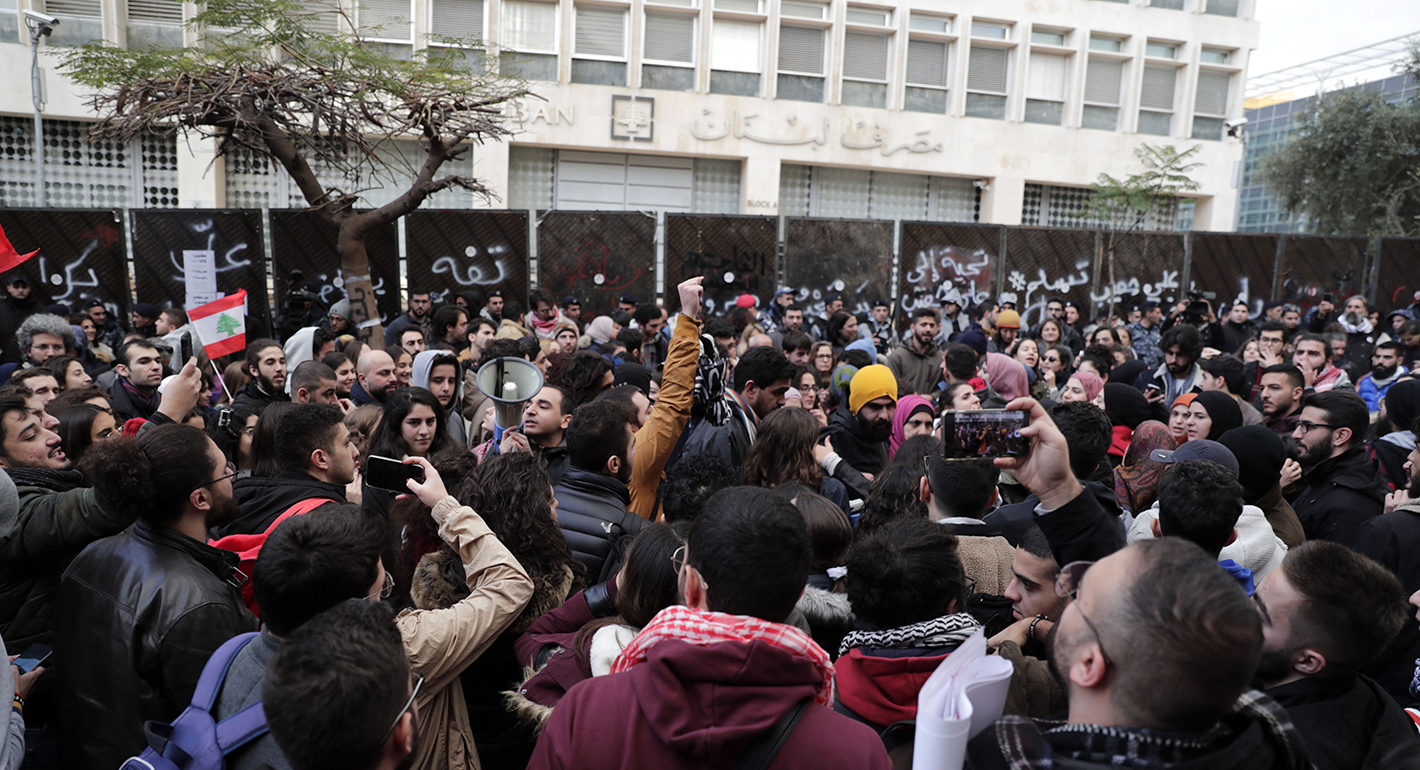
Source: Getty

Other
Malcolm H. Kerr Carnegie Middle East Center

Lebanon’s Economic Crisis: A Ten Point Action Plan for Avoiding a Lost Decade

An independent group of development specialists, economists and finance experts met in Beirut late-December to discuss the ongoing economic crisis and the path forward. This note summarizes the deliberations and puts forth a ten-point action plan meant to arrest the crisis and place the country on a path of sustained recovery.

Link Copied
By Firas Abi Nassif, Edward Asseily, Bilal Bazzy, Hala Bejani, Amer Bisat, Henri Chaoul, Ishac Diwan, Haneen El Sayed, Ali El Reda Youssef, Saeb el Zein, Nabil Fahed, Philippe Jabr, Sami Nader, May Nasrallah, Paul Raphael, Jean Riachi, Nisreen Salti, Kamal Shehadi, Nasser Saidi, Maha Yahya, Bassam Yammine, Gerard Zouein
Published on Jan 6, 2020
Program mobile hero image

Program

Middle East

The Middle East Program in Washington combines in-depth regional knowledge with incisive comparative analysis to provide deeply informed recommendations. With expertise in the Gulf, North Africa, Iran, and Israel/Palestine, we examine crosscutting themes of political, economic, and social change in both English and Arabic.

Learn More

Source: A citizen initiative

How did we get here?

The economic crisis is, at its core, a governance crisis emanating from a dysfunctional sectarian system that hindered rational policymaking and permitted a culture of corruption and waste. The country, led by the public sector, lived beyond its means. Decades of pursuing this model left the economy with high debt and a bloated banking sector.

Inevitably, the dramatic debt increase resulted in an-expanding debt-servicing burden. The large yearly funding needs rendered the country vulnerable to external and regional shocks. As external financial flows into Lebanon slowed, the central bank resorted to desperate and extremely expensive efforts to attract them. Ultimately, this proved unsustainable. Since October, we’ve had a virtual cessation of capital inflows and a sharp acceleration of outflows.

Where are we now?

This situation leaves the country with three simultaneous crises.

The first is a balance of payments and currency crisis. For 2020, we estimate the gap between USD supply and USD demand at $8 billion. If this gap is not filled, the economy will experience difficulties including the servicing of external debt, imported goods’ shortages, currency devaluation, and economic contraction.

The second crisis is that of public finance. Beginning with a 10 percent of GDP deficit in 2019, government revenues are now collapsing under the weight of the recession and the banking crisis described below. Inflation-adjusted spending is also crumbling. We estimate a $3 billion primary budget deficit (excluding interest payments) for 2020. In the current situation, funding this deficit will prove challenging.

The third crisis is that of the banking system. With almost half of banks’ assets invested in Lebanese sovereign risk including with the Banque du Liban (BDL) and another quarter representing risky private sector claims, banks are effectively insolvent and illiquid. Despite the loose and inefficient capital and banking controls recently put in place, the sector is experiencing a deposit run. In similar international experiences, the central bank usually steps in and provides the liquidity that banks need. However, the BdL is constrained by its limited USD reserves and by fears that an oversupply of LBP would lead to further currency weakening.

Consequences of continuing on the current path

Persisting with the current ad hoc approach to policy making will lead Lebanon on a path of implosion and political disintegration. We foresee seven consequences:

  1. The economy will experience a deep recession. USD shortages will force the economy to adjust to lower imports. Bank and capital controls will hit a private sector that is dependent on liquidity and credit; business closures, salary reductions, and layoffs have already become common. The public sector will retrench given difficult financing conditions. Under this scenario, we forecast the economy will experience a double-digit contraction in 2020—i.e., a recession equivalent to what the US experienced during the Great Depression.
  2. The Foreign Exchange (FX) will weaken sharply. The LBP will adjust downwards to bring the supply and demand of USD into balance. Left to its own devices, we estimate the FX could lose up to half its value leading to high inflation. In turn, this will have a massive negative impact on the cost of living, the availability of essential goods, food and healthcare, businesses and unemployment.
  3. Capital and bank controls will intensify. Banks will continue rationing deposit withdrawals and external transfers. The private sector’s liquidity crunch will deepen and disorderly and un-managed debt defaults (including on Eurobonds) will prove inevitable. BdL will hemorrhage international reserves.
  4. Debilitating social conditions will intensify. This kind of economic collapse will cause catastrophic wealth destruction. Poverty rates could rise to more than 40 percent of the Lebanese population with 1.6 million people unable to afford food and basic nonfood items. Unemployment will increase and much of the middle class could be eliminated.
  5. A seismic political shift is likely to occur. The current political parties will not emerge unscathed. The security repercussions of social unrest will be significant and difficult to predict.
  6. Without addressing the root causes, the crises will prove long lasting. To put it in stark terms, this would become a decade long economic crisis—one from which chances of recovery are significantly dim. A “lost decade” will result from this scenario.
  7. Finally, international financial support is likely to fall far short of what is needed to relieve the economy.

Is there a better approach?

We think there is. Below we outline a three-year program that aims to arrest the crisis, deal with its root causes and set the country back on a path of recovery. The program seeks to ensure equitable burden sharing of the crisis’ fallout while protecting the most vulnerable especially during the period of transition. The ten concrete steps below should be implemented in parallel rather than piecemeal.

  1. Establish an empowered economic emergency steering committee to design, negotiate and implement the program. In parallel, create participatory mechanisms to discuss with civil society the policy package, and to empower citizens to monitor its implementation.
  2. Replace the ad hoc and self-administered capital and banking controls. Controls are likely needed for an extended period even in the best of scenarios. They need to be run in a centralized and transparent fashion backed by proper legislation.
  3. Decisively deal with public sector debt. Immediately announce a moratorium on debt payments (external and domestic), hire legal counsel, and convene a creditor’s committee. Our view is that Lebanon’s fundamentals justify a debt load ranging between 60 and 80 percent of GDP over the medium term. To reach this target, creditors should be offered a menu of concessions including lower principal, reduced interest rates, and extended maturities.
  4. Embark on a credible fiscal reform. Public spending, currently inefficient, wasteful, and vulnerable to corruption, must be transformed. The electricity sector is but one example. A wholesale governance and regulatory reform program is needed to curb the rent seeking culture. These reforms, along with savings accruing from lower debt servicing, should allow for increased spending on social sectors and infrastructure. Second, a broad revenue reform is needed that focuses less on raising tax rates and more on addressing weak collection and overt reliance on specific sectors. Third, we recommend the adoption of a binding and credible “fiscal rule” that caps the size of future budget deficits.
  5. Deal with private sector debt. The private sector is facing a severe crisis. Convene a creditor/debtor roundtable to agree on a standardized menu of financial relief actions aiming to safeguard viable firms while orderly liquidating those that aren’t. The existing draft Bankruptcy and Restructuring law should be promptly passed.
  6. Repair BdL’s balance sheet. BDL is a large lender to the government and has an estimated USD30 billion negative net FX position rendering it vulnerable to devaluations. Until this is dealt with, it is tough to see confidence in the LBP returning.
  7. Bring the banking sector back to health as a prerequisite to reinvigorating the economy. Public debt restructuring and mounting Non-Performing Loans (NPLs) will render many banks insolvent. Complicating matters, banks are highly exposed to the BdL whose own balance sheet is impaired. Current bank equity is far from sufficient to cover these hits. Our estimates suggest $20-25 billion of fresh capital is urgently needed. Current shareholders need to assume the losses and be required to bring in fresh capital. This may also necessitate a reduction in the number of banks. In parallel, foreign loans and State assets could conceivably be used to recapitalize the sector (see below). As the above is not likely to be enough, there is a near certain need for reducing portions of large deposits and swapping them into bank equity.
  8. Preserve social peace through a focus on social justice. This involves a distribution of losses that is concentrated on the richest in society while sparing small bank depositors. Foreign funding should be used to blunt the pain of adjustment. A safety net must be put in place to fight poverty and support health and education. And workers should be helped to transition out of decaying sectors into those that benefit from the devaluation.
  9. Re-think the FX/monetary policy mix. The fixed (and overvalued) exchange rate regime has contributed to large current account deficits, hurt export-oriented sectors, andforced BdL to maintain elevated interest rates. Looking forward, we recommend a more flexible exchange rate arrangement centered around a weaker LBP. However, until confidence in the LBP returns, it will be dangerous to allow the currency to freely float. Some form of currency management will have to be maintained for the medium term.
  10. Secure a multi-year Stabilization and Structural Reform Facility. We estimate that a three-year $25 billion fund is needed. This facility should be used to shore up BDL’s net reserves, help fund the immediate government budgetary needs, finance badly needed social spending, and contribute to bank recapitalization. The economic program recommended above can garner this kind of support, including from the World Bank, the EU, and the GCC. However, it will realistically require an IMF program as an umbrella. We also think there is scope to partly fund this facility with state assets and possibly hoped-for oil and gas revenues. We cannot overstate the importance of good governance, transparency and accountability in this regard.

Conclusion

The consequences of the current path are catastrophic. Delays will only increase dislocation, exponentially magnify the needed adjustment, and place the burden on those least able to shoulder it. A better option is available. It won’t be easy, may at times prove painful and will certainly require a new social contract. But we sincerely believe this approach will pave the way to a better and prosperous future.

Signatories (in their personal capacities)

Firas Abi Nassif, Edward Asseily, Bilal Bazzy, Hala Bejani, Amer Bisat, Henri Chaoul, Ishac Diwan, Haneen El Sayed, Ali El Reda Youssef, Saeb el Zein, Nabil Fahed, Philippe Jabr, Sami Nader, May Nasrallah, Paul Raphael, Jean Riachi, Nisreen Salti, Nasser Saidi, Kamal Shehadi, Maha Yahya, Baasam Yammine, Gerard Zouein

About the Authors

Firas Abi Nassif

Edward Asseily

Bilal Bazzy

Hala Bejani
Amer Bisat

Minister of Economy and Trade of Lebanon

Amer Bisat is the Minister of Economy and Trade of Lebanon.

Henri Chaoul
Ishac Diwan

Research Director at the Finance for Development Lab at the Paris School of Economics, Professor of Practice at the Department of Economics at the American University of Beirut.

Ishac Diwan is the research director at the Finance for Development Lab at the Paris School of Economics, Professor of Practice at the Department of Economics at the American University of Beirut.


Haneen El Sayed

Ali El Reda Youssef

Saeb el Zein
Nabil Fahed

CEO, Fahed Group, Vice Chairman/Treasurer of the Chamber of Commerce of Beirut

Nabil Fahed is the CEO of the Fahed Group and serves as the Vice Chairman/Treasurer of the Chamber of Commerce of Beirut.

Philippe Jabr
Sami Nader

Director of the Institute of Political Science at Saint Joseph University.

Sami Nader is the director of the Institute of Political Science at Saint Joseph University.

May Nasrallah

Paul Raphael

Jean Riachi

Nisreen Salti
Kamal Shehadi

Minister of State for Technology and Artificial Intelligence and Minister of the Displaced of Lebanon

Kamal Shehadi is the Minister of State for Technology and Artificial Intelligence and Minister of the Displaced of Lebanon.
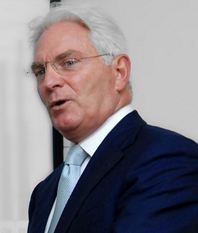
Nasser Saidi

Nasser Saidi is a former Lebanese Minister of Economy & Trade, Minister of Industry, and First Vice-Governor of Banque du Liban.

Maha Yahya

Director, Malcolm H. Kerr Carnegie Middle East Center

Yahya is director of the Malcolm H. Kerr Carnegie Middle East Center, where her research focuses on citizenship, pluralism, and social justice in the aftermath of the Arab uprisings.

Bassam Yammine

Gerard Zouein

Authors

Firas Abi Nassif
Edward Asseily
Bilal Bazzy
Hala Bejani
Amer Bisat
Minister of Economy and Trade of Lebanon
Amer Bisat
Henri Chaoul
Ishac Diwan
Research Director at the Finance for Development Lab at the Paris School of Economics, Professor of Practice at the Department of Economics at the American University of Beirut.
Ishac Diwan
Haneen El Sayed
Ali El Reda Youssef
Saeb el Zein
Nabil Fahed
CEO, Fahed Group, Vice Chairman/Treasurer of the Chamber of Commerce of Beirut
Nabil Fahed
Philippe Jabr
Sami Nader
Director of the Institute of Political Science at Saint Joseph University.
Sami Nader
May Nasrallah
Paul Raphael
Jean Riachi
Nisreen Salti
Kamal Shehadi
Minister of State for Technology and Artificial Intelligence and Minister of the Displaced of Lebanon
Kamal Shehadi
Nasser Saidi

Nasser Saidi is a former Lebanese Minister of Economy & Trade, Minister of Industry, and First Vice-Governor of Banque du Liban.

Nasser Saidi
Maha Yahya
Director, Malcolm H. Kerr Carnegie Middle East Center
Maha Yahya
Bassam Yammine
Gerard Zouein
EconomyPolitical ReformLevantLebanonMiddle East

Carnegie does not take institutional positions on public policy issues; the views represented herein are those of the author(s) and do not necessarily reflect the views of Carnegie, its staff, or its trustees.

More Work from Carnegie Endowment for International Peace

  • Commentary
    Strategic Europe
    Europe and the Arab Gulf Must Come Together

    The war in Iran proves the United States is now a destabilizing actor for Europe and the Arab Gulf. From protect their economies and energy supplies to safeguarding their territorial integrity, both regions have much to gain from forming a new kind of partnership together.

      • Rym Momtaz

      Rym Momtaz

  • US President Donald Trump presides over the inaugural meeting of the âBoard of Peace,❠a newly established body focused on efforts for Gaza, at the US Institute of Peace in Washington, DC, United States, on February 19, 2026.
    Article
    The Board of Peace and Funding for Gaza Reconstruction: On Whose Account?

    Stakeholders must demand major restructuring of the Board of Peace and robust oversight and transparency before engaging with it. Until then, rights-respecting existing platforms and mechanisms for multilateral peacemaking should be supported.

      Zaha Hassan, Charles H. Johnson

  • Commentary
    Diwan
    Syria Skirts the Conflict With Iran

    In an interview, Kheder Khaddour  explains that Damascus is trying to stabilize its borders, but avoiding war isn’t guaranteed. 

      Michael Young

  • Commentary
    Diwan
    Israel’s Forever Wars

    The country’s strategy is no longer focused on deterrence and diplomacy, it’s about dominance and degradation.

      Nathan J. Brown

  • Commentary
    Diwan
    An Extension Under Fire

    The decision of Lebanon’s parliament may look exceptional, but in reality it is not.

      Issam Kayssi

Get more news and analysis from
Carnegie Endowment for International Peace
Carnegie global logo, stacked
1779 Massachusetts Avenue NWWashington, DC, 20036-2103Phone: 202 483 7600Fax: 202 483 1840
  • Research
  • Emissary
  • About
  • Experts
  • Donate
  • Programs
  • Events
  • Blogs
  • Podcasts
  • Contact
  • Annual Reports
  • Careers
  • Privacy
  • For Media
  • Government Resources
Get more news and analysis from
Carnegie Endowment for International Peace
© 2026 Carnegie Endowment for International Peace. All rights reserved.