

Commentary
Russian strikes are weakening the economy sustaining Ukraine’s war effort. Closing the growing funding gap will require more European support and politically contentious reforms in Kyiv.
Balázs Jarábik
{
  "authors": [
    "Tang Xiaoyang"
  ],
  "type": "legacyinthemedia",
  "centerAffiliationAll": "",
  "centers": [
    "Carnegie Endowment for International Peace",
    "Carnegie China"
  ],
  "collections": [],
  "englishNewsletterAll": "",
  "nonEnglishNewsletterAll": "",
  "primaryCenter": "Carnegie China",
  "programAffiliation": "",
  "programs": [],
  "projects": [],
  "regions": [],
  "topics": [
    "Economy",
    "Security"
  ]
}
Source: Getty
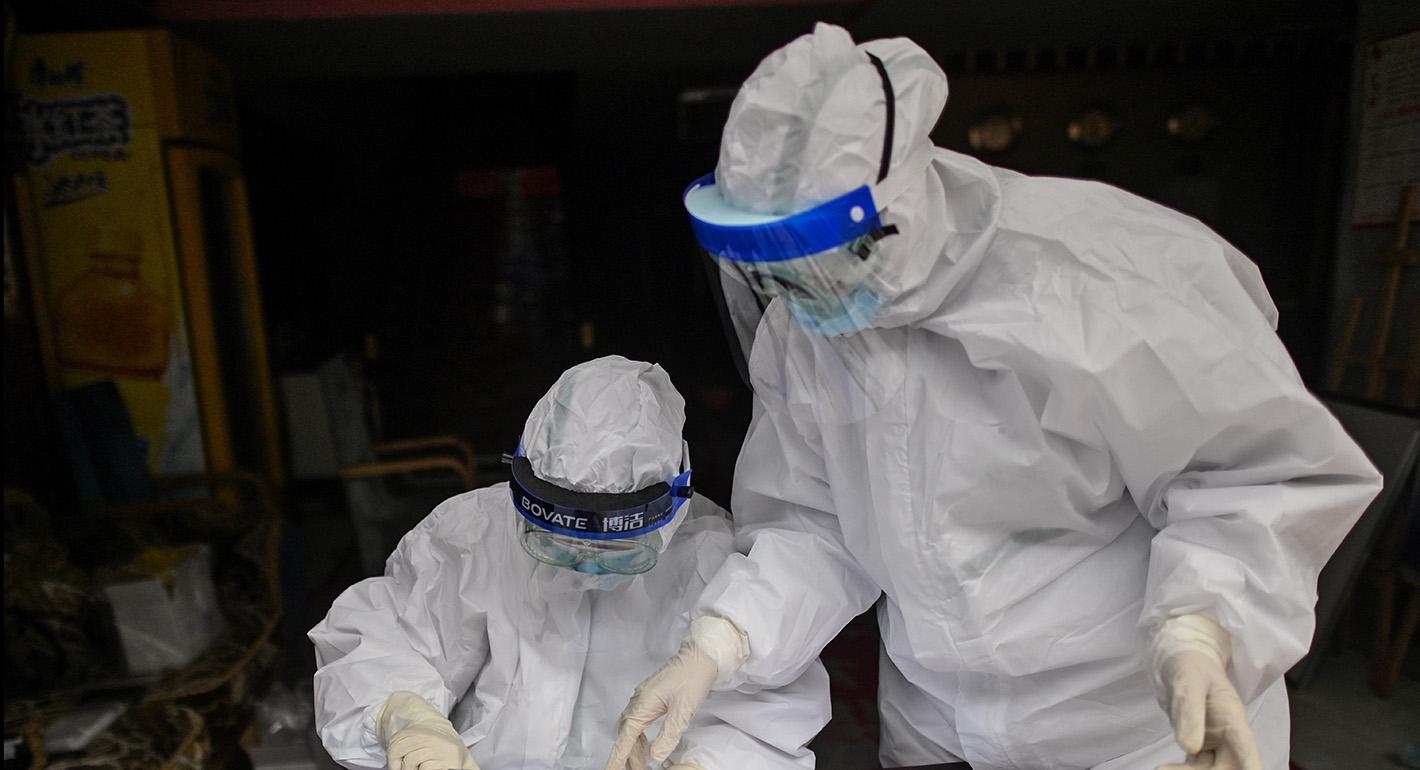
A major reason for the quick spread of the coronavirus is the lack of orchestration in the international effort to contain it. Currently, protection and monitoring measures are decided by authorities in different countries, whose standards and levels of implementation vary.
Source: China-US Focus
Although the World Health Organization only declared the coronavirus outbreak and its associated disease, COVID-19, a pandemic in mid-March, its impact on the global community is unprecedented.
Unlike previous disease outbreaks, such as SARS, MERS, Ebola and Zika, which were mainly confined, respectively, to East Asia, the Middle East, Africa and South America, the current outbreak has managed to quickly spread to every continent except Antarctica. Admittedly, the H1N1 flu of 2009 affected around 70 countries, but it only created an emergency in North America.
The rapidly evolving COVID-19 epidemic has shocked healthcare experts and the general public alike, as many traditional prevention methods and cooperation mechanisms have failed to achieve expected results. Drastic quarantine measures in China significantly contained the spread of the virus within the country, but the situations in South Korea, Italy, Iran, Japan, the United States and other countries slower to adopt such measures have been deteriorating. Since March 16, confirmed COVID-19 cases outside China have outnumbered domestic cases, and the numbers are probably underreported because of the lack of systematic testing in many places.
A major reason for the quick spread of the coronavirus globally is the lack of orchestration in the international effort to contain it. Currently, protection and monitoring measures are decided by authorities in different countries, whose standards and levels of implementation vary. And they don’t necessarily cooperate.
For instance, people in China wear masks whenever going out and are required to undergo quarantine for weeks after travel. Yet, thousands of international travelers who may carry coronavirus but are neither tested nor protected move around the world freely, undermining the stricter measures. Consequently, while restrictions were enforced on China-bound travelers as early as the end of January, more than 50 countries found that their first cases of COVID-19 were not directly related to China.
Efficient distribution of medical resources is another enormous challenge. China has accumulated abundant supplies of N95 masks and virus testing kits, whereas other countries, even developed ones, have woefully inadequate supplies on hand in preparation for the looming exponential spike in cases.
Previously, China was the major battlefield. With this reversal of fortune, attention must be directed to the medically challenged countries and regions outside China that are suffering from shortages of medical supplies, vulnerabilities in their healthcare systems, and the difficulty of enforcing mass quarantines.
The international healthcare response to evolving circumstances is not nearly swift enough. Facing the pandemic, the current level of healthcare cooperation will not meet the very real needs of today’s highly interconnected world. Country-based protection measures, which depend, one by one, on each country’s policies and resources, are destined to be imbalanced, thereby leaving gaping loopholes that guarantee further global spread of the disease.
Although the WHO provides advice on issues of international concern, it usually leaves countries to launch their own preset programs of prevention. Cooperation to address new challenges, such as disrupted global supply chains and inefficient distribution of medical materials, is rare. Reliance on conventional measures, such as the attempted isolation of individual countries, proved ineffective in stopping the spread of virus. Uncoordinated standards have created more panic in society and markets. Worse, some countries have begun to play the blame game recently, which only distracts from the international community’s efforts to combat the disease.
There is an urgent need to change this situation, and not a moment to spare.
It is possible that the coronavirus will mutate to become more deadly. History has taught us bitter lessons. The 1918 so-called Spanish Flu, which killed tens of millions of people, came in three waves of illness. The first wave was moderate, but subsequent ones became more deadly as the virus changed.
Another reason for the high death toll in 1918 was the shortage of health professionals, because many had been deployed to military camps during World War I. We are facing similar challenges today: the possibility of a quickly mutating virus and the certainty of uneven distribution of medical resources.
It is a truism that those who ignore the lessons of history are bound to repeat past mistakes.
The most vulnerable targets of the coronavirus are not the countries that have developed the strongest protection methods but those that are undefended and have limited medical resources, such as Iran and other developing nations—especially those in Africa.
It is in the interest of the entire world that we radically and speedily alter the nature of international efforts to contain the coronavirus to inoculate society against future pandemics. Country-based measures ought to be coordinated to form an integral global system. Testing, monitoring and treatment measures ought to be harmonized as soon as possible. Isolation measures targeting specific countries should be reconsidered.
The entire world is so interconnected that it is not possible to effectively lock down any single country, let alone economic centers such as China, Europe, or the United States. Consistent policies across borders that target the virus will be more beneficial for the global community.
Transnational logistics for medical supplies should be streamlined and distribution should be more efficiently guided by the WHO and other international institutions. Some countries like China have accumulated experience in combating the disease and should step up as a strong ally to help others contain COVID-19.
Moreover, China’s immense manufacturing capacity urgently needs to be shared, as it produces almost half the world’s medical masks, medications, and health-protection equipment. More orchestrated international cooperation will also restore order to global supply chains and stabilize the world economy.
Financial crises and production disturbances, perhaps, are doing more harm to people than the pandemic itself, statistically speaking. Panic, negligence, inefficiency, waste—all these problems originate from the sociopolitical weaknesses of humans, not from the virus. To defeat the coronavirus, we must lower these barriers, at least for the time being, so that the world’s combined strength can be brought to bear. This must happen now to minimize the level of suffering and death.
Tang Xiaoyang
Former Resident Scholar and Deputy Director, Carnegie-Tsinghua Center; Chair and Professor, Department of International Relations, Tsinghua University
Tang Xiaoyang is the chair and a professor in the Department of International Relations at Tsinghua University. He was a resident scholar and the deputy director at the Carnegie-Tsinghua Center until June 2020.

Russian strikes are weakening the economy sustaining Ukraine’s war effort. Closing the growing funding gap will require more European support and politically contentious reforms in Kyiv.

Balázs Jarábik

Europe is facing rising populism internally as well as external pressures from Russia, China, Turkey, and the United States.

Dimitar Bechev
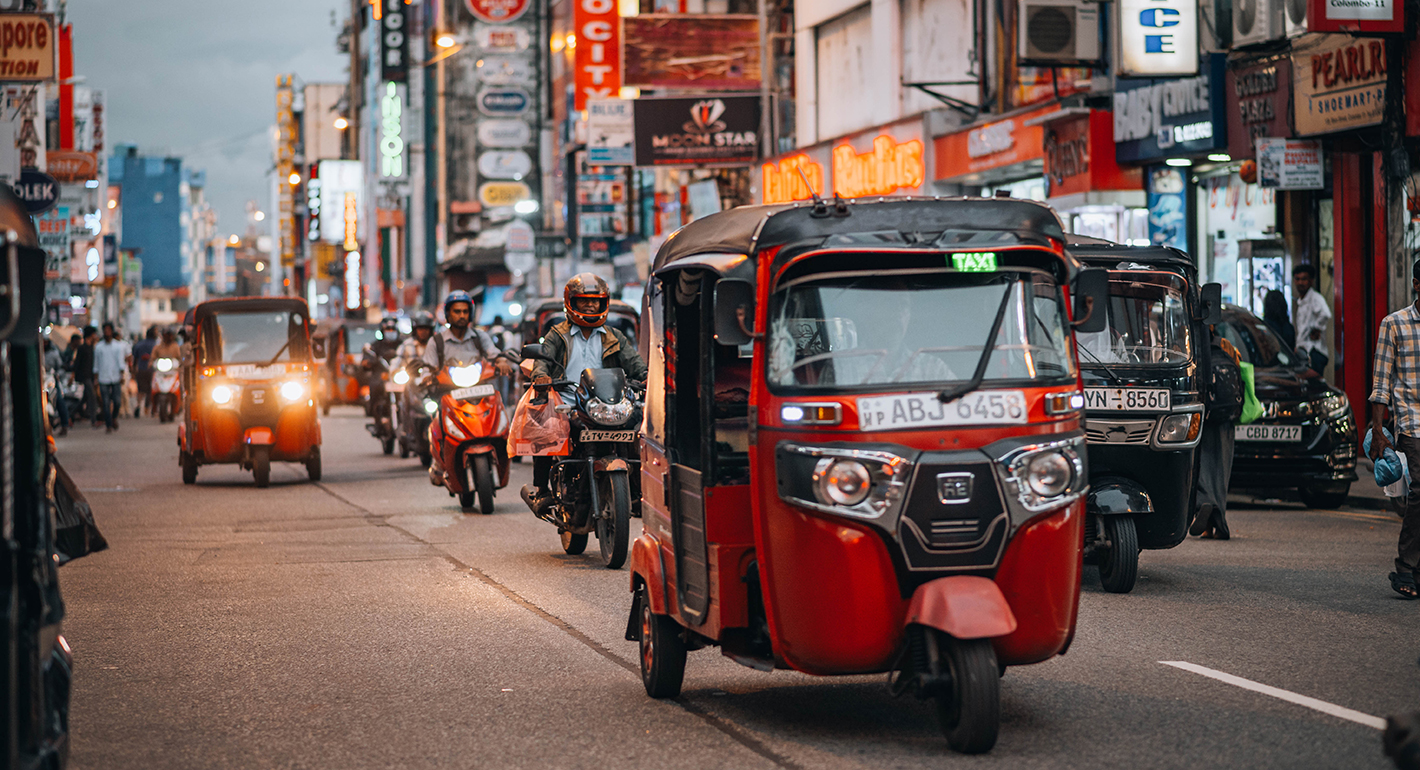
Economic recovery has brought Sri Lanka a modicum of stability, but domestic strains and great-power rivalry could test how long it lasts.

Avinash Paliwal

Policy proposals on sovereign debt must both match the scale of the challenge and be implementable within existing political constraints.
David McNair

For every ruble allocated to social policy, health, and education in 2027, double that amount is earmarked for the army, the police, and the security services.

Alexandra Prokopenko