

Article
Dan Baer
{
  "authors": [
    "Dan Baer"
  ],
  "type": "legacyinthemedia",
  "centerAffiliationAll": "dc",
  "centers": [
    "Carnegie Endowment for International Peace"
  ],
  "collections": [],
  "englishNewsletterAll": "ctw",
  "nonEnglishNewsletterAll": "",
  "primaryCenter": "Carnegie Endowment for International Peace",
  "programAffiliation": "EP",
  "programs": [
    "Europe"
  ],
  "projects": [],
  "regions": [
    "North America",
    "United States",
    "Iran"
  ],
  "topics": [
    "Political Reform",
    "Democracy",
    "Global Governance",
    "Civil Society"
  ]
}
Source: Getty
The coronavirus pandemic is both a foreign policy and a public health issue — and the Trump administration’s mismanagement on both fronts has cost tens of thousands of American lives and trillions of dollars to our economy.
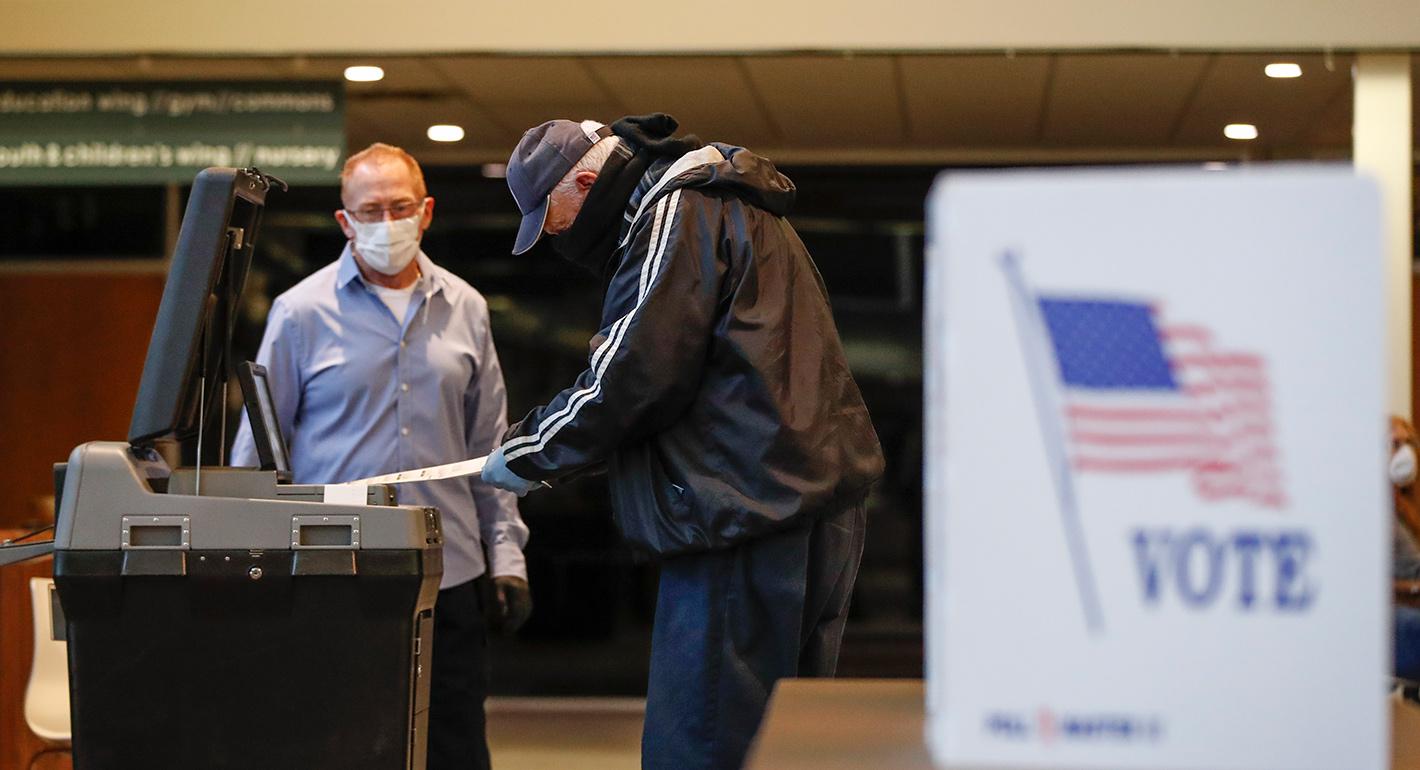
Source: Colorado Sun
The conventional wisdom about political campaigns is that voters don’t care about foreign policy.
Political consultants advise their clients to focus on “kitchen table” issues like jobs, health care, education and safe neighborhoods and schools.
I’ve long believed that this piece of campaign orthodoxy was based on a false premise: the problem isn’t that voters don’t care about international issues, it’s that so few of our candidates have the expertise and communications skills to talk about foreign policy in a way that connects to those kitchen table issues.
Voters are smarter than political consultants think they are; candidates aren’t as smart on foreign policy as they should be, given the world we live in today.
The success — or failure — of American foreign policy has an impact on every kitchen table issue.
The coronavirus pandemic is both a foreign policy and a public health issue — and the Trump administration’s mismanagement on both fronts has cost tens of thousands of American lives and trillions of dollars to our economy. It is dominating our conversations with friends and family — it is, in most American households, quite literally a kitchen table issue.
So, will 2020 be a year in which voters care about foreign policy? On Monday, National Security Action (a group founded by former Obama administration officials to advise Democrats on foreign policy) released a new poll conducted by Hart Research of likely voters in battleground states for the Senate and presidential elections in November, including Colorado. Its findings suggest that Donald Trump — and those who have endorsed him, like vulnerable Colorado Republican Sen. Cory Gardner — may pay a price at the ballot box.
The poll was conducted before the escalation of the coronavirus crisis in the United States last month, and it suggests that voters were already concerned about Trump’s conduct of foreign relations.
Indeed, the advantage that Republicans have historically had in public polling about foreign policy (one that has been stubbornly resilient since Reagan), seems to be melting away under Trump’s mismanagement.
The over 1,200 voters who took part in the poll self-reported who they voted for in the 2016 election — 47% voted for Trump, 46% for Clinton, and 5% for third-party candidates, and it included a large group of self-identified undecided voters looking to November’s election.
A plurality of those polled — 46% — say that re-electing Trump would make us less safe, while only 40% say another Trump term would make us more safe. Meanwhile, 44% say that electing a Democrat would make us more safe, while only 35% say it would make us less safe.
The poll found that 56% of the sampled voters say Trump has made the United States less respected in the world, including a staggering 64% of independent voters.
Half of Democrats and 45% of independents see standing up for our values related to human rights and democracy as a key issue in deciding who to vote for in November (more than a third of Republicans do, too). Meanwhile, over half of undecided voters assess that Trump “cozies up to dictators, abandoning our allies and betraying our values.”
Voters question Trump’s competence and his motives, as 61% of voters believe that Trump refuses to listen to facts from military advisers, intelligence officials, scientists and policy experts.
Over two-thirds of voters — and 77% of independents — want a president to emphasize diplomacy and working with other countries over military strength when confronting global challenges, and by a 22-point margin — 49% vs. 27% — voters think Trump has made it more likely, rather than less likely, that the United States will go to war.
The impeachment trial over Trump’s attempt to use military assistance to coerce Ukraine, as well as Trump’s family’s murky business dealings have also left an impression with voters: a majority — 55% — think it’s definitely or probably true that Trump’s foreign policy is about what’s good for Trump, even when it goes against America’s interests and security.
Perhaps one reason for the conventional wisdom about voters not caring about foreign policy has been that most voters don’t have enough background to be able to understand the ins and outs of trade deals or Middle East peace. (In my experience, neither do most members of Congress.) But voters do understand that war is costly and should only ever be a last resort.
They understand that America’s standing in the world matters, and that when we live up to the values on which our democracy was founded we have more influence in the world and more ability to deliver for the American people.
They understand that there are real threats in the world — terrorism, dictators, climate change, nuclear weapons, pandemics — and that Trump’s combination of recklessness, ignorance and narcissism is like getting in a car with a drunk driver.
American families depend on a federal government that can navigate global challenges so that they can focus on kitchen table issues. Now, more than ever, we are seeing the consequences that befall us when we don’t have a steady, principled, competent hand at the helm.
Interim President
Dan Baer is the interim president of the Carnegie Endowment for International Peace. Under President Obama, he was U.S. ambassador to the Organization for Security and Cooperation in Europe (OSCE) and he also served deputy assistant secretary of state for the Bureau of Democracy, Human Rights, and Labor.
Recent Work


Richard Youngs, Erik Jones, Dan Baer, …
Carnegie does not take institutional positions on public policy issues; the views represented herein are those of the author(s) and do not necessarily reflect the views of Carnegie, its staff, or its trustees.

Understanding the climatic pain points is necessary for policymakers hoping to minimize the war’s negative environmental consequences.



Alejandro Martin Rodriguez, Joy Arkeh, Sarah Yerkes

Huawei pushed hard to enter the Egyptian data centers market, until the Americans made a better offer.

Angie Omar

Radical-right parties are expected to do well in upcoming elections in four of the EU's biggest member states. If successful, they could prevent the union from addressing key challenges ahead.

Stefan Lehne

The books, podcasts, and films that explain the world it made.

Andrew Leber

U.S. trading partners in Asia are closely watching the dispute for signs of how it may affect their own interests.

Barbara Weisel