

Research
- +16
Stewart Patrick, Erica Hogan, Oliver Stuenkel, …
{
  "authors": [
    "Trinh Nguyen"
  ],
  "type": "commentary",
  "centerAffiliationAll": "dc",
  "centers": [
    "Carnegie Endowment for International Peace"
  ],
  "collections": [
    "Coronavirus"
  ],
  "englishNewsletterAll": "asia",
  "nonEnglishNewsletterAll": "",
  "primaryCenter": "Carnegie Endowment for International Peace",
  "programAffiliation": "AP",
  "programs": [
    "Asia"
  ],
  "projects": [],
  "regions": [
    "Southeast Asia"
  ],
  "topics": [
    "Economy"
  ]
}
Source: Getty
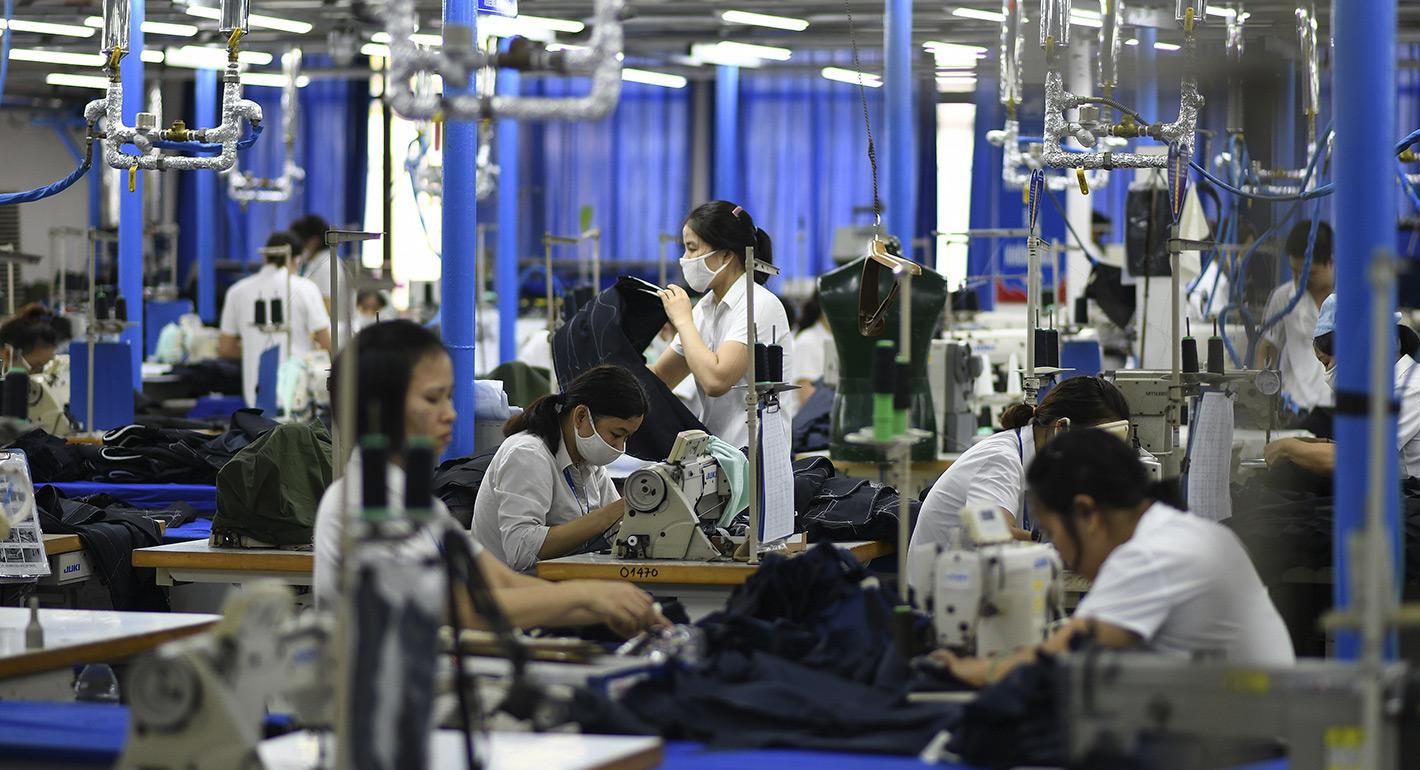
A successful coronavirus response and liberalized trade policies have given Vietnam a production boost, but its demographics and import dependence will limit its gains from a reshuffled supply chain.
Vietnam has managed an impressive feat in controlling the coronavirus, with zero deaths and limited lockdown measures. Its screening, testing, and medical supply manufacturing also show how the country kept supply chains moving with limited disruption. As of June 6, mobility trends in several key sectors had already returned to or exceeded their prepandemic baselines, making Vietnam’s restoration of economic activity among the best in the world.
While this success does not immunize Vietnam from an economic slowdown, it raises the country’s brand as the top destination for diversifying beyond or away from China. Vietnam has many attractive features: cheap input costs, stable politics, and increasingly liberalized trade and investment policies, especially after its free trade agreement with the EU. But two factors limit Vietnam’s ability to absorb significantly more manufacturing from China and move up the value chain: its high dependence on foreign input for production and its much smaller population size (see figure 1).

Because Vietnam’s labor force is only 7 percent the size of China’s (see figure 1), it can attract only a limited share of the firms looking for an alternative to China’s rising costs. Vietnam has succeeded in targeting sectors such as textiles, footwear, and electronics. But given its smaller scale than China, in electronics, it cannot replace production that requires massive mobilization of the labor force. As a result, firms looking to diversify out of China will find a home in Vietnam—one that can likely meet only a subset of their needs. That will leave more of the pie available to other economies in Asia and beyond, should they make an effort to compete.
Moreover, Vietnam’s relatively youthful population will age. According to UN population projections, Vietnam’s age distribution will be much more top heavy by 2050 (see figure 2). That greater friction to growth explains why the government has mounted a campaign to promote fertility. These trends could leave Vietnam with little time to sit on its economic laurels. To avoid that fate, it will have to quickly address its structural weaknesses, particularly through such infrastructure improvements to better connect its domestic firms to the global value chain (GVC).

A second limit on Vietnam’s edge against China is that its gross exports include many Chinese and South Korean intermediate goods (see figure 3 for their share of Vietnam’s imports). While Vietnam has seen impressive growth in exports, much of that growth is being captured by foreign rather than domestic firms (see figures 4–6).


Vietnam’s integration with China has risen over the years, with higher dependency on Chinese inputs for production, while that of other countries in the Association of Southeast Asian Nations (ASEAN) has declined. That said, Vietnam’s rise in global market share is not all shallow—its participation in the GVC has increased significantly not just via foreign inputs for exports, called foreign value added (FVA), but also through its rising exports of intermediate goods in other countries’ exports, known as indirect domestic value-added exports (DVX), over the past ten years (see figure 7).

Nevertheless, Vietnam’s success in raising its participation in the global supply chain and improve its domestic standard of living offer lessons for other economies. Vietnam has expanded trade through bilateral agreements with ASEAN members Australia, Chile, China, India, Japan, New Zealand, and South Korea. But its greatest prize has been a free trade agreement with the EU, which comes into force in summer 2020. Within ASEAN, Singapore is the only other economy with such a status. Moreover, it is one that has eluded China, providing an especially valuable advantage for firms seeking to diversify their supply chain.
The agreement reduces import duties over seven years in the EU and ten years in Vietnam. Provisions that require the entire supply chain to be within the two markets to qualify for zero duties will further boost Vietnamese production up the value chain. This creates a short-term challenge, given Vietnam’s current dependence on China for inputs, but a long-term opportunity.
Vietnam’s free trade access to the largest economic bloc in the world is also a selling point for firms in China and elsewhere in Asia. As a result, inflows of foreign direct investment (FDI) from China rose massively in 2019. Overall, the agreement will further cement Vietnam’s status as Southeast Asia’s friendliest trade and investment hub.
Beyond liberalizing its trade policy, Vietnam has set other examples for emerging markets by adopting incentives for foreign firms to set up shop in the country through industrial parks, infrastructure building, and tax breaks. These measures have attracted large brands such as Samsung Electronics, which now relies on Vietnam as an offshore center to arbitrage rising costs in China. During the ban on foreign visitors due to the coronavirus pandemic, the Vietnamese government granted exemptions to South Korean engineers who needed to visit their plants. The successful containment measures that allowed for such exceptions further burnished Vietnam’s brand as a place to do business.
In manufacturing, Vietnam has now had the region’s highest increase of global market share in the past five years (see figure 8). That growth has allowed it match Thailand and Malaysia’s levels of gross exports and surpass that of Indonesia, whose GDP is four times larger. Further, Vietnam’s trade and economic policies have pushed up the share of FDI in its GDP (see figure 9).


A third lesson from Vietnam is that its increased production has been made possible by improvements in its electric system, national highways, and air and sea ports. These investments have boosted the country’s place on World Bank rankings of national infrastructure from 64 in 2016 to 39 in 2018, driven in large part by upgrades to its logistics services and ability to track consignments. Expected increases in FDI inflows and industrial production will likely propel continued growth in demand for infrastructure investment.
Even as Vietnam’s ability to capture manufacturing activity from China faces limits, therefore, its policies have expanded its share of supply chain activity and value. Its success offers lessons for similar economies to capitalize on trends diversifying production outside China and improve the livelihoods of their citizens.
The author is grateful for research and contributions by Junyu Tan.

Former Nonresident Scholar, Asia Program
Trinh Nguyen was a nonresident scholar in the Asia Program at the Carnegie Endowment for International Peace.
Recent Work

Stewart Patrick, Erica Hogan, Oliver Stuenkel, …
Trinh Nguyen
Carnegie does not take institutional positions on public policy issues; the views represented herein are those of the author(s) and do not necessarily reflect the views of Carnegie, its staff, or its trustees.

Russian strikes are weakening the economy sustaining Ukraine’s war effort. Closing the growing funding gap will require more European support and politically contentious reforms in Kyiv.

Balázs Jarábik
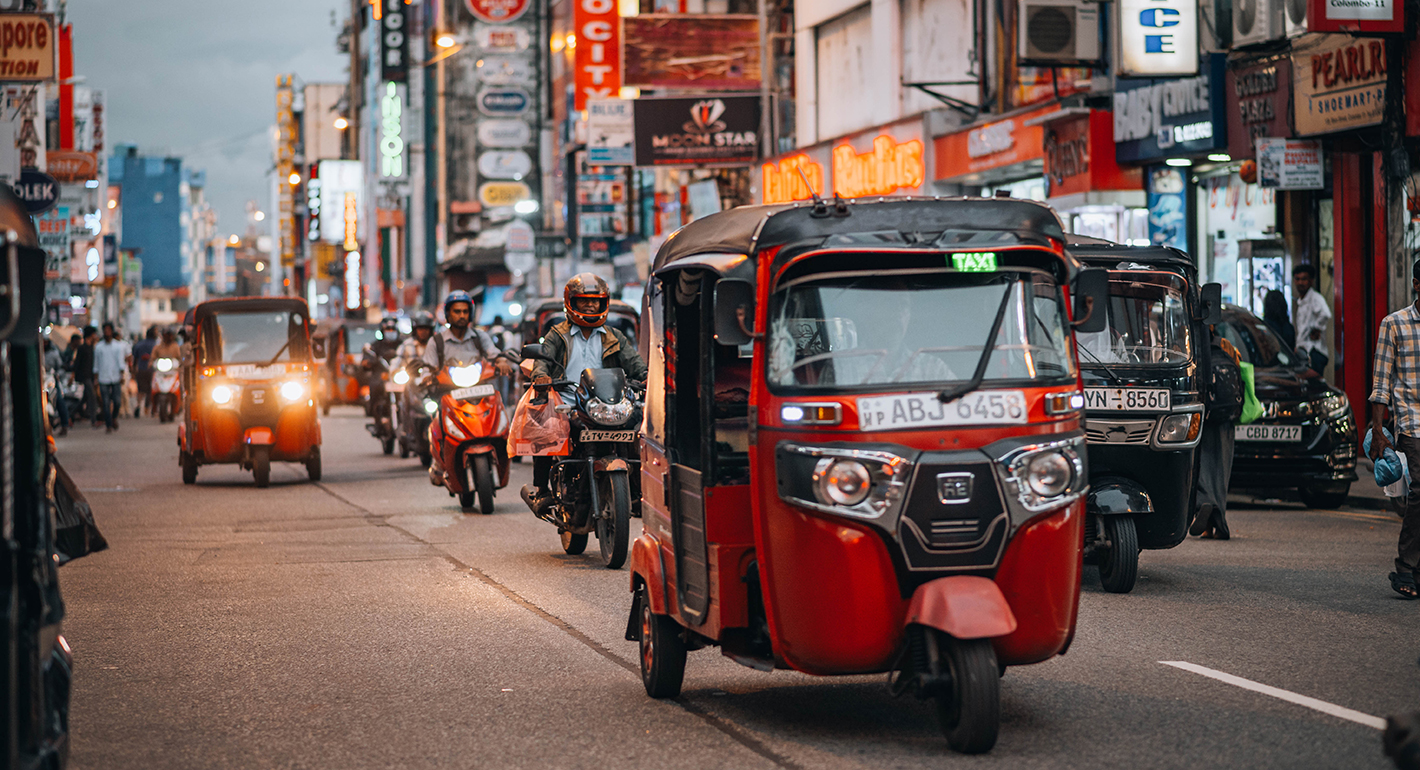
Economic recovery has brought Sri Lanka a modicum of stability, but domestic strains and great-power rivalry could test how long it lasts.
Avinash Paliwal
Policy proposals on sovereign debt must both match the scale of the challenge and be implementable within existing political constraints.
David McNair

For every ruble allocated to social policy, health, and education in 2027, double that amount is earmarked for the army, the police, and the security services.

Alexandra Prokopenko

The European Commissioner for Trade is headed to China. But after President Xi’s bridge-building visit to Washington, can a more isolated EU overcome Beijing’s stranglehold on critical raw materials? Who will blink first?

Rym Momtaz, ed.