

Commentary
H. A. Hellyer
{
  "authors": [
    "H. A. Hellyer"
  ],
  "type": "legacyinthemedia",
  "centerAffiliationAll": "dc",
  "centers": [
    "Carnegie Endowment for International Peace"
  ],
  "collections": [],
  "englishNewsletterAll": "menaTransitions",
  "nonEnglishNewsletterAll": "",
  "primaryCenter": "Carnegie Endowment for International Peace",
  "programAffiliation": "MEP",
  "programs": [
    "Middle East"
  ],
  "projects": [],
  "regions": [
    "Western Europe",
    "United Kingdom"
  ],
  "topics": [
    "Political Reform",
    "Democracy",
    "Civil Society"
  ]
}
Source: Getty
Anwar was welcomed as an independent member of various BBC advisory committees, and expressed pride in the research done in this area, as reflected in the growing number of young Asians moving into television, alongside people from other ethnic minorities.
Source: Guardian
Muhammad Anwar, who has died aged 75 of a heart condition, did much to advance understanding of the problems and opportunities of ethnic minorities in Britain in the half century following his arrival in 1970 as a graduate student from Pakistan. In particular, he looked to involvement in democratic politics as a key factor in improving race relations.
In 1976 he published a book, Between Two Cultures, on Pakistani migrants to the UK. At the time, he noted, “racism and discrimination were rife, and participation in the political process was very low”.
The book was reprinted several times, and an update in 1998, Between Cultures, focusing on how young Asians in Britain stood in relation to education, employment, housing and the police, could point to some reduction in the sense of alienation among young Asians, including Muslim Asians.
Anwar acknowledged that events in the new century – 9/11, 7/7, the invasion of Iraq and the extremist radicalisation of a small number of young Muslims – “put race relations back several years”. Nonetheless, he remained upbeat, pointing to the increase in young Muslims in higher education and working in financial services as well as law and medicine. The academic success of young Muslim women in particular made a myth of the notion that they were being held back by their fathers.
The year 1976 also saw the passing of the Race Relations Act and the establishment of the Commission for Racial Equality (CRE), whose head of research Anwar became five years later. He learned about the practical application of policy, and set about examining ethnic minority participation in the British political system. He had already analysed ethnic minority involvement in the 1979 general election, and continued in this vein in his books Race and Politics (1986) and Race and Elections (1994).
“Greater participation will ultimately lead to greater integration,” he believed, and he was the joint editor of two collections in this field, Black and Ethnic Leaderships: The Cultural Dimensions of Political Action (1991) and From Legislation to Integration (1999). He saw it as a two-way process: if bigotry and Islamophobia were to be challenged and religious identity respected, then Muslims had to “seize opportunities to take part and make a contribution”.
From the CRE Anwar went to the University of Warwick as director of the Centre for Research in Ethnic Relations (CRER, 1989-94) and continued there as research professor, becoming an emeritus professor in the department of sociology after his retirement in 2012. His PhD students, of whom I was one, researching diversity and European Muslim communities, went on to become academics, politicians and public servants in countries including the US and Turkey.
Anwar was welcomed as an independent member of various BBC advisory committees, and expressed pride in the research done in this area, as reflected in the growing number of young Asians moving into television, alongside people from other ethnic minorities. “I see all these black and brown faces on screen, nationally and regionally, and I think to myself: that’s one area where we’ve made a difference,” he said.
For the Runnymede Trust, the race equality thinktank now based at London Metropolitan University, he joined the Commission on the Future of Multi-Ethnic Britain, chaired by Lord (Bhikhu) Parekh. Two thirds of the recommendations in the resulting Parekh report (2000) were accepted by the UK government. In 2007 Anwar was appointed OBE.
Keenly aware of the challenges facing communities targeted by fear and suspicion, he regretted the tendency to characterise Muslims as extremists: “It’s not right to label a whole community because of the actions and sayings of a few people who grab all the publicity.” In Ethnic Minorities and Politics (2010) he returned to his belief that representation in politics is essential to achieving equality of opportunity, both in that area and more widely.
Born and brought up in Sargodha in pre-partition India, now in the Punjab province of Pakistan, Muhammad was the son of Chaudhry Ahmed, a senior civil servant in the agriculture ministry, and his wife, Fatima Bibi. At Punjab University, Lahore, he gained a bachelor’s degree in social sciences (1965), and a master’s in sociology (1967), before serving as a lecturer in sociology at Government College in Peshawar.
After moving to Britain, he completed a master’s in economics (1971) at Manchester University, and a PhD (1977) about Pakistanis in northern England at Bradford University. He then worked at an advice centre in Rochdale, Greater Manchester, helping newly arrived immigrants on social security, housing and immigration issues until he joined the CRE in 1981.
A committed Muslim, throughout his career Anwar maintained the principle of genuinely evidence-based research. Dapper and courteous, he was a highly effective communicator, quoted widely in the press as well as cited in academia.
In 1983 he married Saeeda Abbas. She survives him, along with their daughters, Fatima and Aysha.
Former Nonresident Scholar, Middle East Program
Dr. H.A. Hellyer was a nonresident scholar at the Carnegie Endowment for International Peace. He serves as a senior associate fellow at the Royal United Services Institute for Defence and Security Studies in London, and as a Cambridge University fellow.
Recent Work
H. A. Hellyer
H. A. Hellyer
Carnegie does not take institutional positions on public policy issues; the views represented herein are those of the author(s) and do not necessarily reflect the views of Carnegie, its staff, or its trustees.

Despite its flop at the box office, the film raises important questions for the climate community to answer.

Leonardo Martinez-Diaz

Ex-president Gurbanguly Berdimuhamedov remains interested in politics, but his son Serdar, Turkmenistan’s current president, is becoming increasingly independent and willing to break with his father’s legacy. If their covert rivalry goes too far, both risk losing power.

Galiya Ibragimova

A notable degree of participative democracy has firmly arrived in Europe. But to have more far-reaching impact, democratic deliberation needs to move into a radically new phase.

Richard Youngs
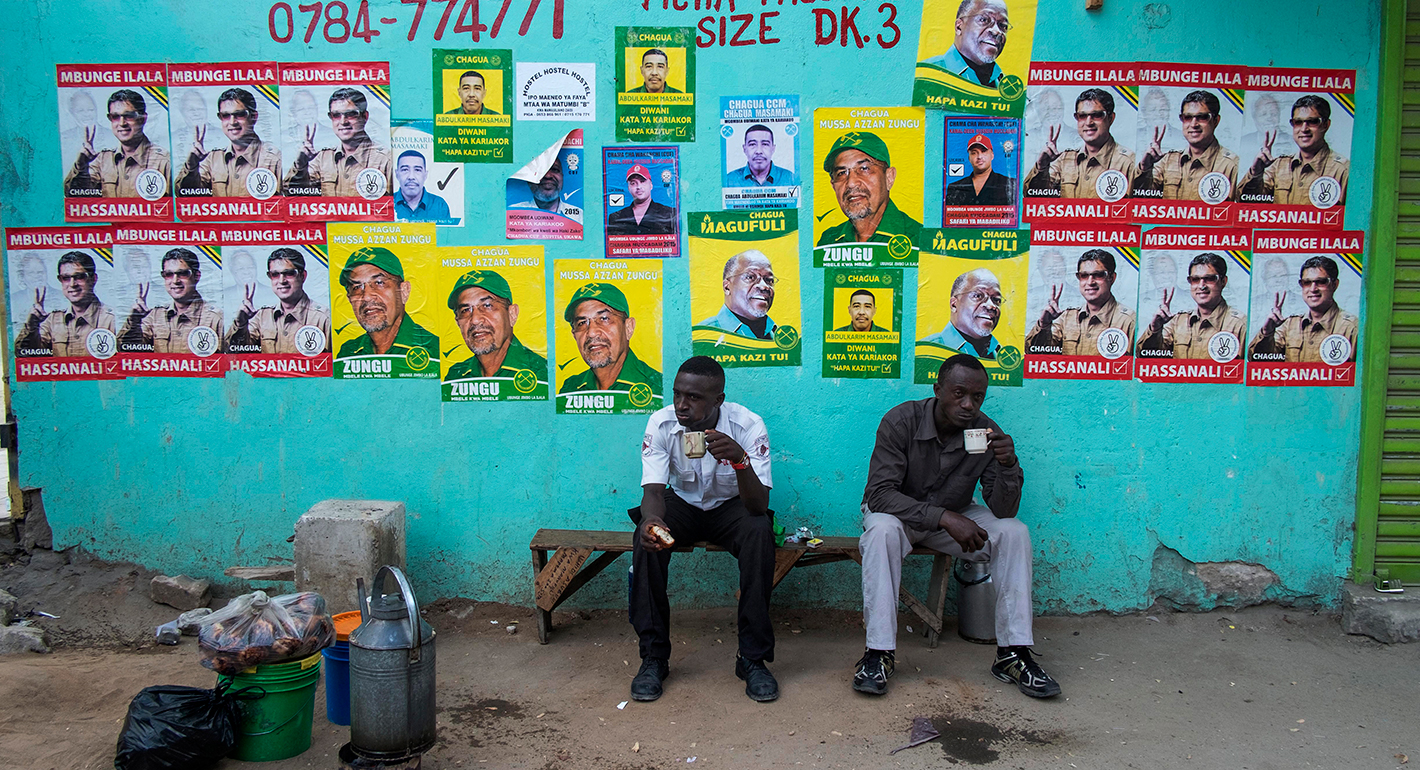
Today’s global democratic recession is partly rooted in a common perception that democracies have a delivery problem, with many citizens in both autocracies and democracies alike now believing that strongmen can achieve better governance outcomes. But a study of four countries in Africa reveals that democratic-leaning governments have demonstrated better governance performance than autocratic governments.


Sarah Yerkes, Natalie Triche, Amr Hamzawy
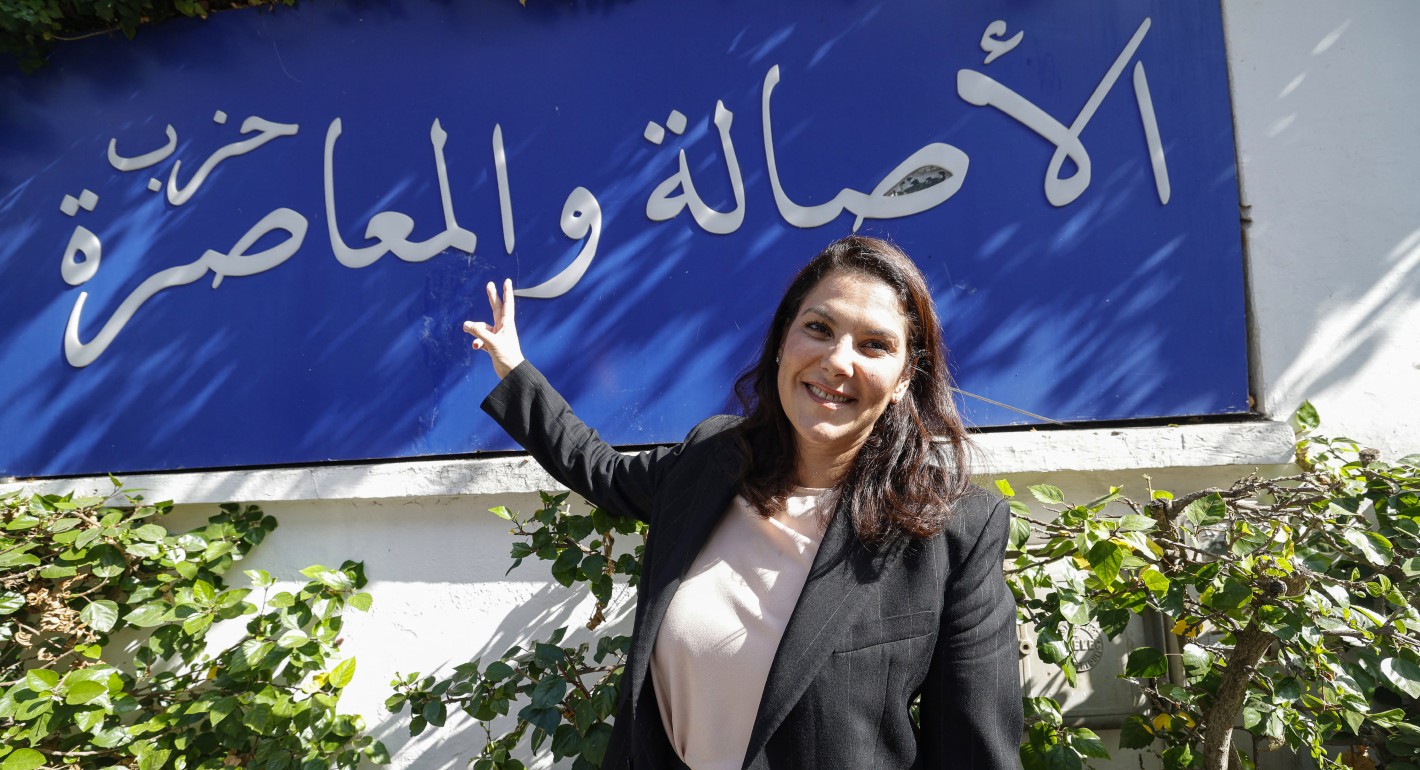
Fatima El Mansouri is the country’s first female prime minister. She’s also a privileged insider in a largely ceremonial position.
Sarah Yerkes