

Research
- +10
Rosa Balfour, Frances Z. Brown, Yasmine Farouk, …
{
  "authors": [
    "Moisés Naím"
  ],
  "type": "legacyinthemedia",
  "centerAffiliationAll": "",
  "centers": [
    "Carnegie Endowment for International Peace"
  ],
  "collections": [],
  "englishNewsletterAll": "",
  "nonEnglishNewsletterAll": "",
  "primaryCenter": "Carnegie Endowment for International Peace",
  "programAffiliation": "",
  "programs": [],
  "projects": [],
  "regions": [
    "North America",
    "United States",
    "South America"
  ],
  "topics": [
    "Political Reform",
    "Democracy",
    "Foreign Policy",
    "Civil Society"
  ]
}
Source: Getty
The script for The Three Amigos indulges every cliché and stereotype that Americans have of Mexicans.
Source: El País
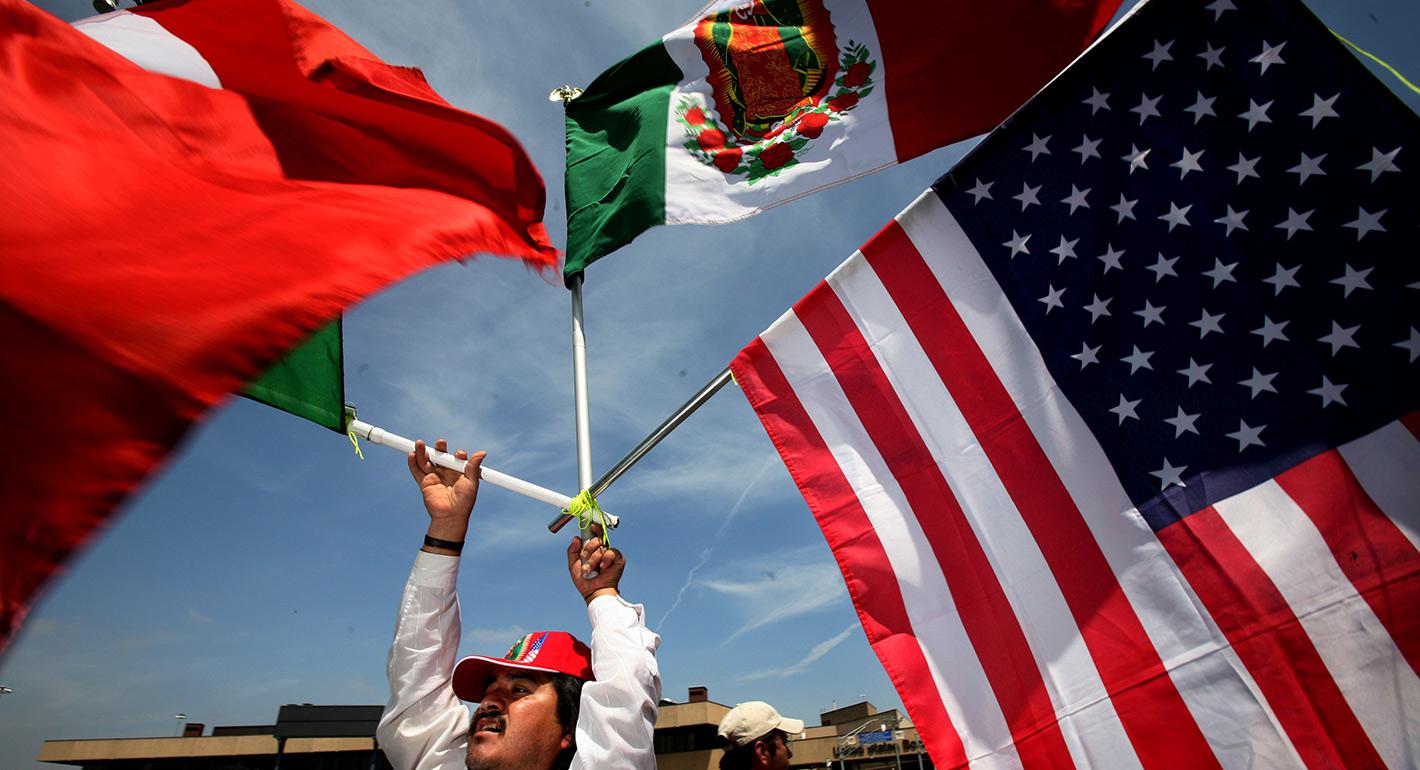
In 1986 Hollywood released the comedy The Three Amigos. It’s the story of three travelling comedians (Steve Martin, Chevy Chase and Martin Short) who, dressed as Mexican cowboys, arrive in the town of Santo Poco to put on a show. Instead, they find a Mexican town besieged by a gang of bearded ruffians on horseback commanded by “El Guapo.” Naturally, the three friends (with the help of the beautiful and long-suffering Carmen) manage to free Santo Poco from El Guapo and his henchmen. The script for The Three Amigos indulges every cliché and stereotype that Americans have of Mexicans. In fact, El Guapo and his gang fit perfectly with Donald Trump’s description of Mexican immigrants: murderers, rapists, bad hombres. And, let’s not forget, animals.

Distinguished Fellow
Moisés Naím is a distinguished fellow at the Carnegie Endowment for International Peace, a best-selling author, and an internationally syndicated columnist.
Recent Work



Rosa Balfour, Frances Z. Brown, Yasmine Farouk, …
Moisés Naím
Carnegie does not take institutional positions on public policy issues; the views represented herein are those of the author(s) and do not necessarily reflect the views of Carnegie, its staff, or its trustees.
Washington’s decision to support some UN functions while letting others wither is pulling the organization apart at the seams.

Stewart Patrick, Theodore Zaritsky

While there are notable demographic, economic, and geographic divides over AI, there is also substantial alignment between Republicans and Democrats.



Ian Klaus, Mark Baldassare, Rachel George, …

Are Germany’s economic, industrial, and political struggles becoming a liability for the EU’s ability to rise to the geopolitical moment?

Rym Momtaz, ed.

Russia’s ruling party would have benefited from Putin appearing as its distant patron, but as an active frontman imposing his views on the public, he has done nothing but harm both the party’s election campaign and the ruling system overall.

Andrey Pertsev

China’s police training infrastructure construction projects provide benefits to recipient countries, promote China’s image as a major global security provider, and are likely to reinforce alignment between Beijing’s security priorities and those of countries in the Global South.


Cameron Waltz, Sheena Chestnut Greitens, Kim Nguyen, …