

Commentary
Andrei Kolesnikov
{
  "authors": [
    "Andrei Kolesnikov"
  ],
  "type": "legacyinthemedia",
  "centerAffiliationAll": "",
  "centers": [
    "Carnegie Endowment for International Peace",
    "Carnegie Russia Eurasia Center"
  ],
  "collections": [],
  "englishNewsletterAll": "",
  "nonEnglishNewsletterAll": "",
  "primaryCenter": "Carnegie Endowment for International Peace",
  "programAffiliation": "",
  "programs": [],
  "projects": [],
  "regions": [
    "Russia",
    "Eastern Europe",
    "Belarus"
  ],
  "topics": [
    "Political Reform"
  ]
}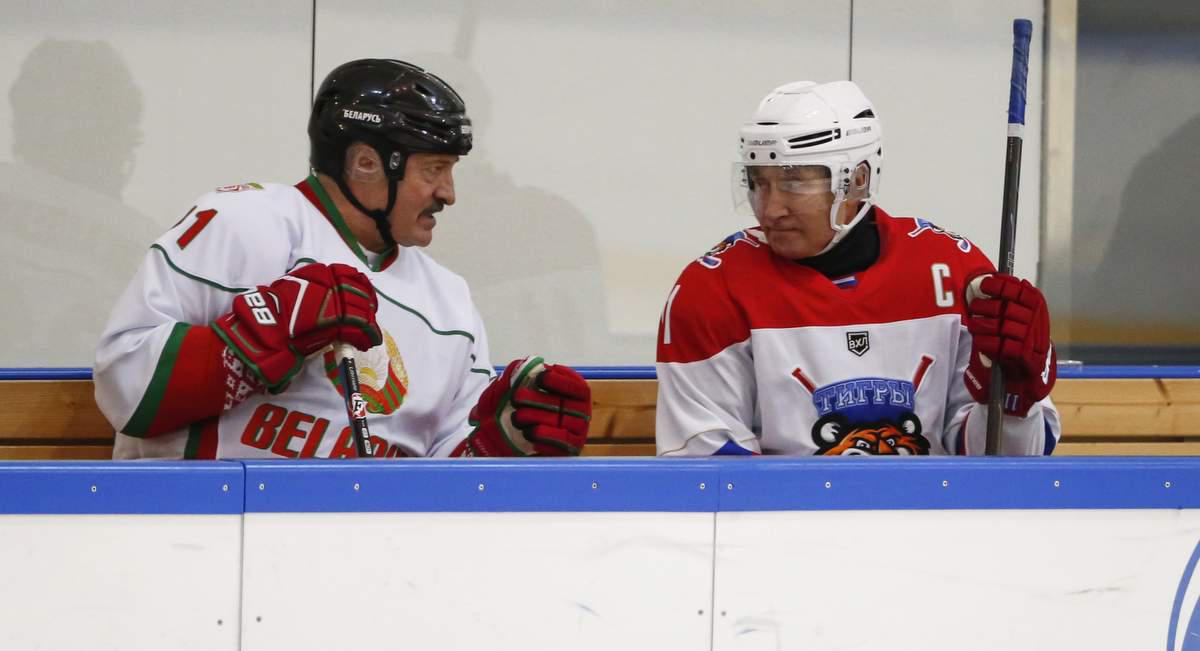
Source: Getty
In Russia and Belarus, civil societies are uniting faster than the two countries themselves.
Source: Moscow Times
Vladimir Putin’s congratulatory telegram to Belarusian President Alexander Lukashenko, despite its dry official tone, concealed a genuinely warm sentiment: the solidarity of one autocrat with another.
No matter how serious the contradictions between the two leaders, no matter how much “Batka” resists the invitation to transform Belarus into a western federal district of the Russian Federation, Putin has a better sense than others of the situation in which the Belarusian dictator found himself during the day and evening of the Aug. 9 election.
How tired Lukashenko must be of all these protesters running around on the streets, all this opposition preventing him from calmly dealing with his paperwork, redistributing revenue among his cronies and playing hockey.
The Kremlin barely recognizes that it has already lost Belarus, just like in 2014, when it lost Ukraine forever. It is lost in the sense that a substantial number of Belarusians do not want to exchange Lukashenko for Putin: this would just mean more of the same dismal political backwardness, economic underachievement and milking of the country’s GDP in broad daylight.
The Russian authorities still have several years to carry out their state merger with Belarus – without Lukashenko. But in the wake of all that has happened during and after this election campaign, now that Belarus has shown that it has already awoken from the lethargy of the last quarter of a century and that there is now a genuine civil society in the country, Belarusians have no need for Russia – with or without Lukashenko.
Furthermore, from the point of view of spreading the protest virus, the experience of Belarusian resistance is even more important than the Ukrainian precedent of a person coming from out of nowhere to win the presidential elections.
Russians carry two persistent myths in their heads. One is that Ukraine is the worst country in the world, possibly almost as bad as the U.S. The other is that Belarus – with its calm, discipline and order – is a model for imitation, an untarnished version of Russia. The unprecedented protests, the appearance of new leaders and the awakening of society destroys this myth about Belarus.
More than that, for Russians there is a lingering question: “You mean we could have done it like this?”
They could have stood in line at polling stations to cast their vote against a dictator. They could have protested, they could have supported opposition leaders. They could have not given up after the arrests and stun grenades.
This doesn’t mean that protests along Belarusian lines are soon going to break out in Russia.
The Russian Federation has its own surprises in store, like Khabarovsk, a phenomenon yet to be fully deciphered by the Kremlin, which freezes and goes dumb in situations when it is impossible to blame popular discontent on Soros or former U.S. Ambassador to Russia Michael McFaul.
But Belarus is showing an example of the kind of “embellishments” that will possibly accompany the State Duma elections in Russia in 2021, and will certainly feature in the next plebiscite on trust in Putin in the form of the 2024 presidential elections.
Autocrats have just one response: even harsher repressions against civil society and any open displays of discontent, even cruder propaganda and even more cretinous and simplified indoctrination of the contemporary version of [Nicholas I’s imperialist motto] “Orthodoxy, autocracy, nationalism.”
An “information dictatorship” (in the words of Sergei Guriyev and Daniel Treisman) will morph into a regular dictatorship, shorn of all hints of hybridity and softness. And this will be in spite of the fact that repressions will prove to be ever more costly — both materially and morally.
But the resistance of civil society has proved to be more focused and accented.
Even if they begin as non-political, in today's circumstances any protests rapidly become politicized, and like never before they select a precise target. Following the tragic explosion in Beirut, the Lebanese are accusing not Israel, but Hezbollah; the Belarusians are unhappy not about the Wagner mercenaries from Russia, but about the dictator they are utterly sick of; the citizens of Khabarovsk are not so much cursing the arrogance of Moscow, but of Putin, of whom they are as exhausted as the Belarusians are of Lukashenko.
As the use of inflated figures becomes increasingly common in elections and referendums, which are no longer a clear reflection of anything at all, the targeting of recent protests is becoming far clearer and more focused.
Unlike 1989, the “velvet” revolutions of 2020 will not lead to a change of regime. The movements lack the necessary mass support. There is a difference between an inert society and a civil society, which is still in the minority. But those classes with a conformist mindset are disparate and they can no longer be described as a pro-Putin majority. Even many of those who mechanically and ritually voted for Putin’s “reset” are very often anti-Putin and have their own reasons to be dissatisfied with the situation in the country.
It is important to note that this dissatisfaction is by no means coming only from the educated classes in the big cities. The social base for potential protest is no longer restricted to those collectively dubbed as “liberals.” But they are all united by a firm belief that before anything else, the autocrat must go.
The street protesters have no positive programme in the traditional understanding, all of its positivity is in the negative: first the leader must leave the stage, and the whole corrupted elite must go with him. For now any similarity in “programmes” is limited to this.
Autocrats have reached their expiration dates. In a strange way this simple idea is becoming a unifying platform for civil society in Russia and Belarus. Civil societies are uniting faster than the two countries.
Former Senior Fellow, Carnegie Russia Eurasia Center
Kolesnikov was a senior fellow at the Carnegie Russia Eurasia Center.
Recent Work
Andrei Kolesnikov
Andrei Kolesnikov
Carnegie does not take institutional positions on public policy issues; the views represented herein are those of the author(s) and do not necessarily reflect the views of Carnegie, its staff, or its trustees.
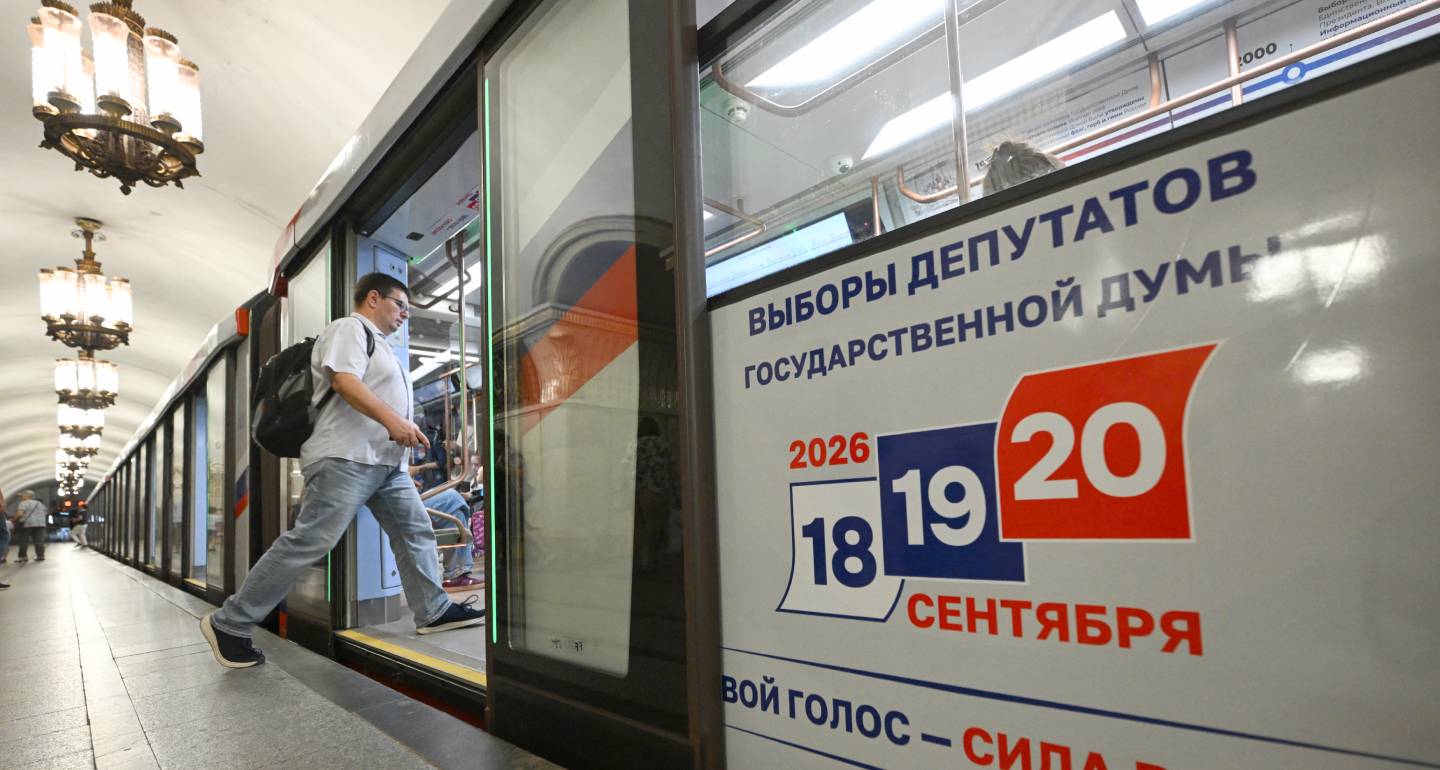
In the discussions made possible by the State Duma election campaign, one question is being asked more and more loudly. “What next?”

Andrey Pertsev
While the Nazis rushed ahead in a revolutionary fervor, Russia’s modern crusaders against enemies of the state work methodically, giving their targets time to adjust to restrictions before closing the loopholes.

Leonid Bershidsky
Media coverage suggests Kyiv’s fortunes have changed. That shift may be important, but it only goes so far.



Dara Massicot, Aaron David Miller, Andrew S. Weiss

When faced with fuel shortages in the past, Central Asian governments could always count on additional supplies from Moscow. That safety net no longer exists.

Galiya Ibragimova
As India undergoes a demographic transition, its cities will be its economic powerhouse—but only if it accurately captures city growth and empowers cities to support their citizens.
Apoorva Jadhav