

Commentary
The EU can impose sanctions but struggles to enforce them without the United States. With Washington increasingly disinterested in backing European interests, the bloc must now fend for itself.
Nicu Popescu, Tiago Antunes
{
  "authors": [
    "Erik Brattberg",
    "Ben Judah"
  ],
  "type": "legacyinthemedia",
  "centerAffiliationAll": "dc",
  "centers": [
    "Carnegie Endowment for International Peace"
  ],
  "collections": [],
  "englishNewsletterAll": "ctw",
  "nonEnglishNewsletterAll": "",
  "primaryCenter": "Carnegie Endowment for International Peace",
  "programAffiliation": "EP",
  "programs": [
    "Europe"
  ],
  "projects": [],
  "regions": [
    "North America",
    "United States",
    "Western Europe",
    "United Kingdom",
    "Iran"
  ],
  "topics": [
    "Foreign Policy"
  ]
}
Source: Getty
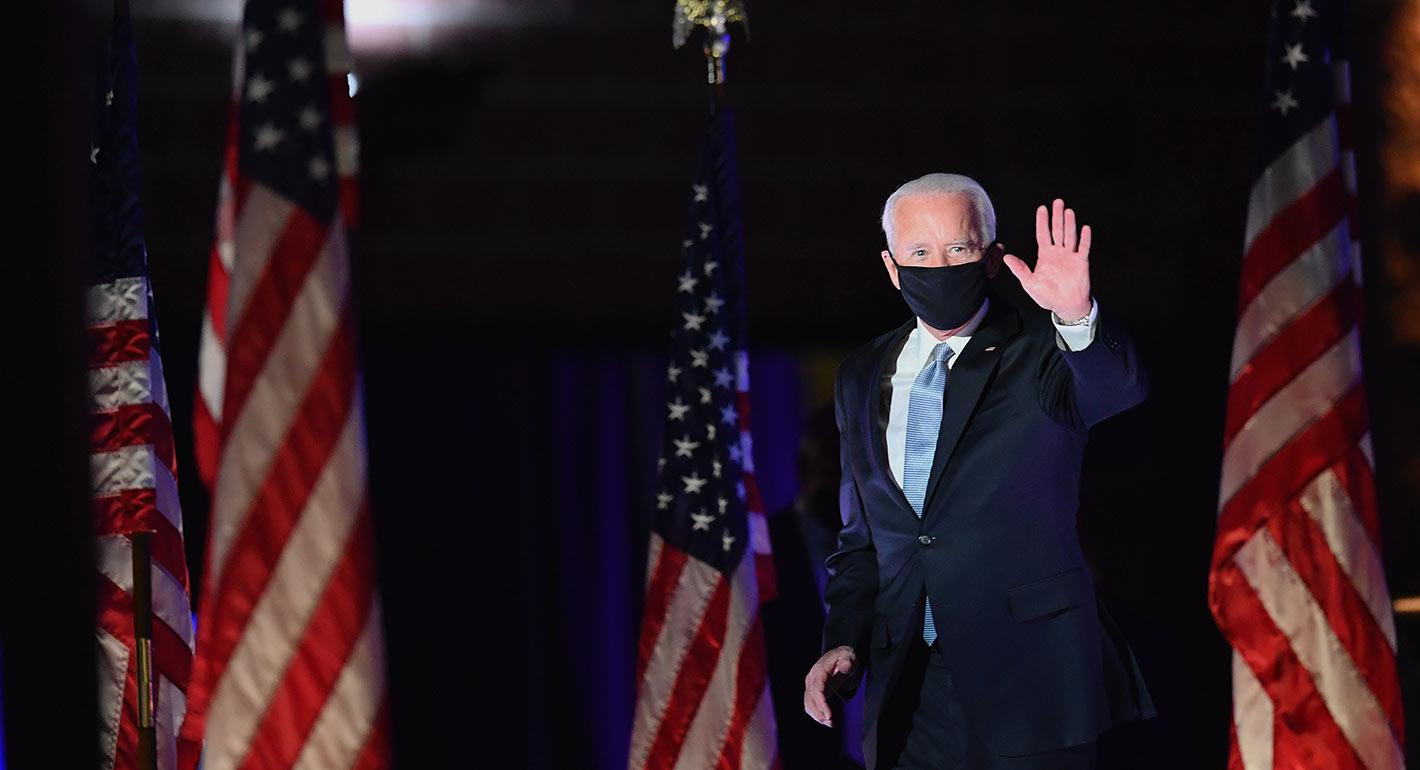
The conventional wisdom is that the special relationship between Washington and London will suffer a blow under President-elect Joe Biden. But that needn’t happen.
Source: Foreign Policy
The conventional wisdom is that the special relationship between Washington and London will suffer a blow under President-elect Joe Biden. But that needn’t happen. In the phone call between Biden and British Prime Minister Boris Johnson, both leaders expressed a “desire to strengthen the special relationship” according to the official readout. While it is true that Biden is skeptical of Brexit, will staunchly defend the Good Friday Agreement in Northern Ireland, and prioritizes rebuilding relations with the European Union, a Biden presidency would also offer new opportunities for the United Kingdom. In particular, while President Donald Trump narrowly fixated on an advantageous bilateral trade deal, Biden has an opportunity to engage both the EU and the U.K., helping to reforge foreign policy ties between the two and plugging the United States back into these conversations.
A trade deal with the EU before the end of the year and the departure from the single market is crucial to Britain’s chances of engaging the new Biden administration. Washington, too, has significant stakes in this outcome. At a time when Europe is facing growing authoritarian pressure from Russia and China, ensuring unity inside the Western tent ought to be a top objective for any U.S. administration. But even with a trade deal, there will still be a need for the U.K. and the EU to agree on a framework for cooperating on foreign and security policy—something Downing Street has resisted discussing so far for fear of losing leverage in the ongoing negotiations.
During the Trump administration, the United States has taken a backseat role in these discussions and failed to recognize the wider stakes involved. Underpinning Trump’s approach was a sense that the Brexit cause is analogous to his own “America first” populist-nationalist movement at home. Having greeted the British decision to leave the EU as a “great victory,” Trump repeatedly urged the U.K. government to pursue a hard Brexit or even to “walk away” from talks with the EU, which he views as an economic competitor and a “foe.” Despite this, he did little to materially support London. Instead, his political criticism did serious harm to then-Prime Minister Theresa May’s political credibility.
“America first” saw the U.K. end up in the same camp as other European countries lamenting Trump’s exit from the Paris climate accords, the Iran nuclear agreement, and the World Health Organization. Even on issues where London hoped to engage Washington, British officials ended up disappointed by a lack of American responsiveness when pressed for forward-looking multilateral plans on securing critical supply chains or 5G amid rising tensions with China. It took China’s own aggressiveness over Hong Kong to push London into action, not an American lead.
As with much else, Biden’s position would be exactly reversed. Biden and his advisors view Brexit suspiciously and have expressed a strong desire to repair America’s battered relations with the European Union. Unlike Trump, Biden is positive about the EU, seeing Brussels as a key partner for advancing American interests. Biden strongly opposes any attempt by the U.K. to walk back its commitments in the EU-U.K. withdrawal agreement signed in January regarding Northern Ireland in such a way that could jeopardize the Good Friday Agreement, and he has issued a tweet and a campaign statement criticizing the controversial Internal Market Bill, much to Downing Street’s chagrin.
But neglecting London in favor of mainly engaging with Berlin, Paris, and Brussels would be a mistake. Despite years of strategic paralysis following the Brexit vote, the U.K. still plays an important role for European security and has been showing signs of a newfound foreign-policy activism. For example, the Royal Navy’s new carrier strike group, which the Navy describes as “the largest and most powerful European-led maritime force in almost 20 years,” recently began patrolling the North Sea. British forces also remain in the Baltics as part of NATO’s forward presence deployment in the area. As the host of last year’s NATO summit, the U.K. has also signaled it wants to play a stronger role in the trans-Atlantic alliance in the coming years as a way to compensate for Brexit. Furthermore, the government’s new $21.9 billion defense budget hike will be the country’s biggest military investment since the Cold War at a time others are scaling down. It will enhance Britain’s status as Europe’s leading military power ahead of France, includes innovative investments in a cybersecurity force and artificial intelligence agency, and is meant to demonstrate international commitment.
London has also been at the forefront of responding to recent security and human rights incidents in Europe’s neighborhood recently. In September, Foreign Secretary Dominic Raab announced plans to impose Magnitsky-style human rights sanctions against Belarusian officials responsible for the illegal crackdown on peaceful protesters, in coordination with Canada, before the EU was able to reach agreement. The Belarusian opposition leader Svetlana Tikhanovskaya praised “all action” Britain as “an example to the whole world.” The U.K. has also imposed targeted sanctions on Russian officials for the poisoning of opposition leader Alexei Navalny and just completed an ambitious trade and strategic partnership agreement with Ukraine, which also includes military assistance. Britain’s launch of the Global Media Defence Fund, housed at UNESCO, again with Canada, has also shown creativity in standing up for human rights.
Nor has Brexit led, as many in Washington feared, to a narrowly mercantilist Britain: a “Singapore-on-Thames” putting interests over values. As part of the government’s “Global Britain” foreign-policy vision, the U.K. has become more forward-leaning on addressing challenges stemming from China’s growing international assertiveness. For example, in response to China’s crackdown on protests in Hong Kong, the U.K. quickly suspended its extradition treaty with Hong Kong and rallied Australia and Canada to join it in condemnation before the United States chose to do so. Britain’s decision to strip Huawei from its 5G network has been seen as a game-changing event for the U.S. campaign against the Chinese company, triggering other European countries to follow. Britain’s role in building up the increased coordination beyond intelligence matters among the Five Eyes alliance has also helped the United States coordinate against challenges posed by China.
Inevitably the U.K. will start at a disadvantage under Biden because of Brexit. It will therefore need to continue demonstrating its usefulness to Washington on advancing broader U.S. objectives vis-à-vis Russia, China, and the Middle East, as well as on global issues such as technology, climate, and public health. Given the pivotal role of the City of London and Britain’s myriad offshore territories, London could be Biden’s indispensable partner to cleaning up global finance. Areas where the United States should welcome greater U.K. engagement include security issues in Eastern Europe—especially the “ring of fire” of conflicts and crises now surrounding Russia from Belarus and Ukraine to the Nagorno-Karabakh conflict and instability in Kyrgyzstan.
The U.K. could also use its relatively good bilateral relations with Turkey to engage Ankara diplomatically on security issues in the Eastern Mediterranean and Libya to help defuse tensions in NATO. Raab’s recent call with the Turkish foreign minister urging de-escalation on these various conflicts is a signal of how London can be useful in the region—complementing Paris’s current tough talk and Berlin’s careful foot-dragging. An incoming U.S. administration immediately torn and pulled between domestic and foreign crises needs as much support as it can get from allies with their own resources.

Former Director, Europe Program, Fellow
Erik Brattberg was director of the Europe Program and a fellow at the Carnegie Endowment for International Peace in Washington. He is an expert on European politics and security and transatlantic relations.
Ben Judah
Ben Judah is a British-French journalist and the author of This Is London and Fragile Empire.
Carnegie does not take institutional positions on public policy issues; the views represented herein are those of the author(s) and do not necessarily reflect the views of Carnegie, its staff, or its trustees.

The EU can impose sanctions but struggles to enforce them without the United States. With Washington increasingly disinterested in backing European interests, the bloc must now fend for itself.


Nicu Popescu, Tiago Antunes
Global and rising powers will need to engage with Africa’s priorities and agency in order to secure the continent’s increasingly attractive partnerships.

Fonteh Akum

Rubio’s recent visit brought welcome attention, but more capital requires governance changes that may be a hard sell for regional governments.

Jennifer B. Murtazashvili

America’s foreign-policy objectives have grown more demanding while Americans have demanded greater focus on their own affairs.

Stephen Wertheim

Japan’s long-term security policy is driven by concerns about China, and there is little appetite for (or interest in) pursuing a confrontation with Moscow.

James D.J. Brown