

Commentary
With its public finances in shambles, the far right polling at 35 percent ahead of the 2027 presidential election, and a growing protest movement, is France’s crisis a threat to the EU’s geopolitical awakening?
Rym Momtaz, ed.
{
  "authors": [
    "Arvind Gupta",
    "Rudra Chaudhuri",
    "Harsh Pant",
    "Reuben Abraham",
    "Nitin Pai"
  ],
  "type": "commentary",
  "centerAffiliationAll": "dc",
  "centers": [
    "Carnegie Endowment for International Peace",
    "Carnegie India"
  ],
  "collections": [
    "Coronavirus"
  ],
  "englishNewsletterAll": "ctw",
  "nonEnglishNewsletterAll": "",
  "primaryCenter": "Carnegie India",
  "programAffiliation": "SAP",
  "programs": [
    "South Asia"
  ],
  "projects": [],
  "regions": [
    "South Asia",
    "India"
  ],
  "topics": [
    "Domestic Politics"
  ]
}
Source: Getty
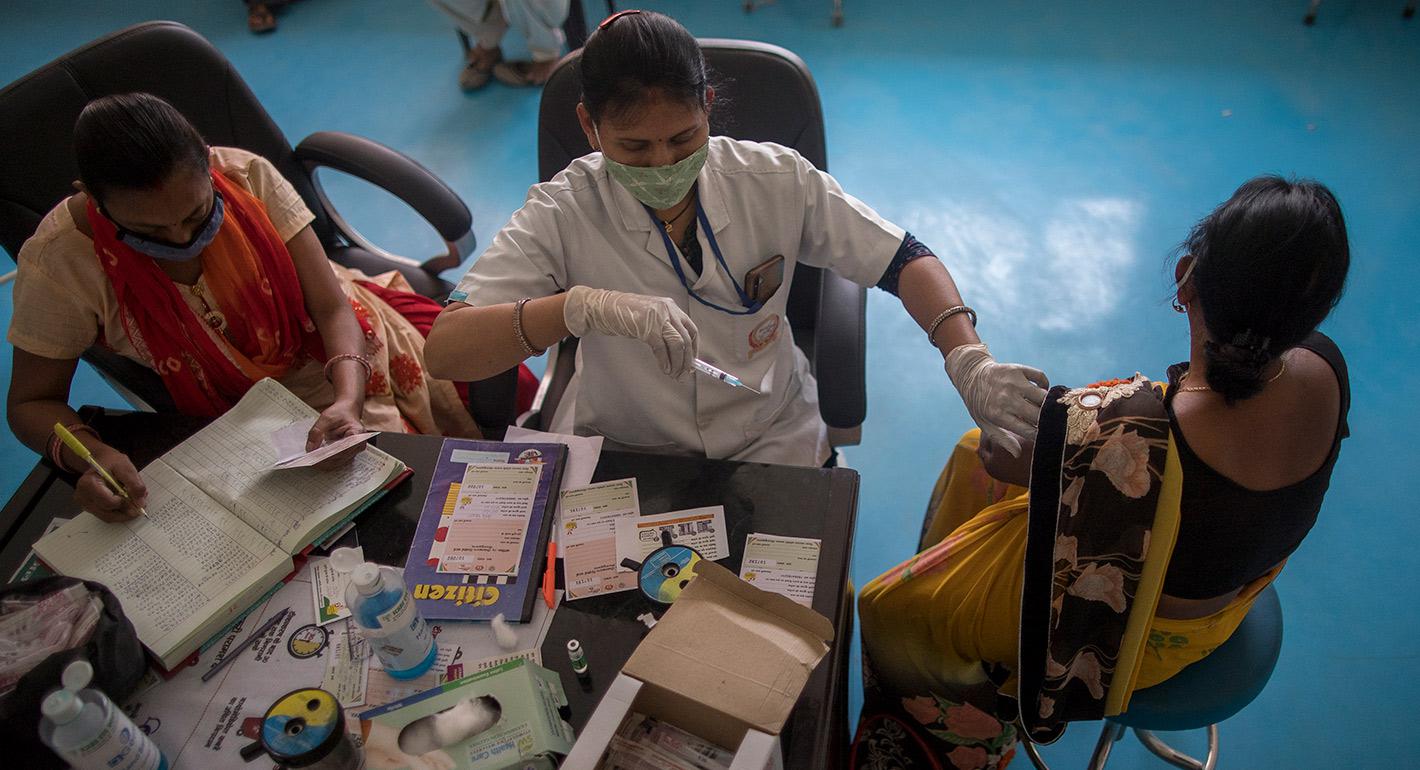
The COVID-19 crisis in India is devastating. The Biden administration must consider exceptions to the Defense Production Act and ease the global vaccine supply chain.
The current public health crisis in India is devastating. On April 22, 2021, India recorded over 330,000 COVID-19 cases and 2,000 fatalities. It is unlikely that the second wave of the pandemic will level out anytime soon. The desperate need for oxygen, medical supplies, and hospital beds has overwhelmed public and private health facilities. Clearly, the state machinery will need to be mobilized in this war against the fast-spreading disease that appears to mutate in different ways and forms at a shattering speed.
To arrest this crisis, there is an equally urgent need to accelerate India’s vaccine drive. India, as is well known, is one of the world’s largest producers of COVID-19 vaccines. “Made-in-India” vaccines have been delivered—by way of aid and under commercial contract—to ninety-five countries across the globe. From Argentina to Bangladesh and El Salvador to Sierra Leone, India has distributed 66.2 million vaccines to date.
However, India is currently facing an acute vaccine shortage at home. On April 19, the Indian government announced that Indians above the age of eighteen will be eligible to get their shots. Making sure that the tens of millions of Indians are able to access vaccines is the only way in which a country as geographically challenging as India will be able to turn the tables on this fast-moving disease.
Yet, without the support of Joe Biden’s administration in Washington, this ambition—of delivering vaccines across India—is at risk of remaining just that, an ambition.
In April 2020, then U.S. president Donald Trump invoked the Defense Production Act (DPA), a law that grants the U.S. president significant emergency authority to direct domestic industries. As Trump made clear, the order was meant to “save lives by removing obstacles in the supply chain that threaten the rapid production of ventilators.” In February 2021, Biden announced a set of plans to hasten inoculations. In March 2021, Biden vowed that vaccines will be available for “every adult in America by the end of May.”
On the first two working days of the Biden administration, on January 20 and 21, 2021, the president signed Executive Orders 13987 and 14001. The aim of these measures was to ensure “a sustainable public health supply chain.” In effect, this meant that manufacturers in the United States, and those registered in the United States but based in Europe and other parts of the world, needed to prioritize supplies for the domestic market within the United States.
Given the globally connected nature of supply chains, Biden’s vow has had other anticipated effects. It means that products like bags and filters, cell culture medias, single-use tubing assemblies, and other raw materials crucial for the production of vaccines in other parts of the world, and especially in India, may face imminent supply constraints.
In practice, this has meant that the largest vaccine manufacturer in the world—the Serum Institute of India—is today hamstrung in its efforts to produce vaccines for both the Indian and global markets. It is crucial to keep in mind that without these ingredients, it is increasingly unlikely that the Serum Institute will be able to prioritize vaccine production under contract—through global vaccine alliances such as Gavi—for countries across the world.
In the case of Covishield, the Oxford-AstraZeneca vaccine as manufactured by the Serum Institute for domestic use in India, the DPA has restricted the supply of essential ingredients. As worryingly, many more such crucial ingredients for Covovax, the vaccine co-developed by the Serum Institute along with the global biotechnology company Novavax, have been reserved for the domestic market in the United States. In sum, over a dozen items desperately needed for vaccine manufacturing in India currently fall under the purview of the DPA.
If this system of prioritization continues, India will be unable to accelerate its own vaccination program, compounding a growing national health and security disaster. Furthermore, the ninety-five countries that have been supplied vaccines manufactured in India will, in all probability, need to turn to alternative suppliers. Many of these countries are likely to turn to China’s vaccines. The efficacy of such supplies is highly questionable. Worse, most of the world will have to live with meager supplies.
Every country, including India, has designed protectionist policies in the interest of their populations at this time of unprecedented crisis. However, this has not stopped many of these countries from making exceptions in times of national emergencies. It is well worth remembering that when New York and other parts of America were facing a public health emergency in late 2020, the Indian government removed an export ban on the active pharmaceutical ingredient hydroxychloroquine. At the time, Trump hailed the drug as a “game changer.” The Indian government made this call despite stark criticism at home. In addition, the government eased the ban against nitrile butadiene rubber gloves, in the interest of protecting frontline workers across the globe.
At this time, the United States is not facing an emergency. With a few exceptions, the trend of active coronavirus cases is on a downward slide. Reportedly, “tens of millions of doses” of the AstraZeneca vaccine “are sitting idly in American manufacturing facilities.” According to media reports, the number of surplus vaccines available—after every American has been vaccinated—is estimated to be around 70 million. In short, the United States has adequate supplies and more. It is now time to relax the prioritization measures and products that fall under the purview of the DPA.
The Biden administration, and the president himself, has made clear the “dire need to coordinate multilateral action to address COVID-19.” He has pledged, in his own Interim National Security Strategic Guidance, that “America is back. Diplomacy is back. Alliances are back.” It can only be hoped that this president urgently heeds to the instinct for true internationalism that he and his administration hail as a global promise for the future.
India is a partner of the United States like none other. Today, it is a country in need of a more supportive American approach to supply chains. This is a request to the United States administration to seriously, urgently, and actively consider exceptions to the DPA. Such an action will, in time, not only save lives in India and other large parts of the world that have been reliant on vaccines manufactured in India, but will also reassure the world’s largest democracy of the promise of a truly global America.
Arvind Gupta is the director of the Vivekananda International Foundation.
Rudra Chaudhuri is the director of Carnegie India.
Harsh Pant is the director of studies and the head of the Strategic Studies Programme at the Observer Research Foundation.
Reuben Abraham is the CEO of the IDFC Foundation and IDFC Institute.
Nitin Pai is the co-founder and director of the Takshashila Institution.
Arvind Gupta
Arvind Gupta is the director of the Vivekananda International Foundation.

Former Director, Carnegie India
Rudra Chaudhuri was the director of Carnegie India. His research focuses on the diplomatic history of South Asia, contemporary security issues, and the important role of emerging technologies and digital public infrastructure in diplomacy, statecraft, and development. He and his team at Carnegie India chair and convene the Global Technology Summit, co-hosted with the Ministry of External Affairs, Government of India.
Harsh Pant
Harsh Pant is the director of studies and the head of the Strategic Studies Programme at the Observer Research Foundation.
Reuben Abraham
Reuben Abraham is the CEO of the IDFC Foundation and IDFC Institute.
Nitin Pai
Nitin Pai is the co-founder and director of the Takshashila Institution.
Carnegie does not take institutional positions on public policy issues; the views represented herein are those of the author(s) and do not necessarily reflect the views of Carnegie, its staff, or its trustees.

With its public finances in shambles, the far right polling at 35 percent ahead of the 2027 presidential election, and a growing protest movement, is France’s crisis a threat to the EU’s geopolitical awakening?

Rym Momtaz, ed.

Putin’s conservative staffing policies and search for ever greater control have cemented parliament’s transformation into a bureaucratic appendage of the executive branch.

Andrey Pertsev

Ex-president Gurbanguly Berdimuhamedov remains interested in politics, but his son Serdar, Turkmenistan’s current president, is becoming increasingly independent and willing to break with his father’s legacy. If their covert rivalry goes too far, both risk losing power.

Galiya Ibragimova
Economic recovery has brought Sri Lanka a modicum of stability, but domestic strains and great-power rivalry could test how long it lasts.

Avinash Paliwal
Today’s global democratic recession is partly rooted in a common perception that democracies have a delivery problem, with many citizens in both autocracies and democracies alike now believing that strongmen can achieve better governance outcomes. But a study of four countries in Africa reveals that democratic-leaning governments have demonstrated better governance performance than autocratic governments.


Sarah Yerkes, Natalie Triche, Amr Hamzawy