

Commentary
European Commission President Ursula von der Leyen is about to give her annual address on the state of the EU. Here’s what she won’t—but should—say.
Rym Momtaz
{
  "authors": [
    "Vladimir Frolov"
  ],
  "type": "commentary",
  "centerAffiliationAll": "",
  "centers": [
    "Carnegie Endowment for International Peace",
    "Carnegie Russia Eurasia Center"
  ],
  "collections": [],
  "englishNewsletterAll": "",
  "nonEnglishNewsletterAll": "",
  "primaryCenter": "Carnegie Endowment for International Peace",
  "programAffiliation": "",
  "programs": [],
  "projects": [],
  "regions": [
    "Russia"
  ],
  "topics": [
    "Economy"
  ]
}
Source: Getty
Is there a realistic format for a political undertaking not to expand NATO to Russia’s borders?
For the last month, Russia has been waging a strategic assault to stop NATO’s expansion to the east once and for all. Moscow is striving to complete what it began in 2014 in Crimea: to alter in its favor the terms on which the Cold War ended.
The campaign began on November 18, when President Vladimir Putin, speaking at a meeting of senior Foreign Ministry officials, called for “serious long-term guarantees that ensure Russia’s security.”
On December 1, at a ceremony for newly arrived foreign ambassadors, Putin was more specific.
“While engaging in dialogue with the United States and its allies, we will insist on the elaboration of concrete agreements that would rule out any further eastward expansion of NATO and the deployment of weapons systems posing a threat to us in close proximity to Russia’s territory. We suggest that substantive talks on this topic should be started. I would like to note in particular that we need precisely legal, juridical guarantees, because our Western colleagues have failed to deliver on verbal commitments they made.”
It would appear that Moscow began to review its “strategic patience” in relations with the West and Ukraine after NATO decided to grant Ukraine the status of Enhanced Opportunities Partner in June 2020. There was talk in Kyiv of attaining the status of Major Non-NATO Ally, which would remove virtually all restrictions on military cooperation with the Americans.
This, combined with Western sanctions against Russia, a lack of progress on implementing the Minsk agreements aimed at ending the conflict in eastern Ukraine, and the immobilization of Russian tools for influencing Ukrainian politics, was seen in Moscow as an alarming sign of Ukraine’s move into the Western security orbit.
Even if the Minsk agreements are implemented in the way that Moscow would like, that still won’t enable Russia to achieve its strategic goals of keeping Ukraine in its own orbit of influence. Reintegrating the pro-Russian breakaway Donbas region into Ukraine’s political system won’t give Russia a veto right on Ukrainian foreign or defense policy. Kyiv will still be able to marginalize the self-proclaimed Donetsk and Luhansk republics, just as President Volodymyr Zelensky managed to do with the pro-Russian oligarch Viktor Medvedchuk, his political party, and TV channels. Implementing the Minsk agreements may destabilize Ukraine in the short term, but Kyiv will adapt rapidly, and then, NATO’s route into Ukraine—if not Ukraine’s into NATO—will be open. Moscow’s fixation on the Minsk agreements has prevented it from solving other problems in its relationship with Ukraine, and left Russia’s relationship with the West hostage to Kyiv’s maneuvering.
Now Moscow is seeking a way out of the impasse by trying to reach an agreement directly with the West that NATO will conclusively cease its expansion, which would force Ukraine to hammer out its relationship with Russia on Russia’s terms. To do this, Moscow needed to create a lever of influence on Western leaders that would prevent them from dismissing Russian concerns.
That lever was provided by Russia’s increased military presence around Ukraine this year. The West believes the Russian leadership is now capable of conducting a limited military campaign against Ukraine that would force Kyiv to accept terms once and for all for ending the conflict that has been simmering in the country’s east for nearly eight years now.
Moscow used this demonstration of military strength to enter into direct discussion with the United States on its agenda. Along with promises that Ukraine won’t join NATO, Russia also wants guarantees that no NATO military infrastructure or facilities will appear on Ukrainian territory, even if it does not formally join the alliance. Moscow has made its demands public and is insisting that talks should begin as soon as possible.
Putin’s call for legally binding agreements that NATO will not expand any further east has reduced its maneuvering room. It’s hard to imagine the alliance’s partners agreeing to any such thing, especially in a legally binding form, which would, in the United States, need to be ratified by the Senate. In any case, Moscow’s unrealistic demands—and their public announcement, when such sensitive issues are better discussed in private—have prompted suspicion in the West that they are simply a cover operation, and that the tight deadline issued by Moscow for starting talks indicates an imminent decision on a military operation.
Nor has Moscow proposed any concessions of its own in exchange for the military and political limitations it would like to impose on NATO countries and Ukraine—other than repeating an old initiative for a moratorium on deploying short- and medium-range missiles in Europe.
Still, we can assume that the military threat on Ukraine’s borders will prompt discussion within NATO of ceasing its expansion, especially if U.S. President Joe Biden (and his French counterpart Emmanuel Macron) personally bring up the issue. In the United States, the possibility has been discussed at the level of experts. The question is how to formulate such a decision in a way that would suit both sides and would not require the North Atlantic Treaty to be amended.
So is there a realistic format for a political undertaking not to expand NATO to Russia’s borders? There are two possible options. The first is to include a corresponding point in the 2022 NATO summit declaration in Madrid stating that the alliance will not expand any further to the east, and that this political declaration annuls all previous statements. That would allow NATO to disavow the declaration from the Bucharest summit in 2008, which promised that Ukraine and Georgia “will become members of NATO,” while preserving the open door policy enshrined in its founding treaty. Russia itself has already suggested something along these lines.
The second option is an analogous point in NATO’s new strategic concept, which is planned to be adopted at the Madrid summit, or a combination of both of these formats. This would not provide legally binding guarantees: NATO’s strategic concept and its summit declarations are political documents and may be reviewed. But such a declaration at the top level would allow Russia to be reasonably confident that the bloc’s expansion would come to a halt.
The political pledge made to Mikhail Gorbachev in 1990 that NATO would not expand its military infrastructure onto the territory of the former East Germany has never been broken. That is better than an unspoken promise not to accept Ukraine into NATO for another ten years. Diplomacy is the art of the possible, and this scenario, unlike others, is possible.
The reaction of the NATO leadership has so far been sharply negative, but Biden has not yet spoken on the issue. It’s true that in any case, he doesn’t have a big enough majority in the Senate right now to get any legal guarantees of non-expansion ratified there. This is why the Iran nuclear deal was formatted as a political commitment, rather than a treaty obligation. Not to mention that within NATO, all thirty member states would have to ratify treaty obligations.
Still, this should be the focus. An agreement to stop expanding NATO up to Russia’s border, regardless of its format, would be pivotal. It would open up the prospect of a different kind of relationship for Russia with the West and with Ukraine (as well as Georgia), while costing the NATO countries nothing but a change in rhetoric.
Stopping NATO’s expansion would make it possible for Moscow and Kyiv to hold direct talks on a conclusive resolution to the conflict based on the real state of affairs. If the two sides manage to reach an understanding on stopping NATO’s expansion to the east, then it should be possible to reach agreements fairly quickly on other “red lines” regarding Ukraine and also arms control.
As in the late 1960s, direct interaction between Moscow and Washington could give a political framework to a future détente, within which agreements would become possible on European security. Still, escalation remains likely, due to unrealistic requirements being made under artificially short deadlines, as well as not enough emphasis on diplomacy—and too much on the military aspect.
Vladimir Frolov

European Commission President Ursula von der Leyen is about to give her annual address on the state of the EU. Here’s what she won’t—but should—say.

Rym Momtaz

Depleted financial reserves and a shrinking tax base mean it is no longer possible to simultaneously deliver high defense spending, price stability, and economic growth.

Alexandra Prokopenko
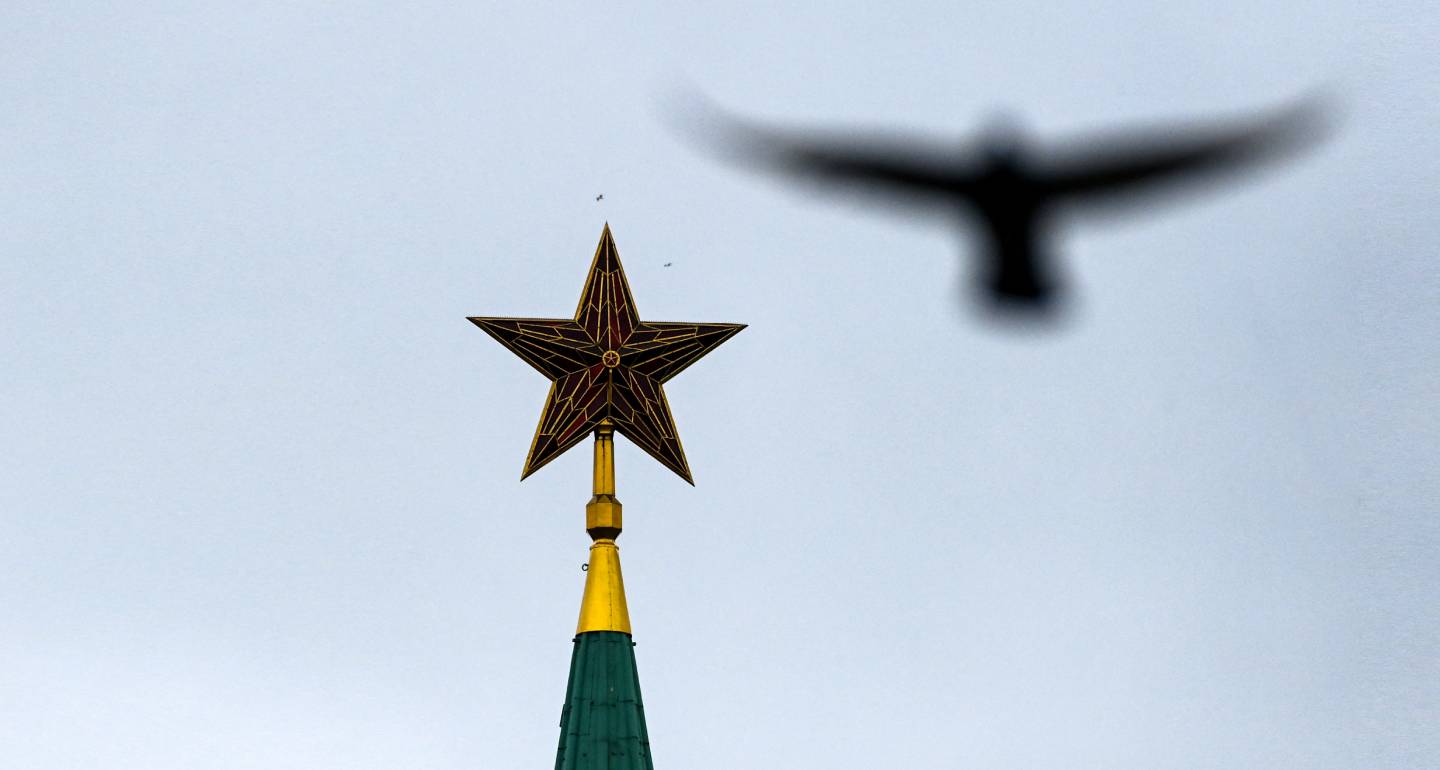
Blurring the line between humans and animals is a long-standing tradition in social utopian prose. In his latest novel, Leonid Bershidsky reminds us that in social experiments, people are often treated no differently than animals.

Alexander Baunov
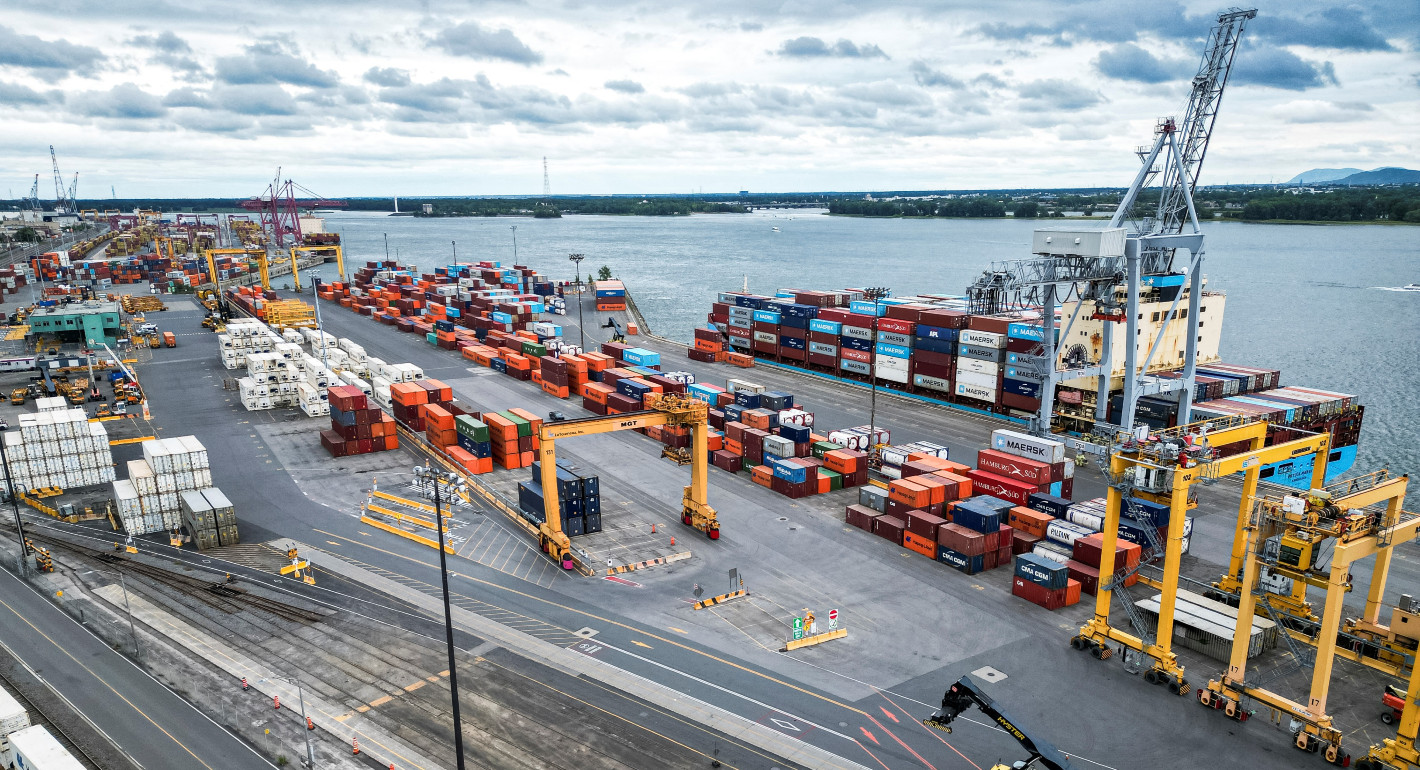
U.S. trading partners in Asia are closely watching the dispute for signs of how it may affect their own interests.
Barbara Weisel
While France and Australia are seeking to establish the legal obligations of messaging apps like Telegram, Russia wants total subordination.

Maria Kolomychenko