

Research
- +16
Stewart Patrick, Erica Hogan, Oliver Stuenkel, …
{
  "authors": [
    "Trinh Nguyen"
  ],
  "type": "commentary",
  "centerAffiliationAll": "dc",
  "centers": [
    "Carnegie Endowment for International Peace"
  ],
  "collections": [
    "Southeast Asia’s Diverse Futures"
  ],
  "englishNewsletterAll": "asia",
  "nonEnglishNewsletterAll": "",
  "primaryCenter": "Carnegie Endowment for International Peace",
  "programAffiliation": "AP",
  "programs": [
    "Asia"
  ],
  "projects": [],
  "regions": [
    "Southeast Asia",
    "Indonesia",
    "Myanmar"
  ],
  "topics": [
    "Economy",
    "Trade"
  ]
}
Source: Getty
Tourism and manufacturing are rebounding after coronavirus-related disruptions, but the recovery is fragile.
Last year, Southeast Asia’s low vaccination rates and strict lockdowns reverberated across the world, mostly in the form of supply shortages. The region is a key manufacturing center for electronics and labor-intensive goods, and the disruptions—ranging from footwear and textiles from Vietnam and semiconductors from Malaysia—have been most acute in the United States. Given Southeast Asia’s crucial role in the global supply chain, its performance in 2022 is important for not just its 655 million people but for the entire world.
COVID-19 has hit the region hard: contact-based economies, especially tourism, account for a large share of GDP; governments have limited ability to provide financial support; and acquisition and distribution of vaccines has proved difficult. These limitations formed a perfect storm in the second half of 2021, when the Delta variant caused a spike of infections, and regional policymakers had to resort to lengthy lockdowns, which weakened the economy and disrupted tourism, manufacturing, and global supply chains. In the third quarter, economic output fell by 6.2 percent in Vietnam as its southern industrial centers were largely shut for months. In Malaysia, output dipped by 4.5 percent as industries ranging from semiconductors to palm oil halted under government restrictions. In Thailand, drops in domestic and tourism sectors prompted a 0.3 percent fall in output.

But the region’s growth is poised to make a gradual comeback this year. Many countries now have boosted their vaccination efforts, prompting policymakers to be more willing to refrain from ordering lockdowns and use gentler containment measures. As a consequence, the private sector is on the move again, reviving struggling supply chains, allowing the economy to normalize and government revenues to increase. On the fiscal side, government spending, according to budgets unveiled thus far, will be helpful to ensure the recovery takes place, except for Thailand. Malaysia’s and Thailand’s governments are willing add more debt to boost growth, even if they must raise their deficit ceilings (Vietnam is considering this move as well).

But Southeast Asia should not bask in such a recovery, as much of it is making up for underperformance in 2021, especially in domestic demand. The cyclical rebound is fragile, contingent on the resolve of policymakers to push ahead on five factors that will contribute to a much more challenging external environment.
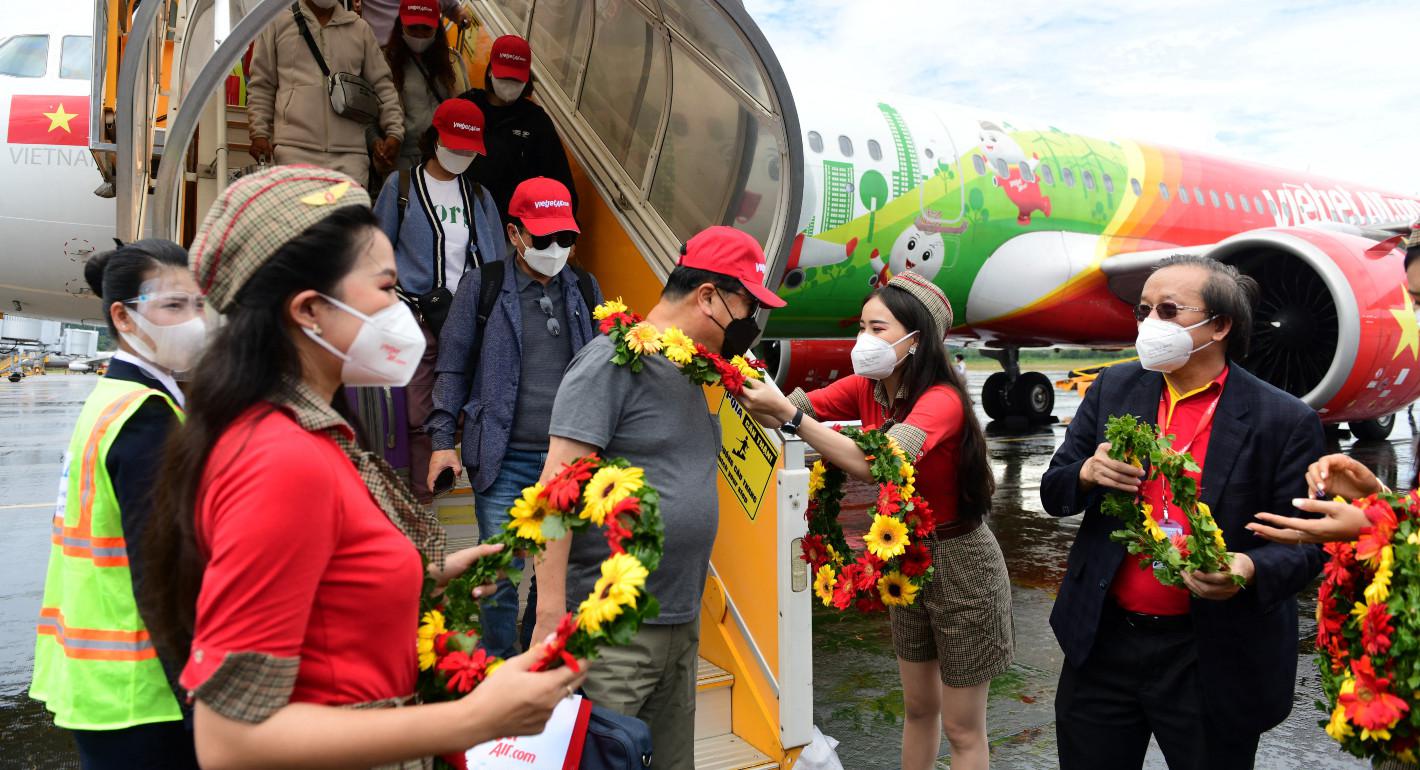
First, tourism isn’t going to fully normalize in 2022, even if the region presses ahead with reopening. This is especially true with Chinese tourists—who accounted for about one-third of all visitors pre-pandemic—staying home. Even if the country can attract the rest of the world to return to its beaches and temples—which is unlikely, as travel in Asia remains restricted and appetite to travel has been dampened by the Omicron variant—it still needs to make up for a substantial drop-off. Thailand’s plan is to expand medical tourism and issue longer-term visas, as well as attract visitors from other markets to reduce dependency on China. Bali is following Thailand’s footstep by adding medical tourism to boost its offerings.

The data shows promise: in October, 20,270 tourists arrived in Thailand, and in November, that number rose to 91,260. Thailand would typically see over 3 million tourists per month pre-pandemic, so there’s still a major gap, but there’s evidence that the tourists who are visiting are spending more money, pushing the country’s income flows into positive territory.
That said, Omicron has derailed the progress, albeit temporarily, as the government delayed the issuance of quarantine-free visas, suggesting a bumpy road ahead for international reopening. Other Southeast Asian economies have also been hit by the slow recovery of tourism, although they have less urgency in policy reaction. Indonesia, for example, still requires that tourists quarantine when visiting Bali. The impact is negative on growth, but to a lesser extent than Thailand, given Indonesia’s larger dependency on the domestic economy.
Second, while Southeast Asia is finally sorting out its supply chain disruption and normalizing production and exports, the global economy is slowing, especially in China. That deceleration in China, Europe, and the United States is likely to dampen the region’s export growth in 2022. In Vietnam, production has resumed, but labor shortages remain a key challenge. It needs to speedily work out its supply chain issues before it loses its hard-won foreign direct investment, as investors mull diversifying from too much concentration in China and Vietnam. In Indonesia, commodity exports staged a strong rebound, but the country remains too dependent on coal and natural gas. Both energy sources are likely to retain value in the short term due to strong demand, but in the longer term, coal is seeing headwinds due to its climate change impacts and lack of appetite for investment. The Philippines continues to lag its neighbors in export prowess. And meaningful changes do not appear to be imminent, as the government has not deemed this a central issue, even in the upcoming presidential elections. Thailand’s exports also face a few challenges, including droughts that have reduced rice yields and manufacturing that has lost competitiveness.
Third, external financial conditions, led by the U.S. Federal Reserve, are tightening and spilling over to the region via Southeast Asia central banks’ interest rate hikes. The region can stomach gentle rate hikes, but a much fiercer cycle may significantly derail the recovery, especially with rising debt. And it isn’t just fiscal debt—places like Thailand have higher household debt, limiting the ability of the central bank to raise rates without significantly curbing private consumption. While it’s unlikely that Southeast Asia will falter on tighter external conditions—it has substantial foreign exchange reserves, manageable level of debts thanks to lessons learned from the 1997 Asian Financial Crisis, and economies that are expected to perform stronger—a faster than expected interest rate hike by the Federal Reserve may dent the recovery.

Fourth, increasing domestic demand in 2022 will push Southeast Asia’s energy consumption higher, which will put pressure on its capability to balance between short-term energy supply needs and longer-term objectives of more sustainable growth through clean energy. The International Energy Agency estimates that the region’s energy demand will rise 60 percent by 2040, or 12 percent of the global rise. Electricity demand is expected to increase 4 percent each year until 2040, twice that of the global average. As of now, electricity is only 16 percent of Southeast Asia’s total energy usage, but that will rise as the region sees increased demand for cooling and other electronics associated with higher incomes.
The region has ambitious goals to reach net zero by roughly the first half of the century (except the Philippines, which doesn’t have a stated goal). To get there, governments have a lot of work to do to move to clean energy. Vietnam, for example, still relies on fossil fuels for 84 percent of its energy needs, and half of its energy comes from coal alone. The rest of Southeast Asia relies less on coal, but their energy sources depend heavily on other fossil fuels, with Singapore at 98 percent, Thailand 79 percent, Indonesia 76 percent, Malaysia 67 percent, and the Philippines 66 percent. In other words, the region has plenty of room for improvement.

That said, there is clear progress in the region. The ASEAN Plan of Action for Energy Cooperation lays out plans for a regional power grid, a common liquefied natural gas market, cleaner coal technology, an increase in renewables and civilian nuclear energy capabilities, and more. And there has been progress. Despite its reliance on fossil fuels, Vietnam has become a renewable-energy leader in Southeast Asia, thanks to a mix of favorable tariffs and tax incentives. More will come as its master plan includes a financing component to help it pivot to a greener path. The region’s dependency on fossil fuel creates opportunities for a more sustainable supply mix, but the transition will be challenging, as it requires nimble balancing between higher energy demand and cleaner energy supply without significantly stoking inflation and eroding profit margins as well as raise costs for households.
Fifth and finally, domestic politics and geopolitics are a concern in 2022. The Philippines is having a presidential election in May, and the expansionary fiscal budget is a way for the outgoing president to grow the Philippines out of its funk. However, political considerations may outweigh long-term economic needs. Thailand’s politics have clouded its economic outlook, as the government focuses on short-term survival over longer-term solutions, such as how to limit its overdependency on tourism. Malaysia, where political gridlock has hampered its ability to tackle long-standing issues, could have a general election called, especially with its largest-ever budget in 2022.

In addition, the rivalry between the United States and China presents both challenges and opportunities for Southeast Asia, especially as the relationship between the two powers remains as confrontational as ever. The major opportunity is in investment—especially in supply chain reshuffling to diversify risks, and one that only few of the region’s economies have capitalized. For example, the jockeying for power has allowed Vietnam to escape the United States’ currency-manipulator list, as it sees Vietnam as key for its Indo-Pacific strategy. Both China and the United States have courted Vietnam with vaccine donations and state visits. The European Union, Japan, and South Korea are also courting the region to diversify trade and investment linkages, including giving Vietnam a prized free trade agreement.

In another example, Intel announced that it will invest in a U.S. $7 billion semiconductor packaging facility in Malaysia. India is also trying to capitalize on the U.S.-China rivalry by allocating U.S. $10 billion in incentives to attract firms looking to diversify. (Intel is looking into build a chip manufacturing plant there.) While there are some advantages to being in middle of the U.S.-China rivalry, the challenges include economic risks and security concerns. Such an environment requires stealthy maneuvering.
The region leaves behind a year of disappointing growth, much of it due to its own domestic suppression, and looks forward to a more hopeful 2022. And it has reasons to be: Southeast Asia is less likely to have to resort to lockdowns this year, a key reason for its underperformance in 2021. Policy support is coming via fiscal policy, although less so for monetary. While such optimism is warranted, caution is wise, as the region will likely face a more challenging external environment, requiring policymakers and investors to be on alert to navigate choppier water.

Former Nonresident Scholar, Asia Program
Trinh Nguyen was a nonresident scholar in the Asia Program at the Carnegie Endowment for International Peace.
Recent Work


Stewart Patrick, Erica Hogan, Oliver Stuenkel, …
Trinh Nguyen
Carnegie does not take institutional positions on public policy issues; the views represented herein are those of the author(s) and do not necessarily reflect the views of Carnegie, its staff, or its trustees.
Despite public disputes over trade and immigration, the strategic partnership’s foundations remain sturdy.

Sameer Lalwani

With its public finances in shambles, the far right polling at 35 percent ahead of the 2027 presidential election, and a growing protest movement, is France’s crisis a threat to the EU’s geopolitical awakening?

Rym Momtaz, ed.

Without a ceasefire with Ukraine on attacking each other’s energy infrastructure—to which the Kremlin is unlikely to agree—the diesel agreement between Putin and Trump is largely for show, rather than representing a genuine increase in the volumes of Russian diesel on the global market.

Sergey Vakulenko

Russian strikes are weakening the economy sustaining Ukraine’s war effort. Closing the growing funding gap will require more European support and politically contentious reforms in Kyiv.

Balázs Jarábik

Much has been said of the changes Brussels is trying to make to the EU enlargement process. Here’s why gradual integration might—or might not—be the answer.

Dimitar Bechev