• Research
  • Emissary
  • About
  • Experts
Carnegie Global logoCarnegie lettermark logo
Democracy
  • Donate
{
  "authors": [
    "Paul Haenle",
    "Huong Le Thu"
  ],
  "type": "questionAnswer",
  "centerAffiliationAll": "",
  "centers": [
    "Carnegie Endowment for International Peace",
    "Carnegie China"
  ],
  "collections": [
    "Carnegie China Commentaries"
  ],
  "englishNewsletterAll": "",
  "nonEnglishNewsletterAll": "",
  "primaryCenter": "Carnegie China",
  "programAffiliation": "",
  "programs": [],
  "projects": [],
  "regions": [
    "North America",
    "United States",
    "East Asia",
    "China",
    "Southeast Asia"
  ],
  "topics": []
}

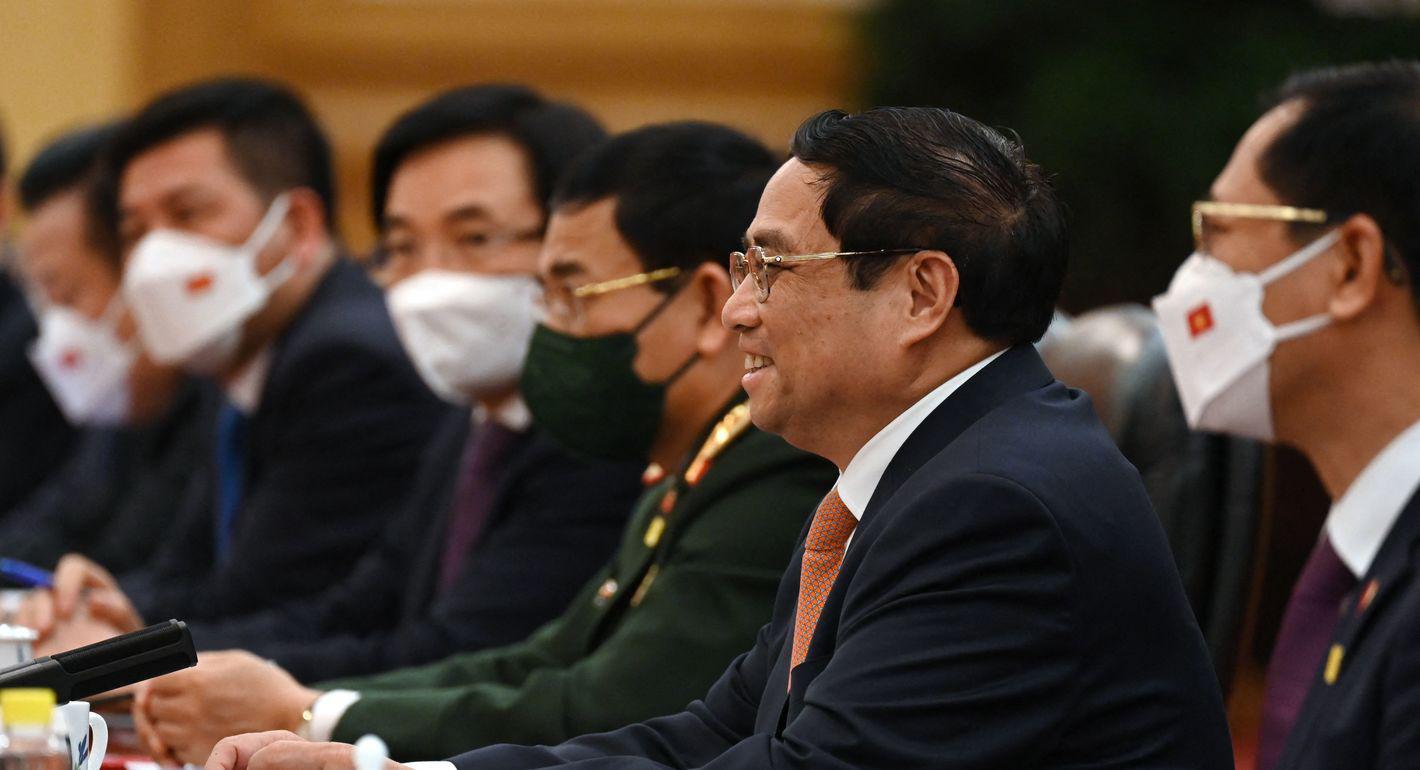
Source: Getty

Q&A
Carnegie China

Vietnam’s Response to China’s Global Security Initiative

There is a certain level of restraint, but there is also a lingering distrust.

Link Copied
By Paul Haenle and Huong Le Thu
Published on Oct 18, 2023

On a recent episode of the China in the World podcast, Paul Haenle spoke with Huong Le Thu, nonresident fellow with the Southeast Asia Program at the Center for Strategic and International Studies, about Vietnam’s views of China’s foreign policy. A portion of their conversation, which has been edited and condensed for clarity, is below.

Paul Haenle: China recently announced three new initiatives: the Global Security Initiative, the Global Development Initiative, and the Global Civilization Initiative. This has been an effort by China to bring its concepts and approaches of solving global security and development challenges to the international stage.

As you know, the U.S. and China each present different narratives about their role in the region. These differences were on display in the two countries’ defense ministers’ speeches at the Shangri-La Dialogue in Singapore last June. How does Vietnam assess these dueling narratives?

Huong Le Thu: I am also interested in the role that the narrative battle plays in great power competition. The regional response to China’s narratives is often more restrained than its response to those of the United States. Relative to criticism of the United States’ vision for a “Free and Open Indo-Pacific,” you don’t hear as much open criticism of China’s proposals in the Global Civilization, Development, or Security Initiatives. It is unlikely that anyone will come out and say that these are bad ideas or suspicious in any way.

Paul: What explains the difference in how the region is responding to the initiatives of China and the U.S.?

Huong: The narratives play a different role in each great power’s relations with the region.

China is very sensitive to criticism. Southeast Asian countries refrain from doing anything that could be perceived as offending, contradicting, or criticizing China. There is certainly a concern about retaliation or diplomatic pressure. This is learned from experience. It is not just a perception. For example, with the South China Sea issues, China made explicit that it did not want countries to raise it in regional forums and wanted to deal bilaterally with individual claimant countries.

With the U.S., there are different ways to interpret it. First, regional countries do not expect direct retaliation from the United States. Especially with Singapore and other countries, the United States also explicitly requests to hear different views and feedback from the region. For example, the region’s emphasis on ASESN centrality has helped build that into the Biden administration’s narrative. Official U.S. speeches on the Free and Open Indo-Pacific now pay respect to ASESN centrality. So it is a way for the region to influence U.S. policy.

Back to your question about China’s initiatives: there is a certain level of restraint, but there is also a lingering distrust. If you look at the 2023 State of Southeast Asia survey, it shows that many countries are confused by what the Global Security Initiative is, and many others do not have confidence in it. Two-thirds of the Vietnamese respondents have no confidence in [it], whereas only 11 percent have confidence in it. This comes from historical experience. You can’t have too much confidence in the Global Security Initiative—which claims to be working for broader peace, security, and win-win cooperation—when China has militarized artificial islands around the South China Sea. China’s actions on the ground are incompatible with the narratives it is presenting.

To listen to the full episode, use the player below, or subscribe in your favorite podcast app.

About the Authors

Paul Haenle

Former Maurice R. Greenberg Director’s Chair, Carnegie China

Paul Haenle held the Maurice R. Greenberg Director’s Chair at the Carnegie Endowment for International Peace and is a visiting senior research fellow at the East Asian Institute, National University of Singapore. He served as the White House China director on the National Security Council staffs of former presidents George W. Bush and Barack Obama.

Huong Le Thu

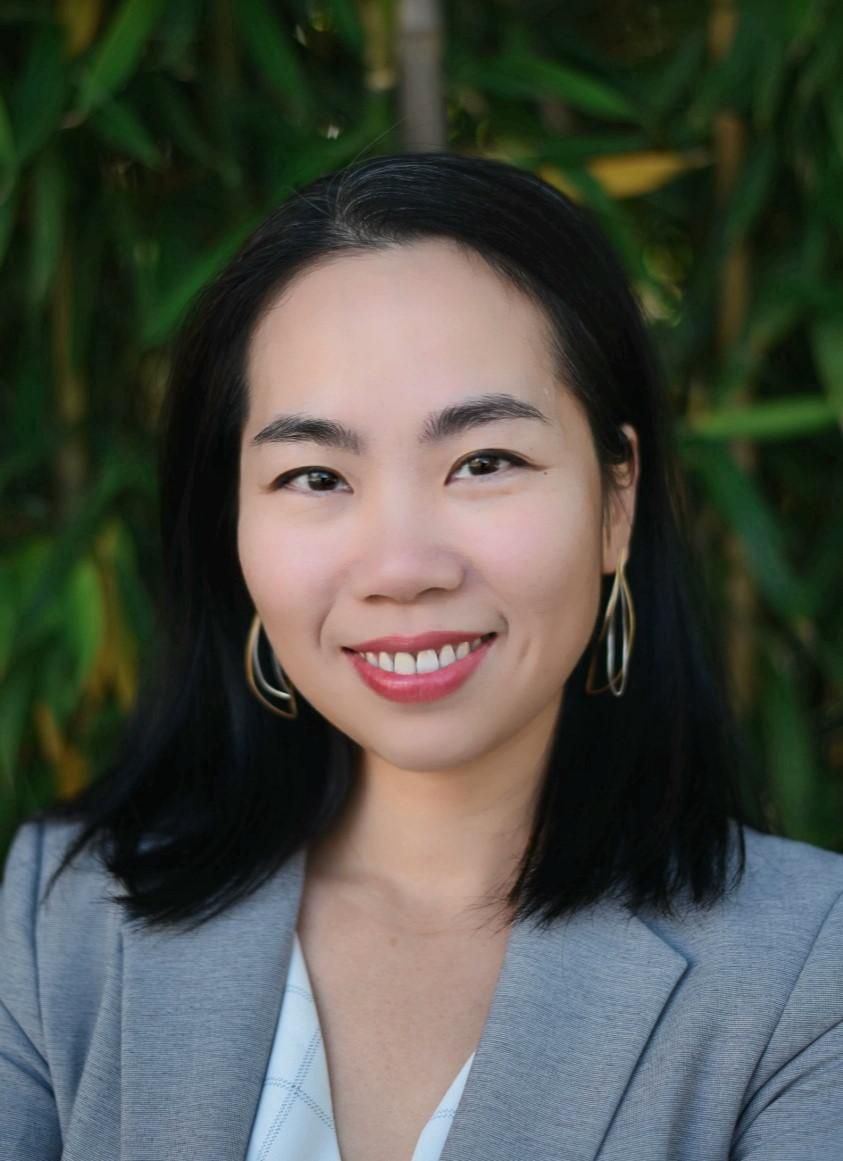
Huong Le Thu is the Deputy Director of the Asia Program at the International Crisis Group.

Authors

Paul Haenle
Former Maurice R. Greenberg Director’s Chair, Carnegie China
Paul Haenle
Huong Le Thu

Huong Le Thu is the Deputy Director of the Asia Program at the International Crisis Group.

Huong Le Thu
North AmericaUnited StatesEast AsiaChinaSoutheast Asia

Carnegie does not take institutional positions on public policy issues; the views represented herein are those of the author(s) and do not necessarily reflect the views of Carnegie, its staff, or its trustees.

More Work from Carnegie Endowment for International Peace

  • Commentary
    Carnegie Politika
    How Far Can Russian Arms Help Iran?

    Arms supplies from Russia to Iran will not only continue, but could grow significantly if Russia gets the opportunity.

      Nikita Smagin

  • Front of a damaged apartment building
    Commentary
    Emissary
    Is a Conflict-Ending Solution Even Possible in Ukraine?

    On the fourth anniversary of Russia’s full-scale invasion, Carnegie experts discuss the war’s impacts and what might come next.

      • +1

      Eric Ciaramella, Aaron David Miller, Alexandra Prokopenko, …

  • People in voting booths
    Commentary
    Emissary
    Indian Americans Still Lean Left. Just Not as Reliably.

    New data from the 2026 Indian American Attitudes Survey show that Democratic support has not fully rebounded from 2020.

      • +1

      Sumitra Badrinathan, Devesh Kapur, Andy Robaina, …

  • A young man uses Kimi, an AI grand model of artificial intelligence launched by Moonshot AI, in Shanghai, China, March 22, 2024.
    Article
    China Is Worried About AI Companions. Here’s What It’s Doing About Them.

    A new draft regulation on “anthropomorphic AI” could impose significant new compliance burdens on the makers of AI companions and chatbots.

      Scott Singer, Matt Sheehan

  • Trump speaking
    Commentary
    Emissary
    Trump’s State of the Union Was as Light on Foreign Policy as He Is on Strategy

    The speech addressed Iran but said little about Ukraine, China, Gaza, or other global sources of tension.

      Aaron David Miller

Get more news and analysis from
Carnegie Endowment for International Peace
Carnegie global logo, stacked
1779 Massachusetts Avenue NWWashington, DC, 20036-2103Phone: 202 483 7600Fax: 202 483 1840
  • Research
  • Emissary
  • About
  • Experts
  • Donate
  • Programs
  • Events
  • Blogs
  • Podcasts
  • Contact
  • Annual Reports
  • Careers
  • Privacy
  • For Media
  • Government Resources
Get more news and analysis from
Carnegie Endowment for International Peace
© 2026 Carnegie Endowment for International Peace. All rights reserved.