• Research
  • Emissary
  • About
  • Experts
Carnegie Global logoCarnegie lettermark logo
Democracy
  • Donate
{
  "authors": [
    "Konark Bhandari"
  ],
  "type": "commentary",
  "centerAffiliationAll": "",
  "centers": [
    "Carnegie Endowment for International Peace",
    "Carnegie India"
  ],
  "englishNewsletterAll": "",
  "nonEnglishNewsletterAll": "",
  "primaryCenter": "Carnegie India",
  "programAffiliation": "",
  "programs": [],
  "projects": [
    "Technology and Society"
  ],
  "regions": [
    "India"
  ],
  "topics": [
    "Military",
    "Technology"
  ]
}
Commentary
Carnegie India

India Signs a Security of Supply Arrangement (SOSA) with the United States: What Can We Expect?

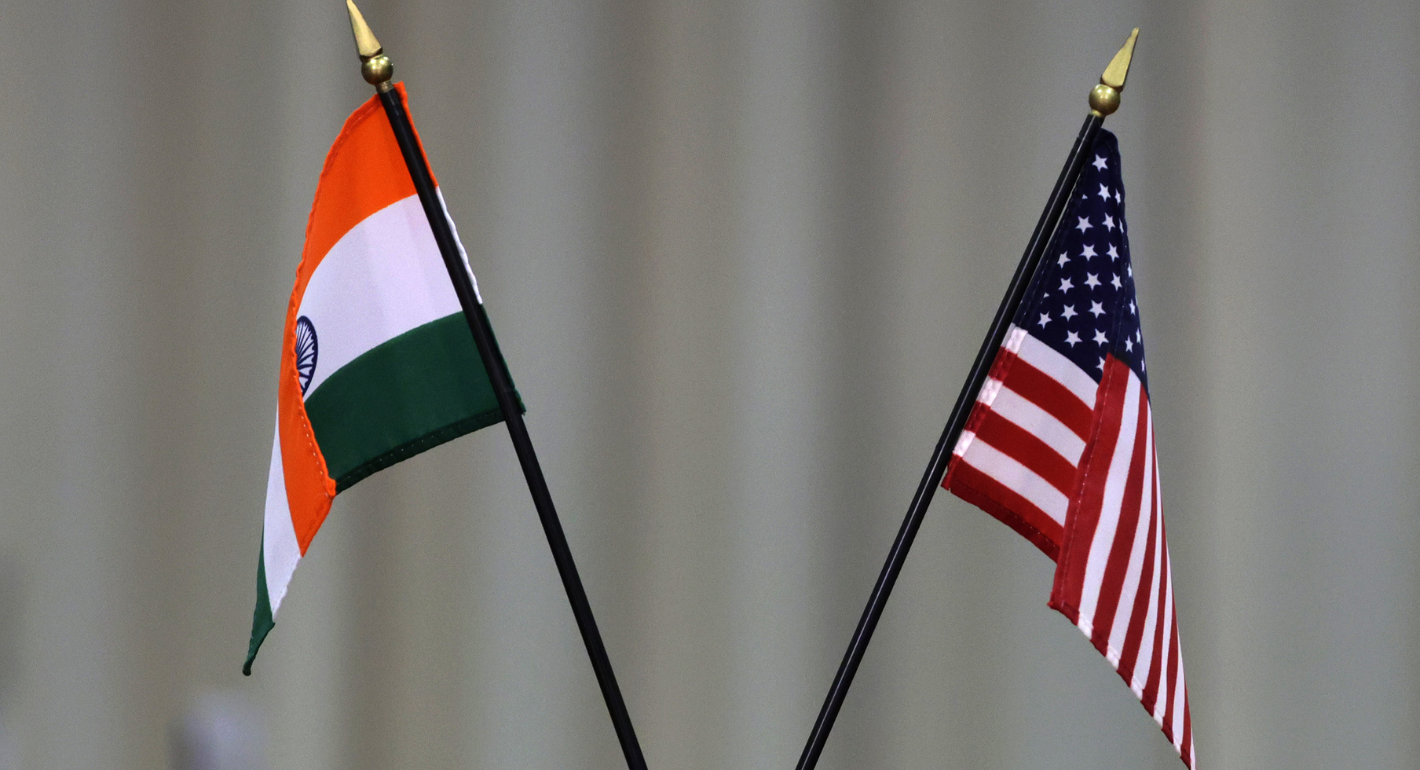
In August 2024, the U.S. Department of Defense (DoD) entered into a Security of Supply Arrangement (SOSA) with the Indian Ministry of Defence (MoD). This commentary attempts to highlight the issues that arise in the wake of the arrangement.

Link Copied
By Konark Bhandari
Published on Sep 6, 2024
Project hero Image

Project

Technology and Society

This program focuses on five sets of imperatives: data, strategic technologies, emerging technologies, digital public infrastructure, and strategic partnerships.

Learn More

Introduction

In August 2024, the U.S. Department of Defense (DoD) entered into a Security of Supply Arrangement (SOSA) with the Indian Ministry of Defence (MoD). The SOSA is a significant milestone in the defense partnership between India and the United States since it would allow both the countries to request each other for priority delivery of certain defense items. These include “materials, services and facilities” that include raw, in-process, or manufactured supply, equipment, component, or part. However, besides this official purpose of enabling both the countries to acquire industrial resources from each other in the face of supply chain disruptions, there is a lack of clarity as to why the arrangement was signed now and its other advantages. This commentary attempts to highlight the issues that arise in the wake of the arrangement.

What does the SOSA entail?

The SOSA allows both the United States and India to request each other for priority delivery of certain defense items. Both the countries will provide each other assurances in this regard through different mechanisms. While the United States already has a Defense Priorities and Allocations System (DPAS) program under which it provides prioritization of the performance of certain contracts, India has agreed under the SOSA to establish a Code of Conduct where Indian firms will agree to make reasonable effort to provide the requested item. Essentially, the Code of Conduct will ensure prioritization of requests made under the SOSA. Similarly, the DPAS will provide priority to the performance of contracts for the provision of defense items requested by India.

The SOSA is non-binding, which means that the firms under the Code of Conduct or DPAS do not necessarily have to fulfil the request, especially if they have other commitments. However, each of the SOSAs entered into by the DoD provides that if a company refuses to provide priority support, then the partner country will investigate the circumstances surrounding the refusal to do so. Similarly, the DoD, upon a request on the part of India, would endeavor to ensure that the performance of contracts requested by the MoD are given priority under the DPAS.

Why now?

It was known for some time that the United States and India were negotiating a SOSA, with the arrangement close to being finalized at the Fifth Annual India–U.S. 2+2 Ministerial Dialogue in December 2024. It appears that the SOSA was signed to propel the Major Defense Partner (MDP) status provided to India in 2016. Indeed, the sides highlighted it as a “pivotal moment” in the MDP relationship they share. However, the rationale for entering into a SOSA may have been more recent—eight SOSAs have been signed in the last one year alone, and India is the eighteenth country to enter into one with the United States. The earlier SOSAs were negotiated with Western European countries and were related to the deployment of their militaries during the wars in Iraq and Afghanistan. These militaries relied on the United States’ defense equipment and needed to ensure the timely supply of spare parts. Accordingly, SOSAs were signed by the DoD with them.

However, the recent spate of SOSAs, especially since 2023, highlight the need for a resilient supply chain. For instance, the United States’ defense industrial base has been under strain when it comes to serving its own needs. There have been an increasing number of calls for the American military to make reforms, especially as they relate to procurement processes and diversifying its base of suppliers. To its credit, the DoD has moved swiftly, initiating new programs that have compressed timelines for securing new and emerging technologies. It has also moved to liberalize export controls when it comes to the transfer of high-tech defense items among certain countries. However, it is felt that more could be done. This may have prompted the United States to consider entering into a flurry of SOSAs with certain countries recently.

What are the possible advantages?

The United States has signed SOSAs with eighteen countries. The provisions of all of them were reviewed, barring the ones with Singapore and India, which are not public yet. The following are the advantages that appear to stem from these agreements.

  1. It may wean India off its traditional reliance on Russian defense items – A request under SOSA is usually a one-time request. Providing India with the option to seek delivery of goods from a supplier under the arrangement allows the country to engage with suppliers that it might otherwise not have engaged with.
  2. Follow-on orders might result from the U.S. DOD for partner nations – For instance, the United States’ SOSA with the UK provides that the U.S. Office of Deputy Assistant Secretary of Defense is required to update the U.S. procurement community of all the accredited UK companies participating in the SOSA code of conduct. Having a ready roster of the SOSA code of conduct-accredited companies that can supply to the U.S. industrial base serves as an indicator of their reliability.
  3. It provides familiarity with procurement practices – The SOSA with Canada provides that both the United States and Canada will coordinate their training programs for government procurement and contract administration functions. On procurement, if the SOSA with India has a similar provision, then it may play out similarly. Again, familiarity with the procurement practices of each other’s defense bureaucracies could help companies from partner nations to navigate them more easily. Often, a lack of acquaintance with or awareness regarding procurement rules makes it difficult for companies to secure defense contracts.
  4. Non-binding nature of SOSA – The SOSA allows the DoD to request priority delivery of goods from companies that are part of the Code of Conduct. However, while the SOSA provides priority assistance preferences to the United States and the partner country, it is non-binding and confers no legal obligations on either country. This provides the partner nation with the flexibility to not fulfil the SOSA request if the circumstances do not allow for it.

Potential issues going ahead

  1. Reciprocal Defense Procurement (RDP) agreement – It has been reported that the MoD and the DoD are already in the middle of negotiations regarding an RDP agreement. An RDP agreement is essentially a memorandum of understanding (MoU) that relates to the reciprocal procurement of defense items. Each RDP MoU is individually negotiated and may contain varying levels of detail. In effect, the RDP ensures that the signatory nation will not discriminate against the suppliers from its counterpart when it comes to defense procurement. The United States has currently signed an RDP agreement with twenty-eight countries and has initiated the process of taking feedback from the public and industry on negotiating an RDP agreement with India. An RDP agreement may well be the next logical step after the SOSA. It would open up the defense industrial base to Indian entities since it would automatically make India a “qualifying country” under the Defense Federal Acquisition Regulation Supplement, a set of cybersecurity standards that the DoD suppliers have to adhere to. Furthermore, under the RDP agreement, all products sourced would be treated as domestic for the purposes of the Buy American Act, a U.S. legislation that gives preference to American products during procurement. However, since the RDP is binding and requires reciprocity, India too would have to consider whether it would be open to treating American companies at par with Indian entities during its procurement processes. At present, it is unclear what would happen to the SOSA with an RDP agreement being signed, given its various ancillary benefits.
  2. Export control issues – It has emerged in discussions regarding SOSA that export control restrictions under the U.S. law may inhibit the seamless transfer of spare parts or other maintenance equipment even after a SOSA is signed. Here, the United States and India have a Strategic Trade Dialogue (STD) that is looking at facilitating high-tech commerce between the two countries. However, given the highly convoluted nature of U.S. export control laws, it is challenging to predict whether the technology requested by India will be transferred. Furthermore, most SOSAs (especially the newer ones signed from 2023 onwards) have a provision that provides that any information under the SOSA would only be provided under the respective country’s applicable export control laws. Curiously, this provision is not there in the SOSAs with Norway, Italy, Finland, Australia, Spain, Sweden, the Netherlands, Canada, and the UK. Since the Indian SOSA is not public yet, it is unclear whether it will mirror the ones with these nine countries or whether it will be subject to similar provisions on export controls that are under the other seven SOSAs.
  3. Code of Conduct – Most SOSAs provide that the partner SOSA nation “would invite specific companies” to participate in their Code of Conduct. How will the MoD decide which companies to empanel for this exercise? Would it include startups that often do not have a track record, yet are seen as innovating better when it comes to emerging tech? The India SOSA is not in public domain, so it is hard to say whether a similar provision exists regarding empanelment. However, while the specifics of how the MoD may empanel are not clear, it is suggested that the process of empanelment take into account that a lot of disruptive innovation that is taking place is being led by start-ups in emerging technologies.

Conclusion

India and the United States have made significant strides in their defense partnership over the years. The recent signing of the SOSA could even have positive spillover effects on the INDUS-X as a SOSA Code of Conduct will likely be more expansive in scope of the empaneled companies compared to the companies that are involved in the INDUS-X challenges. However, as discussed, clarity would be required on the aforementioned issues if the most is to be made out of the U.S.–India SOSA. For now, it is a welcome step in the trajectory of U.S.–India defense relations.

Konark Bhandari
Fellow, Technology and Society Program
Konark Bhandari
MilitaryTechnologyIndia

Carnegie does not take institutional positions on public policy issues; the views represented herein are those of the author(s) and do not necessarily reflect the views of Carnegie, its staff, or its trustees.

More Work from Carnegie Endowment for International Peace

  • Commentary
    The PSLV Setback: Restoring India’s Workhorse

    On January 12, 2026, India's "workhorse," the Polar Satellite Launch Vehicle, experienced a consecutive mission failure for the first time in its history. This commentary explores the implications of this incident on India’s space sector and how India can effectively address issues stemming from the incident.

      Tejas Bharadwaj

  • Police standing watch
    Commentary
    Emissary
    What’s Keeping the Iranian Regime in Power—for Now

    A conversation with Karim Sadjadpour and Robin Wright about the recent protests and where the Islamic Republic might go from here.

      Aaron David Miller, Karim Sadjadpour, Robin Wright

  • Soldier looking at a drone on the ground
    Commentary
    Emissary
    Are All Wars Now Drone Wars?

    From Sudan to Ukraine, UAVs have upended warfighting tactics and become one of the most destructive weapons of conflict.

      • Jon Bateman

      Jon Bateman, Steve Feldstein

  • Trump speaking on a stage
    Commentary
    Emissary
    The Greenland Episode Must Be a Lesson for Europe and NATO

    They cannot return to the comforts of asymmetric reliance, dressed up as partnership.

      Sophia Besch

  • Commentary
    Strategic Europe
    The EU and India in Tandem

    As European leadership prepares for the sixteenth EU-India Summit, both sides must reckon with trade-offs in order to secure a mutually beneficial Free Trade Agreement.

      Dinakar Peri

Get more news and analysis from
Carnegie Endowment for International Peace
Carnegie global logo, stacked
1779 Massachusetts Avenue NWWashington, DC, 20036-2103Phone: 202 483 7600Fax: 202 483 1840
  • Research
  • Emissary
  • About
  • Experts
  • Donate
  • Programs
  • Events
  • Blogs
  • Podcasts
  • Contact
  • Annual Reports
  • Careers
  • Privacy
  • For Media
  • Government Resources
Get more news and analysis from
Carnegie Endowment for International Peace
© 2026 Carnegie Endowment for International Peace. All rights reserved.