

Q&A
Milan Vaishnav, Ila Patnaik
{
  "authors": [
    "Ila Patnaik"
  ],
  "type": "legacyinthemedia",
  "centerAffiliationAll": "dc",
  "centers": [
    "Carnegie Endowment for International Peace"
  ],
  "collections": [],
  "englishNewsletterAll": "ctw",
  "nonEnglishNewsletterAll": "",
  "primaryCenter": "Carnegie Endowment for International Peace",
  "programAffiliation": "SAP",
  "programs": [
    "South Asia"
  ],
  "projects": [],
  "regions": [
    "North America",
    "United States",
    "South Asia",
    "India"
  ],
  "topics": [
    "Political Reform",
    "Economy"
  ]
}
Source: Getty
India’s recent slowdown in GDP growth is not unique. Several emerging economies are facing similar downturns, for some similar reasons.
Source: Indian Express
The recent slowdown in GDP growth and some of its causes are not unique to India. While a lot of our problems appear homegrown, it is interesting to note that several emerging economies are facing similar downturns. This sudden deceleration of growth in emerging markets (EMs) poses challenges for the world economy. EMs had contributed significantly to global growth and a slowdown in these economies could result in a downturn for the world economy. Global growth forecasts have been cut primarily due to the sluggish growth in emerging economies.
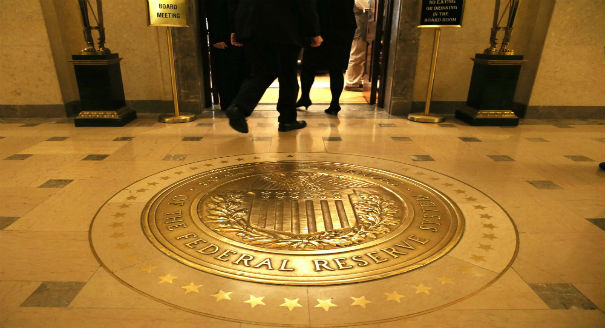
This slowdown was the focus of many a debate at the annual meetings of the IMF and the World Bank earlier this month. Almost all EMs are now showing a decline in GDP growth. Further, most forecasts for EM growth have been cut. The discussion suggested that emerging economies will face three major challenges in the coming months: high volatility of capital flows, a cyclical downturn and structural problems.The high volatility of capital flows in recent times stems from the anticipation of decisions that are yet to be taken by the U.S. Fed. Everyone understands that the Fed must cut back on its asset purchases. Indeed, it is argued that they are no longer necessary, as the balance sheet of the Fed is large enough to support much greater credit growth if there was enough demand for it. The money multiplier has fallen sharply. While there is an increase in reserve money growth, the corresponding growth in money supply, which happens only when there is demand for credit and lending by banks, is much lower. However, the asset purchase programme of the Fed has also become a signalling device. As long as the Fed is buying assets, people believe that long-term interest rates in the U.S. will remain low.
Ben Bernanke's carefully drafted May 22 communication, that the Fed must now start devising a strategy to reduce its asset purchases, was read by jittery financial markets as an announcement of the programme's withdrawal. The nervousness of the markets, and the perception that the Fed's purchases must be reduced and eventually stopped has created a tense situation. Every tiny bit of information about the U.S. economy has the potential to induce the entry or exit of waves of capital in the U.S.. The impact on EMs has been far greater and more sudden than what was initially expected. Not only is there no prior example of such unconventional monetary policy, the inflows and outflows of capital from EMs are not symmetric. When the Fed purchases started, the inflow into EMs was slower and less dramatic than the outflow has been now.
Some observers believe that the May-July drama was only a trailer of what is to come when the Fed actually starts tapering its bond purchases. Market participants and investors seem to be bracing themselves for higher volatility. Others believe that the markets have already factored in the effect of a US tapering — the corrections that were to be made in investor portfolios and EM currencies have already been made. Policy-makers, especially among emerging economies, prefer to think that the worst, in terms of market volatility, is over. This is understandable, as there is a limited menu of possible responses.
The most common opinion appears to be that before the next wave of volatility hits financial markets, that is, before the U.S. Fed starts talking about tapering again, emerging economies with weak macroeconomic fundamentals should set their house in order. As of now, EMs have got some respite. This is mainly due to two reasons. First, US unemployment numbers showed a reduction in labour participation, suggesting that the labour market is not healthy, so a reduction in the unemployment rate cannot be taken literally. Second, the fiscal contraction in the U.S. has slowed down the expected pace of recovery.
Setting one's house in order is not easy, especially since growth is expected to be slower. For example, even though slower growth is forecast, both for cyclical and structural reasons, the IMF has suggested that EMs undertake fiscal consolidation. India, for example, overdid its fiscal stimulus in 2009 and 2010 and a correction for this would entail fiscal contraction. This could, however, impact emerging economies' growth rates adversely. On the monetary policy front, while the IMF did not say that emerging economies should maintain a tight monetary stance in response to higher U.S. interest rates, it did recommend that countries with high inflationary expectations put in place a sound framework for monetary policy. However, in many countries, such as India, this would mean a tightening of monetary policy. A framework may not be credible or capable of pulling down inflationary expectations unless such a tightening were undertaken. But tighter monetary policy could mean a further contraction in output.
In the aftermath of the recent volatility, two distinct sets of countries seem to have emerged. First, those that have sound macroeconomic fundamentals — small fiscal and current account deficits, and low inflation. Second, those that had witnessed fiscal expansions and inflation that was higher than world inflation in recent years. Countries like Mexico and Chile appear to be well prepared for the tapering, with sound fiscal and monetary policies in place, but they have slowed down for structural reasons. They need to undertake structural reforms. Other EMs have to counter the impact of tighter fiscal and monetary policies. Structural reforms like building infrastructure, creating greater labour flexibility and a good business environment can increase growth. But such long-term reforms are a political process. In democratic countries like India, Turkey and Brazil, they require building political consensus and are not quick and easy.
The only instrument that might help is currency flexibility. An assessment of currency mismatches suggests that emerging economies are better placed and more resilient today than in the past. Countries that allow currency depreciation might be in a better position to take advantage of the pick-up in the U.S. economy and world trade than those that do not. For emerging economies like India, the coming months might witness slower growth, higher volatility, contractionary fiscal policy and monetary tightening.
This article was originally published in the Indian Express.

Former Nonresident Senior Associate, South Asia Program
Patnaik, an expert on India’s economy, was a nonresident senior associate in Carnegie’s South Asia Program.
Recent Work

Milan Vaishnav, Ila Patnaik
Ila Patnaik, Ajay Shah
Carnegie does not take institutional positions on public policy issues; the views represented herein are those of the author(s) and do not necessarily reflect the views of Carnegie, its staff, or its trustees.

Drawing on ten public discussions from the India AI Impact Summit 2026, this article highlights key outlooks on open source in AI that are likely to shape policy and governance conversations going forward.

Shruti Mittal

If U.S. policymakers continue down the path of restricting China’s access to frontier AI, they will eventually have to implement some sort of restriction on cloud access.
Noah Tan
European leaders have now not only lost faith in Donald Trump’s U.S. presidency, but also in America’s hegemony as a whole. But short-term challenges make an immediate divorce unwise.

Rym Momtaz

As the war in Ukraine enters its fifth year, it is worth examining where accountability efforts currently stand, how U.S. policy on Russian aggression has shifted, and what the Ukrainian experience reveals about the challenges of holding international aggressors to account.

Federica D’Alessandra
The regime bets that international legitimacy can be translated into domestic stability. But that depends upon whether it can leverage international goodwill to manage grievances and the economy at home.

Zoha Waseem, Yasser Kureshi