

Research
- +10
Rosa Balfour, Frances Z. Brown, Yasmine Farouk, …
{
  "authors": [
    "Moisés Naím"
  ],
  "type": "legacyinthemedia",
  "centerAffiliationAll": "",
  "centers": [
    "Carnegie Endowment for International Peace"
  ],
  "collections": [],
  "englishNewsletterAll": "",
  "nonEnglishNewsletterAll": "",
  "primaryCenter": "Carnegie Endowment for International Peace",
  "programAffiliation": "",
  "programs": [],
  "projects": [],
  "regions": [
    "United States",
    "South America",
    "Egypt",
    "Russia"
  ],
  "topics": [
    "Democracy",
    "Global Governance"
  ]
}
Source: Getty
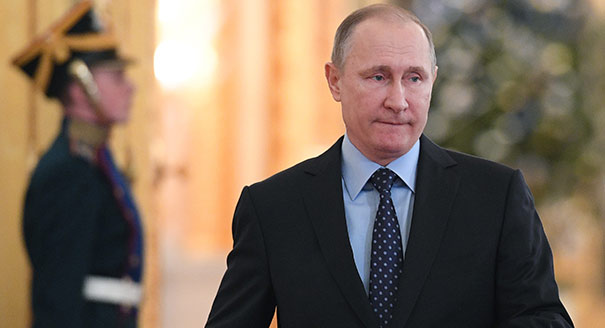
The world seems to be growing more paradoxical where democratic practices are becoming more popular among dictators. Democracy gives them something repression can’t - a modicum of legitimacy.
Source: El País
Times of great change breed contradictions, uncertainties, and perplexities.
Indeed, the world seems to grow ever more paradoxical. Among the many paradoxes that baffle us two in particular have caught my attention.
First, why do dictators seem to have fallen in love with democracy? In its latest annual report, the NGO Freedom House concluded: “Democracy faced its most serious crisis in decades in 2017 as its basic tenets – including guarantees of free and fair elections, the rights of minorities, freedom of the press, and the rule of law – came under attack around the world. Seventy-one countries suffered net declines in political rights and civil liberties, with only 35 registering gains. This marked the 12th consecutive year of decline in global freedom. Over the period since the 12-year global slide began in 2006, 113 countries have seen a net decline, and only 62 have experienced a net improvement.” All opinion polls reveal that people’s doubts about the democratic process are increasing, especially among the young, and that this is a global trend.
The paradox is that, among dictators, some democratic practices – namely, presidential elections – are very popular. It doesn’t seem to bother them that everyone knows that these elections are a sham. In mid-March there were presidential elections in Russia and Egypt and, in May, in Venezuela. Vladimir Putin won with 75% of the votes, Abdel Fattah el-Sisi with 97% and Nicolás Maduro with 68%. Certainly a good performance, but nothing compared to Saddam Hussein, who in 2002 garnered 100% of the vote in Iraq. Why do they bother put on this show? Why don’t they simply declare themselves president for life and openly exercise their dictatorial power instead of putting on this ridiculous democratic charade? The answer is that democracy gives them something repression can’t: a modicum of legitimacy that – despite the fact that they aren’t fooling anyone – simplifies their lives before certain audiences. The elections, though rigged, allow them to present a democratic facade to their people and to certain key audiences around the world, something that they hope will distract the world a little from the fact that those who oppose them are tortured in prison and murdered in the streets.
Second, why have hackers and whistle-blowers been more successful in the fight against money laundering than governments?
After the attacks of September 11, 2001, many governments decided that “follow the money” was one of the best strategies for identifying and neutralizing terrorist networks. Thus, many nations adopted more restrictive laws and regulations in order to make it more difficult for the wealthy to hide their identity or move money around the world.
The result was that although governments had some success in making the financial system more transparent, their efforts were hampered by the difficulties that nations typically face when they are trying to coordinate efforts as well as the obstacles that were quickly created by the lawyers, accountants, and financial and computer experts who were hired by wealthy clients to help them to keep their money hidden from tax authorities, law enforcement agencies or simply litigious former spouses, business partners or disgruntled employees.
At least until the whistle-blowers and hackers turned up.
John Doe is the pseudonym of someone who made 11 million files from the Panamanian law firm Mossack Fonseca public. Each file had detailed information of assets in different banks, the identities of their owners and all the movements of the money in the the accounts between 1970 and 2015. The disclosure of this information, known as the Panama Papers, had repercussions throughout the world. It included data on the accounts of 12 heads or former heads of state, some of them with inexplicable fortunes; more than 60 relatives and partners of well-known politicians, including Vladimir Putin; eight members of the elite that governs China and several companies linked to Donald Trump. But perhaps the main contribution of the Panama Papers was that they revealed how the international financial system – a system that hides behind front men and companies with unidentified owners – actually works, as well as the sophisticated legal and financial instruments used to launder money or simply hide and move it around surreptitiously.
The Panama Papers were not the only leak of bank secrets. There were others before and more will surely come. These leaks – which are always the outcome of unauthorized access to private information – create important ethical dilemmas. But they also open the world’s eyes. It is paradoxical that it has been the hackers and whistle-blowers, acting illegally, who have pulled back the curtain on the international financial system.
The money launderers, the tax evaders, and the corrupt who hide their money in these institutions can no longer sleep easy at night. Not so much because of the threat from governments, but from other citizens who have taken on the task of obtaining and revealing the world’s banking secrets.
Nor can the dictators of our day sleep in peace, even if they disguise themselves as democrats.

Distinguished Fellow
Moisés Naím is a distinguished fellow at the Carnegie Endowment for International Peace, a best-selling author, and an internationally syndicated columnist.
Recent Work



Rosa Balfour, Frances Z. Brown, Yasmine Farouk, …
Moisés Naím
Carnegie does not take institutional positions on public policy issues; the views represented herein are those of the author(s) and do not necessarily reflect the views of Carnegie, its staff, or its trustees.

But their "principal to principal" model will only be as effective as the political strength of each leader back home.

Damien Ma

The demands of the Kremlin’s war in Ukraine, demographic problems, and public hostility toward Central Asians mean Russia does not have enough workers.

Salavat Abylkalikov

Amid uncertainty caused by the Iran war, the global drive for nonproliferation has stalled. With Europe diplomatically marginalized and countries reassessing their nuclear options, efforts to curb the spread of nuclear weapons risk becoming irrelevant.

Jane Darby Menton
Between the United States’ market-driven approach and China's state-led industrial strategy, Europe is reckoning with how it can remain competitive in the global economy. But is Europe in danger of becoming a U.S. or China colony?
Noah Barkin, Anu Bradford
Minsk’s faith in the future of its larger neighbor’s economy is fading as Belarusian firms in Russia see record losses.

Olga Loiko