• Research
  • Emissary
  • About
  • Experts
Carnegie Global logoCarnegie lettermark logo
DemocracyIran
  • Donate
{
  "authors": [
    "Ashley J. Tellis"
  ],
  "type": "other",
  "centerAffiliationAll": "dc",
  "centers": [
    "Carnegie Endowment for International Peace"
  ],
  "collections": [],
  "englishNewsletterAll": "ctw",
  "nonEnglishNewsletterAll": "",
  "primaryCenter": "Carnegie Endowment for International Peace",
  "programAffiliation": "SAP",
  "programs": [
    "South Asia"
  ],
  "projects": [],
  "regions": [
    "South Asia",
    "India"
  ],
  "topics": [
    "Security",
    "Military"
  ]
}
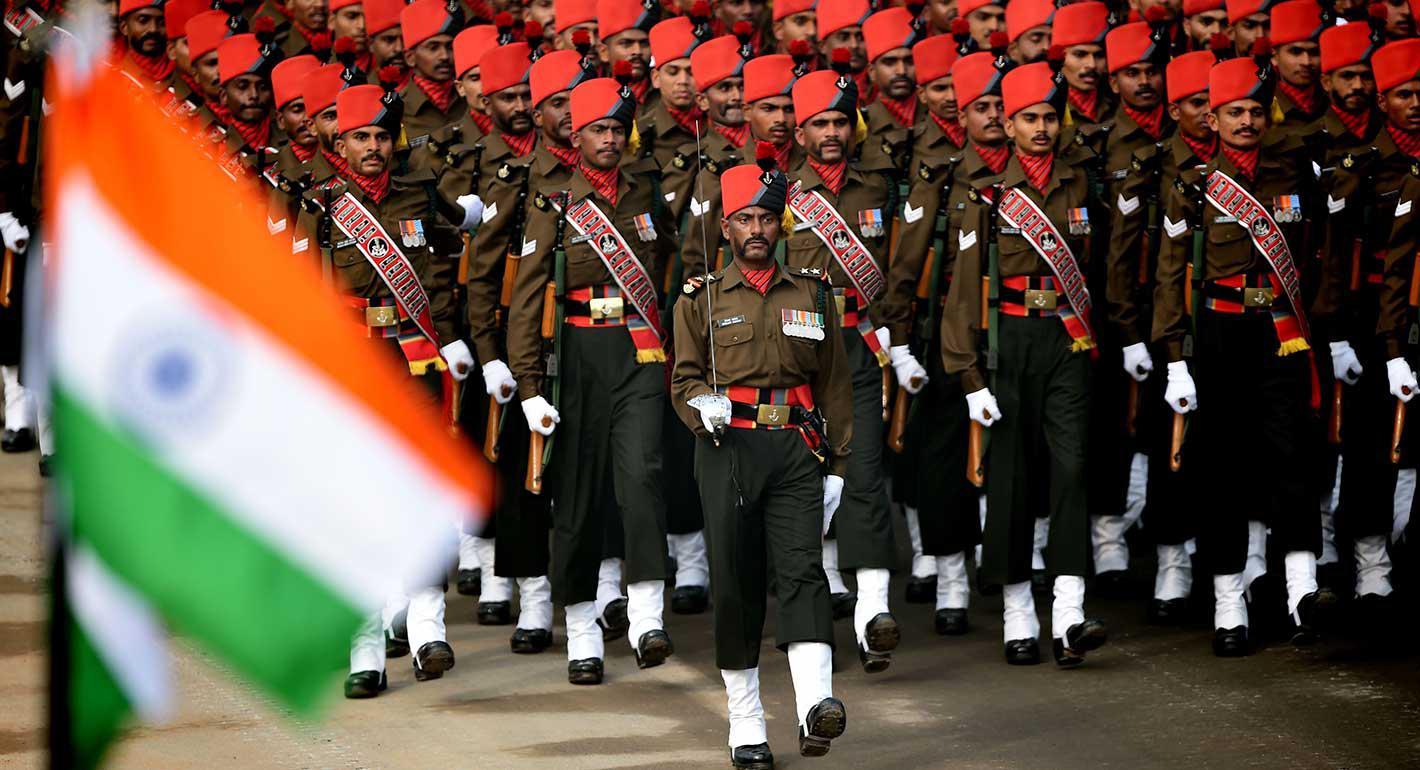
Source: Getty

Other

India: Capable but Constrained

The Indian Armed Forces are large and competent, but they face significant internal security challenges as well as major external dangers from China and Pakistan.

Link Copied
By Ashley J. Tellis
Published on Oct 30, 2020
Program mobile hero image

Program

South Asia

The South Asia Program informs policy debates relating to the region’s security, economy, and political development. From strategic competition in the Indo-Pacific to India’s internal dynamics and U.S. engagement with the region, the program offers in-depth, rigorous research and analysis on South Asia’s most critical challenges.

Learn More

Source: United States Army War College Press

Key Points

  • The Indian Armed Forces are large and competent, but they face significant internal security challenges as well as major external dangers from China and Pakistan.
  • An underperforming economy has constrained military budgets and largely confined the Indian military to ensuring internal security and protecting the country’s frontiers.
  • Indian policy makers have expressed an interest in the country playing a more significant role in the wider Indo-Pacific region, but they still eschew the kind of strategic partnerships that would make enhanced power projection possible.

Read Full Text

This chapter was originally published in A Hard Look at Hard Power: Assessing the Defense Capabilities of Key US Allies and Security Partners—Second Edition, by the United States Army War College Press.

About the Author

Ashley J. Tellis

Former Senior Fellow

Ashley J. Tellis was a senior fellow at the Carnegie Endowment for International Peace.

    Recent Work

  • Paper
    Multipolar Dreams, Bipolar Realities: India’s Great Power Future

      Ashley J. Tellis

  • Commentary
    India Sees Opportunity in Trump’s Global Turbulence. That Could Backfire.

      Ashley J. Tellis

Ashley J. Tellis
Former Senior Fellow
SecurityMilitarySouth AsiaIndia

Carnegie does not take institutional positions on public policy issues; the views represented herein are those of the author(s) and do not necessarily reflect the views of Carnegie, its staff, or its trustees.

More Work from Carnegie Endowment for International Peace

  • Commentary
    "I Don’t Think Trump Wants to Pull America Out of NATO"

    Does Donald Trump want to redraw the map of the world? Historian and geopolitical thinker Stephen Wertheim tries to parse the logic behind current American foreign policy

      Stephen Wertheim

  • Article
    Build, Not Buy: The Semiconductor Lesson that Indian AI Experts Must Learn

    As AI grows more sophisticated, as the supply chains that power it become more contested, and as access to frontier models becomes geopolitically charged, India must begin to ask a different set of questions. Not what applications it can build on someone else’s infrastructure but what the world needs.

      Konark Bhandari

  • A visitor looks at a simulator for "electronic warfare" at the booth of German Federal Armed Forces Bundeswehr during a tour of the Hannover industrial trade fair for mechanical and electrical engineering and digital industries, in Hannover, northern Germany on April 20, 2026.
    Article
    Generative AI and Atrocity Denial in War

    In the fog of modern war, generative AI offers every side a simple transaction: Trade documented reality for permanent doubt.

      Mahsa Alimardani, Afsaneh Rigot

  • Article
    Unlocking India’s Urban Dividend

    As India undergoes a demographic transition, its cities will be its economic powerhouse—but only if it accurately captures city growth and empowers cities to support their citizens.

      • Apoorva Jadhav

      Apoorva Jadhav

  • Two women walking in front of thick black smoke
    Commentary
    In the War with Iran, Targeting Energy Infrastructure Has Outsized Impact on Civilians

    Acknowledging these harms strengthens the case for ethical limits on the weaponization of critical infrastructure.

      • Andrew Leber

      Alia Sajjadian, Andrew Leber

Get more news and analysis from
Carnegie Endowment for International Peace
Carnegie global logo, stacked
1779 Massachusetts Avenue NWWashington, DC, 20036-2103Phone: 202 483 7600
  • Research
  • Emissary
  • About
  • Experts
  • Donate
  • Programs
  • Events
  • Blogs
  • Podcasts
  • Contact
  • Annual Reports
  • Careers
  • Privacy
  • For Media
  • Government Resources
Get more news and analysis from
Carnegie Endowment for International Peace
© 2026 Carnegie Endowment for International Peace. All rights reserved.