

Paper
Ashley J. Tellis
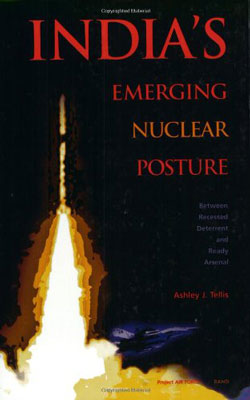
This book examines the forces—political, strategic, technological, and ideational—that led to India's dramatic nuclear policy shift and describes how New Delhi's force-in-being will be fashioned, particularly in light of the threat India faces from its two most salient adversaries, China, and Pakistan.
On May 11, 1998, after a hiatus of more than two decades, India conducted a series of nuclear tests that signaled a critical shift in its strategic thinking. Once content to embrace a nuclear posture consisting largely of "maintaining the option"—i.e., neither creating a nuclear arsenal nor renouncing its right to do so—India is now on the threshold of adopting a posture that, while stopping short of creating a ready arsenal, will take as its goal the establishment of a "minimum but credible deterrent," known as a "force-in-being." India's Emerging Nuclear Posture: Between Recessed Deterrent and Ready Arsenal examines the forces—political, strategic, technological, and ideational—that led to this dramatic policy shift and describes how New Delhi's force-in-being will be fashioned, particularly in light of the threat India faces from its two most salient adversaries, China, and Pakistan.
Former Senior Fellow
Ashley J. Tellis was a senior fellow at the Carnegie Endowment for International Peace.
Recent Work
Ashley J. Tellis
Ashley J. Tellis
Carnegie does not take institutional positions on public policy issues; the views represented herein are those of the author(s) and do not necessarily reflect the views of Carnegie, its staff, or its trustees.

The nuclear relationship between China and the United States is increasingly shaped by widening perception gaps rather than deliberate strategic design.

Tong Zhao

A look at why states without nuclear weapons are seeking naval nuclear propulsion, whether they can legally and technically deliver it, what it will cost them, and what responsible stewardship of the capability would look like.

Jamie Kwong
Congress should ask tough questions about the agreement’s more unique features and whether they advance U.S. interests or compromise them.

Jane Darby Menton

With the growth in points of friction between the great powers, organizations like the SCO will continue to play a role in the strategic adaptation of the smaller powers caught between them.

Temur Umarov

Xi, Putin, and other regional leaders are back-slapping in Bishkek, but the SCO has yet to answer the most serious questions about continental Asia's economic future.

Evan A. Feigenbaum