• Research
  • Emissary
  • About
  • Experts
Carnegie Global logoCarnegie lettermark logo
DemocracyIran
  • Donate
REQUIRED IMAGE

REQUIRED IMAGE

Article

Living with the Bomb: A View from India's Silicon Valley

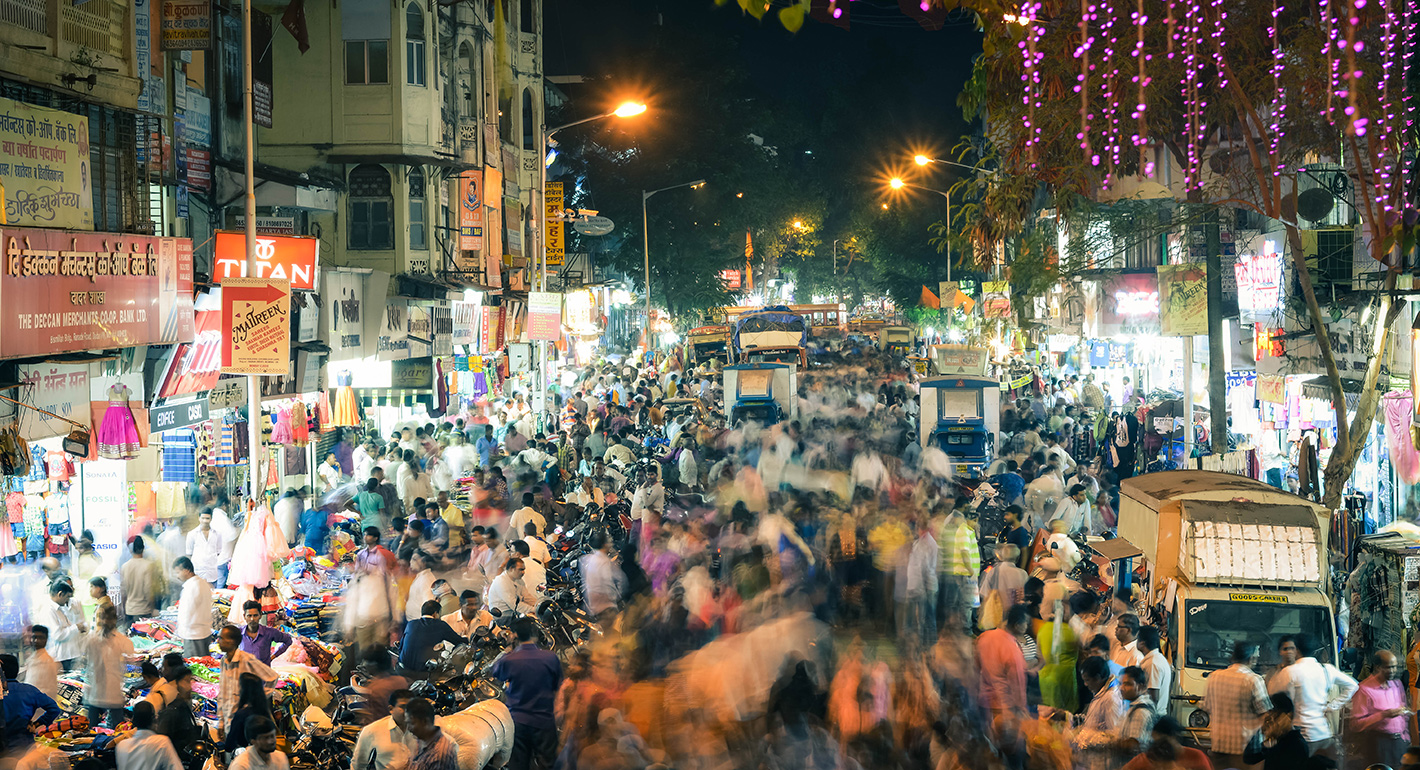
Rhetoric and missile tests may be flying, but for many Indians nuclear war seems a remote prospect. At the height of tensions between India and Pakistan, people in the bustling city of Bangalore, India's answer to California's Silicon Valley, had decided that they were far more concerned about the dismal state of the IT economy than they were concerned about nuclear Armageddon. Fear of nuclear war in this South Indian city is conspicuous in its absence.

Link Copied
Published on Jan 25, 2002
Program mobile hero image

Program

Nuclear Policy

The Nuclear Policy Program aims to reduce the risk of nuclear war. Our experts diagnose acute risks stemming from technical and geopolitical developments, generate pragmatic solutions, and use our global network to advance risk-reduction policies. Our work covers deterrence, disarmament, arms control, nonproliferation, and nuclear energy.

Learn More

Rhetoric and missile tests may be flying, but for many Indians nuclear war seems a remote prospect. At the height of tensions between India and Pakistan, people in the bustling city of Bangalore, India's answer to California's Silicon Valley, had decided that they were far more concerned about the dismal state of the IT economy than they were concerned about nuclear Armageddon. Fear of nuclear war in this South Indian city is conspicuous in its absence.

I just returned from three weeks in Bangalore and even after the Decemeber 13 terrorist attack on India's Parliament, I found no sense of impending nuclear doom. In part, this is due to the city's geographical distance from the actual tension; in part it is because India- Pakistan bickering is par-for-the-course to South Asian ears; in part it is a consequence of thinking that New Delhi's decisions really have little impact on their lives, and in part it reflects a fatalism that characterizes the people.

The reality of a nuclear-armed South Asia has virtually no impact on the daily lives of people here. The 1998 nuclear tests were popular because of the sense of scientific and military accomplishment they provided. The nukes, however, have long lost their ability to enamour the people. And, in what some may view as dangerous naiveté, the bomb has yet to strike terror in the hearts of people who go on with their lives far removed from New Delhi's political and security wrangling over Kashmir. Thus, even with the military build-up along the Line of Control in Kashmir, even as India cut its staff at the Indian embassy in Islamabad, even in the midst of news reports (denied by Islamabad) that Pakistan had moved its missile force to the border, Banglorians continued their daily life largely unaffected and undaunted.

In public and private conversations people voiced vociferous political opinions, of course. They shared the whole country's sense of outrage at what had been attempted on December 13 - a terrorist strike at the heart of Indian democracy. The foiled attack on India's parliament did change some of this city's nonchalance towards Kashmir and "cross-border terrorism." There was some glib talk of "solving" the Kashmir problem once and for all, drawing inevitable comparisons to the American response to September 11. For the most part, however, the people here recognized the need for restraint. There was consternation that this government could find itself trapped in its own rhetoric, leading the country to war. Numerous editorials expressed this fear and called for restraint both in rhetoric and action.

Meanwhile, as Washington worried about the prospect of nuclear war, many in Bangalore worried about their high-tech job prospects, quite oblivious, it seems, that they were inhabitants of "the most dangerous place in the world."

South Asia

Carnegie does not take institutional positions on public policy issues; the views represented herein are those of the author(s) and do not necessarily reflect the views of Carnegie, its staff, or its trustees.

More Work from Carnegie Endowment for International Peace

  • Indian Prime Minister Narendra Modi, wearing an orange cap, and the Chief Minister of Uttar Pradesh, Yogi Adityanath, dressed in saffron robes, are greeting supporters of the Bharatiya Janata Party (BJP) during a roadshow ahead of the Indian General Elections in Ghaziabad, Uttar Pradesh, India, on April 6, 2024.
    Paper
    India’s Foreign Policy in the Age of Populism

    Domestic mobilization, personalized leadership, and nationalism have reshaped India’s global behavior.

      Sandra Destradi

  • Photo of shipping containers stacked against a cloudy sky.
    Article
    Modernizing South Asia’s Borders Through Data-Driven Research

    Cargo time release studies offer a path to greater economic gains and higher trust between neighboring countries.

      Nikita Singla

  • Abstract of global AI
    Article
    South-South AI Collaboration: Advancing Practical Pathways

    The India AI Impact Summit offers a timely opportunity to experiment with and formalize new models of cooperation.

      Lakshmee Sharma, Jane Munga

  • Escalation Dynamics Under the Nuclear Shadow—India’s Approach
    Paper
    Escalation Dynamics Under the Nuclear Shadow—India’s Approach

    An exploration into how India and Pakistan have perceived each other’s manipulations, or lack thereof, of their nuclear arsenals.

      • Rakesh Sood

      Rakesh Sood

  • A Quarter Century of Nuclear South Asia: Nuclear Noise, Signalling, and the Risk of Escalation in India-Pakistan Crises
    Paper
    A Quarter Century of Nuclear South Asia: Nuclear Noise, Signalling, and the Risk of Escalation in India-Pakistan Crises

    A close study of five crises makes clear that Cold War logic doesn’t apply to the South Asia nuclear powers.

      • Rizwan Zeb

      Moeed Yusuf, Rizwan Zeb

Get more news and analysis from
Carnegie Endowment for International Peace
Carnegie global logo, stacked
1779 Massachusetts Avenue NWWashington, DC, 20036-2103Phone: 202 483 7600Fax: 202 483 1840
  • Research
  • Emissary
  • About
  • Experts
  • Donate
  • Programs
  • Events
  • Blogs
  • Podcasts
  • Contact
  • Annual Reports
  • Careers
  • Privacy
  • For Media
  • Government Resources
Get more news and analysis from
Carnegie Endowment for International Peace
© 2026 Carnegie Endowment for International Peace. All rights reserved.