• Research
  • Emissary
  • About
  • Experts
Carnegie Global logoCarnegie lettermark logo
DemocracyIran
  • Donate
REQUIRED IMAGE

REQUIRED IMAGE

Article

India and Pakistan's Nuclear Capabilities

There is great uncertainty over the number, location and operational status of the nuclear weapons held by India and Pakistan. The project has prepared a short overview of the two nations' nuclear capabilities drawn from extensive analysis from the latest Carnegie study, Deadly Arsenals: Tracking Weapons of Mass Destruction.

Link Copied
Published on Jun 7, 2002
Program mobile hero image

Program

Nuclear Policy

The Nuclear Policy Program aims to reduce the risk of nuclear war. Our experts diagnose acute risks stemming from technical and geopolitical developments, generate pragmatic solutions, and use our global network to advance risk-reduction policies. Our work covers deterrence, disarmament, arms control, nonproliferation, and nuclear energy.

Learn More

There is great uncertainty over the number, location and operational status of the nuclear weapons held by India and Pakistan. The project has prepared a short overview of the two nations' nuclear capabilities drawn from extensive analysis from the latest Carnegie study, Deadly Arsenals: Tracking Weapons of Mass Destruction.

For the Nuclear Overview, Please Click Here

Additional Resources:

  • "Experts Weigh U.S. Role as India-Pakistan Tensions Rise," A Carnegie Event, 6 June 2002- Listen to the Audio From This Event
  • "A New Equation: U.S. Policy Toward India and Pakistan After September 11," Carnegie Working Paper by Lee Feinstein, James C. Clad, Lewis A. Dunn and David Albright, May 2002
  • "Political Tragedy For U.S., Musharraf," Chicago Tribune Op-Ed by George Perkovich, 28 April 2002
  • "Bad-Mouthing as Doctrine," Hindustan Times, 7 June 2002
  • "US Assured Pakistan Will Not Begin War: Musharraf, Armitage Hold Talks," Dawn, 6 June 2002
  • "No Alternative to Peace: Jaswant," Times of India, 6 June 2002
  • "Contradiction in Words," The News, 6 June 2002
  • Carnegie South Asia Resource Page

Click Here to Return to Proliferation News

South Asia

Carnegie does not take institutional positions on public policy issues; the views represented herein are those of the author(s) and do not necessarily reflect the views of Carnegie, its staff, or its trustees.

More Work from Carnegie Endowment for International Peace

  • India and a Changing Global Order: Foreign Policy in the Trump 2.0 Era
    Research
    India and a Changing Global Order: Foreign Policy in the Trump 2.0 Era

    Trump 2.0 has unsettled India’s external environment—but has not overturned its foreign policy strategy, which continues to rely on diversification, hedging, and calibrated partnerships across a fractured order.

      • Sameer Lalwani
      • +6

      Milan Vaishnav, ed., Sameer Lalwani, Tanvi Madan, …

  • Gen Z United activists hold a demonstration in Kathmandu, Nepal, on September 8 and 9, 2025, under the banner ''Don't Forget the Blood of Martyrs,'' honoring protest martyrs and demanding justice and accountability for those killed during past movements.
    Article
    Gen Z Protests Across Asia Offer a Delicate but Renewed Democratic Order

    A disconnect between Gen Z citizenry and older rulers has fueled massive demonstrations. What are the key issues and how is protest energy translating into electoral change?

      • Usama Khilji

      Usama Khilji

  • Indian Prime Minister Narendra Modi, wearing an orange cap, and the Chief Minister of Uttar Pradesh, Yogi Adityanath, dressed in saffron robes, are greeting supporters of the Bharatiya Janata Party (BJP) during a roadshow ahead of the Indian General Elections in Ghaziabad, Uttar Pradesh, India, on April 6, 2024.
    Paper
    India’s Foreign Policy in the Age of Populism

    Domestic mobilization, personalized leadership, and nationalism have reshaped India’s global behavior.

      Sandra Destradi

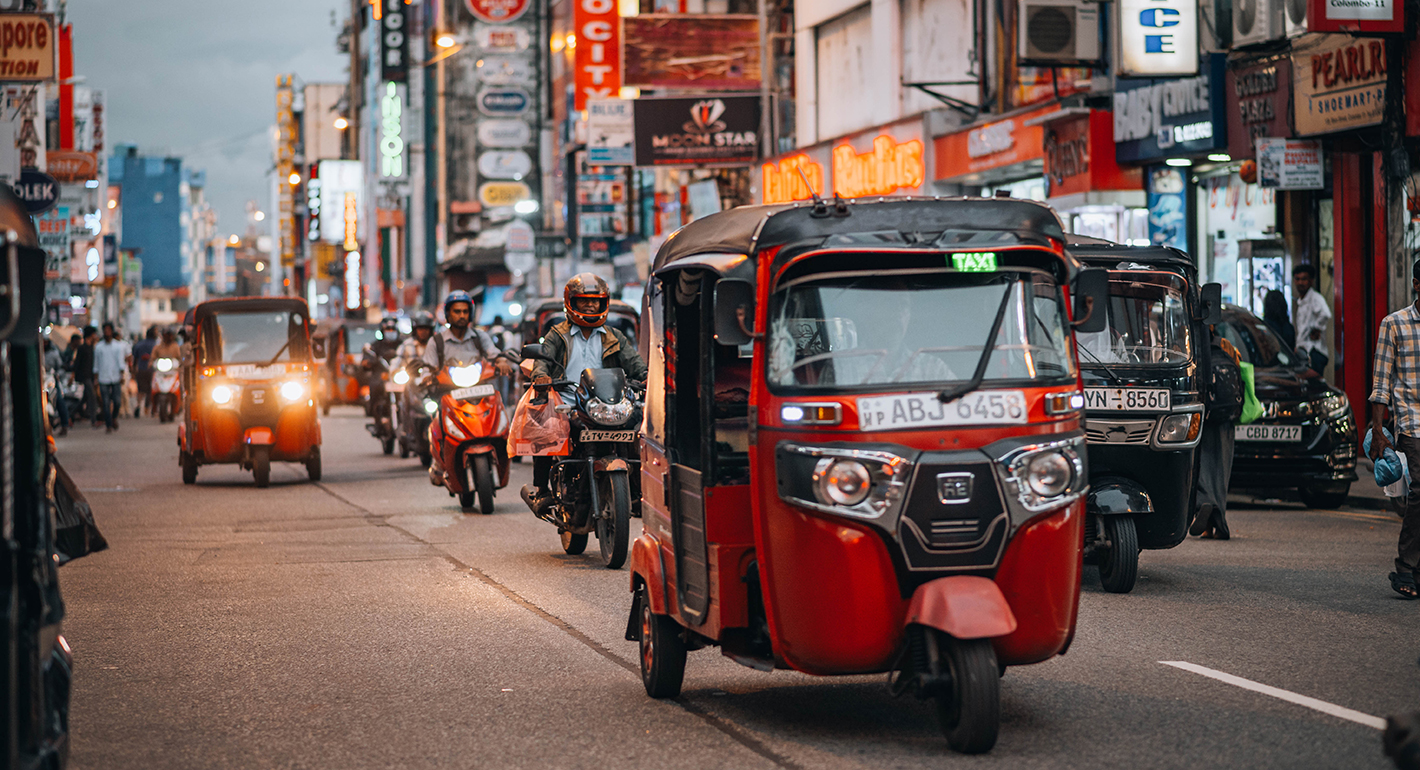
  • Photo of shipping containers stacked against a cloudy sky.
    Article
    Modernizing South Asia’s Borders Through Data-Driven Research

    Cargo time release studies offer a path to greater economic gains and higher trust between neighboring countries.

      Nikita Singla

  • Abstract of global AI
    Article
    South-South AI Collaboration: Advancing Practical Pathways

    The India AI Impact Summit offers a timely opportunity to experiment with and formalize new models of cooperation.

      Lakshmee Sharma, Jane Munga

Get more news and analysis from
Carnegie Endowment for International Peace
Carnegie global logo, stacked
1779 Massachusetts Avenue NWWashington, DC, 20036-2103Phone: 202 483 7600Fax: 202 483 1840
  • Research
  • Emissary
  • About
  • Experts
  • Donate
  • Programs
  • Events
  • Blogs
  • Podcasts
  • Contact
  • Annual Reports
  • Careers
  • Privacy
  • For Media
  • Government Resources
Get more news and analysis from
Carnegie Endowment for International Peace
© 2026 Carnegie Endowment for International Peace. All rights reserved.