Source: Moscow: Carnegie Moscow Center
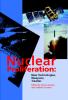
 Nuclear Proliferation: New Technologies, Weapons, Treaties, edited by Alexei Arbatov, a member of the Carnegie Moscow Center’s Research Council and chairman of its Nonproliferation program, and Vladimir Dvorkin, a leading researcher at the Russian Academy of Sciences’ Institute of World Economy and International Relations, looks at the complex and contradictory problems and prospects for global nuclear energy, the development and spread of nuclear technology, missiles, and missile technology, and issues related to non-strategic nuclear weapons, scientific and technical breakthroughs in the field of high-precision conventional weapons, missile defense, and the use of outer space for military purposes.
New Nuclear Energy Technologies
The first chapter analyzes projected expansion of nuclear energy in the world and its possible impact on the nonproliferation regime.
Chapter Two examines nonproliferation problems arising from the fact that many countries have ambitious plans to develop the nuclear fuel cycle as part of the growing use of nuclear energy.
Chapter Three studies the advantages and shortcomings of global cooperative projects to develop a new generation of nuclear energy technology.
Proliferation of the Means of Delivery of Nuclear and Conventional Weapons
Chapter Four examines an issue closely related to the nuclear field, namely the spread of missiles and missile technology, extending the range of nuclear weapons while increasing the likelihood of a lethal strike, in a situation in which the balance of nuclear power and the corresponding threats in the world are increasingly multilateral.
Chapter Five assesses the role of non-nuclear high-precision weapons in global and regional contexts and the possible consequences of their development as a means to combat nuclear proliferation and as an incentive for threshold countries to create nuclear weapons.
Chapter Six gives a detailed study of the issue of non-strategic nuclear weapons, and their role in military and political relations between the great powers and in the proliferation of nuclear weapons.
Strategic Systems, Disarmament, and Nonproliferation
Chapter Seven studies the relations between strategic offensive weapons and missile defense systems.
Chapter Eight looks at the future of the Intermediate Nuclear Forces Treaty and the possibility that medium-range missiles could be deployed in response to missile proliferation and the construction of a missile defense system.
Chapter Nine examines the militarization of outer space, the development of space-based weapons, their impact on nuclear proliferation, and the outlook for the international legal regime regulating the militarization of space.
The book’s aim is to broaden the analytical perspective on the military, political, and legal issues that exert an increasing influence on the nonproliferation of nuclear weapons and which must be taken into consideration in any effort to strengthen the nonproliferation regime.