• Research
  • Emissary
  • About
  • Experts
Carnegie Global logoCarnegie lettermark logo
DemocracyIran
  • Donate
Stepping Back From Democratic Pessimism

Source: Getty

Paper

Stepping Back From Democratic Pessimism

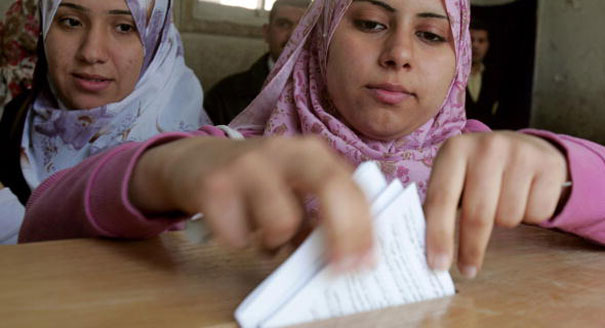
Good news on democratization, though often less visible, has occurred in roughly equal proportion to bad news. By taking on this more balanced perspective, the Obama administration can ensure that unnecessary pessimism does not hinder important U.S. support for democracy around the world.

Link Copied
By Thomas Carothers
Published on Feb 25, 2009

Additional Links

Full Text
Program mobile hero image

Program

Democracy, Conflict, and Governance

The Democracy, Conflict, and Governance Program is a leading source of independent policy research, writing, and outreach on global democracy, conflict, and governance. It analyzes and seeks to improve international efforts to reduce democratic backsliding, mitigate conflict and violence, overcome political polarization, promote gender equality, and advance pro-democratic uses of new technologies.

Learn More

The Obama administration faces pressure to pull back U.S. democracy promotion efforts, given the Bush administration’s legacy and increasing talk of a global “democratic recession.”  The United States can and should remain an active supporter of democracy abroad. By building a new approach to democracy promotion around the new president’s cardinal values—non-confrontational, measured, cooperative, and empowering—the United States can regain its place as a respected, trusted, and influential ally of democracy around the world.

Thomas Carothers offers a wide-ranging assessment of the state of democracy in the world, finding that despite set backs in the troubled regions of the Middle East and former Soviet Union, democracy has not experienced a global retreat this decade.  Good news on democratization, though often less visible, has occurred in roughly equal proportion to bad news, and considerable continuity exists in many places.  By taking on this more balanced perspective, the Obama administration can ensure that unnecessary pessimism does not hinder important U.S. support for democracy.

Understanding Democracy Development in Key Regions

  • Former Soviet Union
    Most of the former Soviet Union is either as undemocratic as it was at the start of the decade or even more so.
     
  • Asia
    There are many troubled democratic governments and outright nondemocratic governments on the continent, but on the whole it is not substantially less democratic today than it was ten years ago.
     
  • Middle East
    Most of the countries in the region have not moved backward, instead they have experienced stasis leavened by a certain amount of liberalizing political reforms.
     
  • Africa
    The democratic wave that hit Africa in the early 1990s left it roughly equally divided between countries that had made real democratic gains and those that had not; a situation that remains largely the same today.
     
  • Latin America
    Democracy has persisted despite all its flaws, a persistence that contrasts the earlier pattern of democratic reversals following expansion.
     
  • Central and Southeastern Europe
    Despite the rise of populist movements that support intolerance and anti-elitist demagoguery, there is not a fundamental cirsis of democracy in the region.

About the Author

Thomas Carothers

Harvey V. Fineberg Chair for Democracy Studies; Senior Fellow, Democracy, Conflict, and Governance Program

Thomas Carothers, a senior fellow in the Carnegie Endowment for International Peace’s Democracy, Conflict, and Governance Program, is a leading expert on comparative democratization and international support for democracy.

    Recent Work

  • Paper
    The Effects of U.S. Democratic Backsliding on U.S. Power

      Thomas Carothers

  • Paper
    Post-U.S. International Democracy Support: Aspiration in Search of Substance

      Richard Youngs, Thomas Carothers

Thomas Carothers
Harvey V. Fineberg Chair for Democracy Studies; Senior Fellow, Democracy, Conflict, and Governance Program
Thomas Carothers

Additional Links

Full Text
North AmericaPolitical ReformDemocracy

Carnegie does not take institutional positions on public policy issues; the views represented herein are those of the author(s) and do not necessarily reflect the views of Carnegie, its staff, or its trustees.

More Work from Carnegie Endowment for International Peace

  • Paper
    How to Engage with New Media: A Strategic Guide for Nonprofit Organizations

    To remain effective, organizations need to master new media and legitimacy markers to make a once-in-a-century shift.

      Renée DiResta, Rachel Kleinfeld, Margot Treadwell

  • Commentary
    Strategic Europe
    Germany’s Shattered Consensus

    An overwhelming victory by a far-right-wing party in a small state in eastern Germany will have major repercussions for Chancellor Friedrich Merz’s coalition.

      Judy Dempsey

  • Commentary
    Carnegie Politika
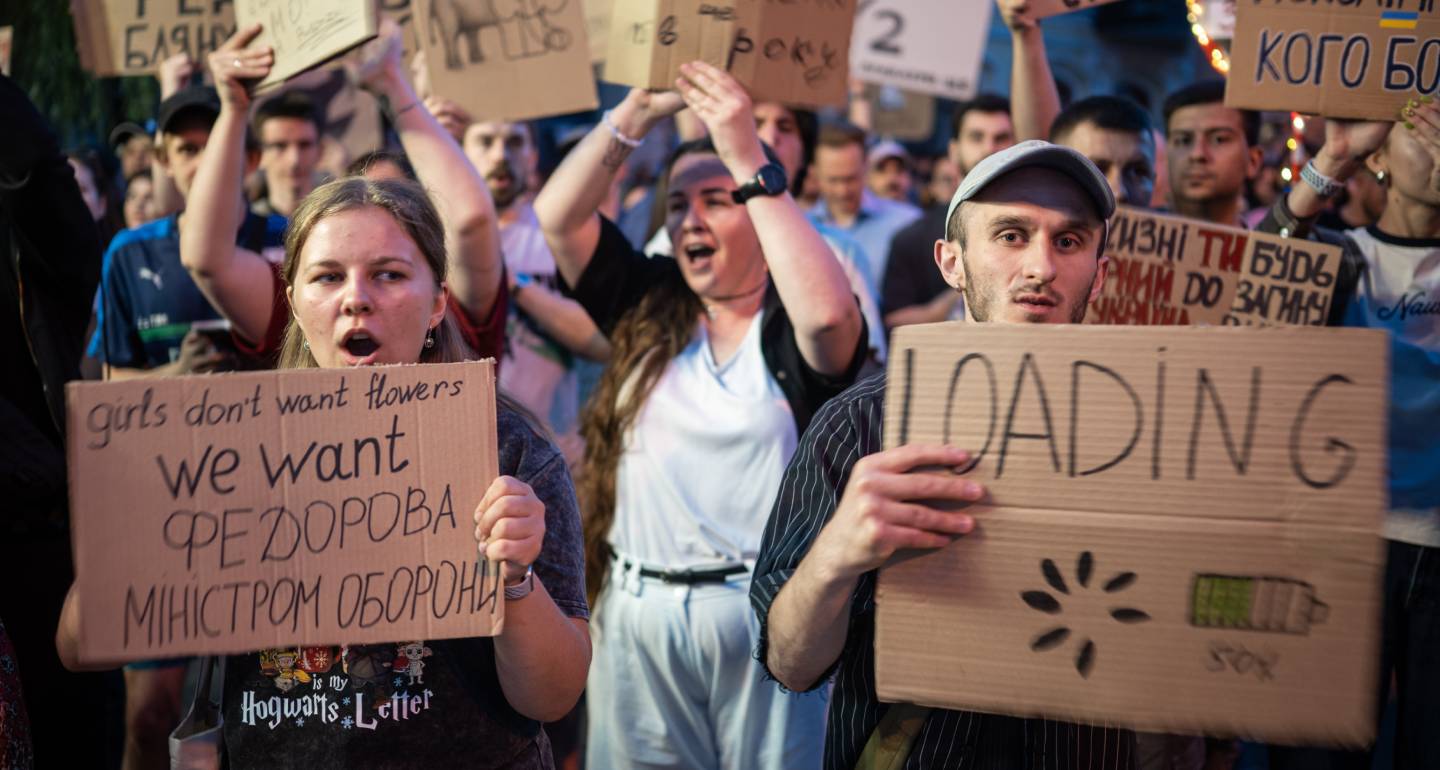
    As a Former Defense Minister Revolts in Ukraine, Is Zelensky’s System Fracturing?

    The greater threat to Zelensky comes not from Fedorov alone, but from the convergence between the former defense minister’s political campaign and the anti-corruption investigations moving ever closer to the presidential administration.

      Balázs Jarábik
  • Commentary
    Carnegie Politika
    Fedorov’s Challenge to Zelensky Could Upend Ukrainian Politics

    With his public call for new elections in Ukraine, ex-defense minister Mykhailo Fedorov has opened Pandora’s box.

      Konstantin Skorkin

  • Europe far right MAGA Trump
    Commentary
    Strategic Europe
    Why MAGA’s Far-Right European Ties Will Endure

    In supporting Europe’s far-right, MAGA and Russia both want the same thing: a weaker EU. Europe must defend itself without abandoning the openness these forces exploit.

      • Armida van rij

      Armida van Rij

Get more news and analysis from
Carnegie Endowment for International Peace
Carnegie global logo, stacked
1779 Massachusetts Avenue NWWashington, DC, 20036-2103Phone: 202 483 7600
  • Research
  • Emissary
  • About
  • Experts
  • Donate
  • Programs
  • Events
  • Blogs
  • Podcasts
  • Contact
  • Annual Reports
  • Careers
  • Privacy
  • For Media
  • Government Resources
Get more news and analysis from
Carnegie Endowment for International Peace
© 2026 Carnegie Endowment for International Peace. All rights reserved.