• Research
  • Emissary
  • About
  • Experts
Carnegie Global logoCarnegie lettermark logo
DemocracyIran
  • Donate
Managing Arab Sovereign Wealth in Turbulent Times—and Beyond

Source: Getty

Paper
Malcolm H. Kerr Carnegie Middle East Center

Managing Arab Sovereign Wealth in Turbulent Times—and Beyond

Rethinking the wisdom of relying on unstable Western economies for growth, the Arab world is increasingly focused on the diversification of its own economies.

Link Copied
By Sven Behrendt and Bassma Kodmani
Published on Apr 30, 2009

Additional Links

Full Textالنص الكامل بالعربي
Program mobile hero image

Program

Middle East

The Middle East Program in Washington combines in-depth regional knowledge with incisive comparative analysis to provide deeply informed recommendations. With expertise in the Gulf, North Africa, Iran, and Israel/Palestine, we examine crosscutting themes of political, economic, and social change in both English and Arabic.

Learn More
Project hero Image

Project

Eurasia in Transition

Learn More

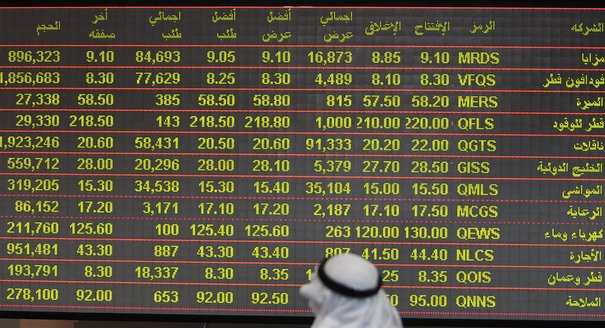
Western political and economic leaders, seeking desperately needed capital for their faltering economies, have put aside many of their concerns over Arab sovereign wealth funds (SWFs). But the Arab world is questioning the wisdom of building its financial future on the shaky foundations of Western economies, and increasingly focusing on the development and diversification of its own economies.

In this Carnegie Paper, produced in cooperation with the Arab Reform Initiative, editors Sven Behrendt and Bassma Kodmani, and a group of Arab economists, discuss the economic, political, and social influences that will determine Arab funds’ investment behavior in the years to come.

Key points:

  • Arab investment in strategic industries in Western countries will become increasingly cautious and selective.
     
  • The Arab public is demanding more accountability and transparency from SWF managers, which will drive them also to invest in tune with the political sentiment in their countries.
     
  • Arab foreign investments should complement domestic economic development and diversification agendas. They should develop a clear understanding of the markets that they seek to serve and adjust their foreign acquisition strategy accordingly.
     
  • Arab fund managers should not scale back efforts to make their funds more transparent in light of reduced international pressure. As the G20 process indicates, all stakeholders in the global financial architecture would benefit from efficient and transparent global markets.
     
  • Western political and economic leaders need a new sense of partnership and understanding for the development needs of the Arab world to attract Arab fund investments into their industries.


Behrendt concludes:

“Moving forward, the investment strategies of Arab SWFs will most likely be based on a more holistic approach. Ideally, this would include taking into account the long-term financial needs of their societies, the long-term development and diversification strategies of their economies, as well as the long-term opportunities of select industries to serve in global markets in transition.”
About the Authors

Sven Behrendt

Former Visiting Scholar, Middle East Center

Behrendt is an expert in global issues, international negotiations, conflict resolution, and corporate strategy. He previously served at the World Economic Forum in various management positions.

Bassma Kodmani

Authors

Sven Behrendt
Former Visiting Scholar, Middle East Center
Sven Behrendt
Bassma Kodmani
BahrainKuwaitQatarSaudi ArabiaUnited Arab EmiratesNorth AmericaEconomyTrade

Carnegie does not take institutional positions on public policy issues; the views represented herein are those of the author(s) and do not necessarily reflect the views of Carnegie, its staff, or its trustees.

More Work from Carnegie Endowment for International Peace

  • One man tossing a sack to another to stack on a truck
    Commentary
    Emissary
    The Other Global Crisis Stemming From the Strait of Hormuz’s Blockage

    Even if the Iran war stops, restarting production and transport for fertilizers and their components could take weeks—at a crucial moment for planting.

      • Noah  Gordon ​​​​

      Noah Gordon, Lucy Corthell

  • Commentary
    Diwan
    Shockwaves Across the Gulf

    The countries in the region are managing the fallout from Iranian strikes in a paradoxical way.

      • Angie Omar

      Angie Omar

  • Commentary
    Diwan
    The U.S. Risks Much, but Gains Little, with Iran

    In an interview, Hassan Mneimneh discusses the ongoing conflict and the myriad miscalculations characterizing it.

      Michael Young

  • Commentary
    Carnegie Politika
    Georgia’s Fall From U.S. Favor Heralds South Caucasus Realignment

    With the White House only interested in economic dealmaking, Georgia finds itself eclipsed by what Armenia and Azerbaijan can offer.

      Bashir Kitachaev

  • Commentary
    Strategic Europe
    Global Instability Makes Europe More Attractive, Not Less

    Europe isn’t as weak in the new geopolitics of power as many would believe. But to leverage its assets and claim a sphere of influence, Brussels must stop undercutting itself.

      Dimitar Bechev

Get more news and analysis from
Carnegie Endowment for International Peace
Carnegie global logo, stacked
1779 Massachusetts Avenue NWWashington, DC, 20036-2103Phone: 202 483 7600Fax: 202 483 1840
  • Research
  • Emissary
  • About
  • Experts
  • Donate
  • Programs
  • Events
  • Blogs
  • Podcasts
  • Contact
  • Annual Reports
  • Careers
  • Privacy
  • For Media
  • Government Resources
Get more news and analysis from
Carnegie Endowment for International Peace
© 2026 Carnegie Endowment for International Peace. All rights reserved.