• Research
  • Emissary
  • About
  • Experts
Carnegie Global logoCarnegie lettermark logo
DemocracyIran
  • Donate
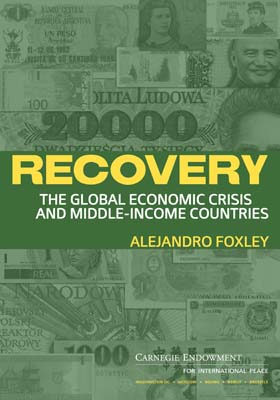
Recovery: The Global Financial Crisis and Middle-Income Countries
Report

Recovery: The Global Financial Crisis and Middle-Income Countries

There is no single solution to the financial crisis for middle-income countries, but fundamental labor markets reforms that create high-paying jobs are key to restarting economic growth.

Link Copied
By Alejandro Foxley
Published on Jul 9, 2009

Additional Links

Full TextSummary

There is no single solution to the effects of the financial crisis on middle-income countries, but introducing fundamental labor markets reforms to create high-paying jobs will be the key to restarting economic growth, according to a report by Alejandro Foxley, the former foreign and finance minister of Chile. 

Labor reform is always politically contentious, but the current crisis, by illustrating the dangers of ignoring necessary long-term reforms, has made it easier to reach consensus on the need for action. If policy makers undertake the right reforms, middle-income countries could achieve higher growth, better standards of living, and more effective government.

Key points:

  • Critical reforms include improving access to education and on-the-job training, reducing the costs of hiring and firing workers, and increasing the number of women in the workforce.
     
  • Unemployment is likely to remain high in middle-income countries as the crisis continues, threatening the stability of governments across Latin America, East Asia, and Eastern Europe.
     
  • Governments must resist the temptation to take populist shortcuts that make it appear that they are dealing with the crisis when they are not, and should instead be clear and consistent in their pursuit of reform.
     
  • Sustainable growth requires a balance between exports and domestic demand. East Asian economies that relied heavily on exports for growth have been hit harder by the crisis than Latin American countries that emphasized domestic demand.
     
  • Diversified trade offers some protection against economic shocks. Middle-income countries should diversify not only their exports but also the markets to which they export.

Foxley concludes:

“There are no magic formulas, no shortcuts, no miracles, and no ‘models’ as far as development is concerned. Economic growth and development is a several-decades-long proposition that requires consistent policies, persistence in moving in a certain direction, and adaptability to shocks and changes and the opportune correction of policy mistakes.”
About the Author

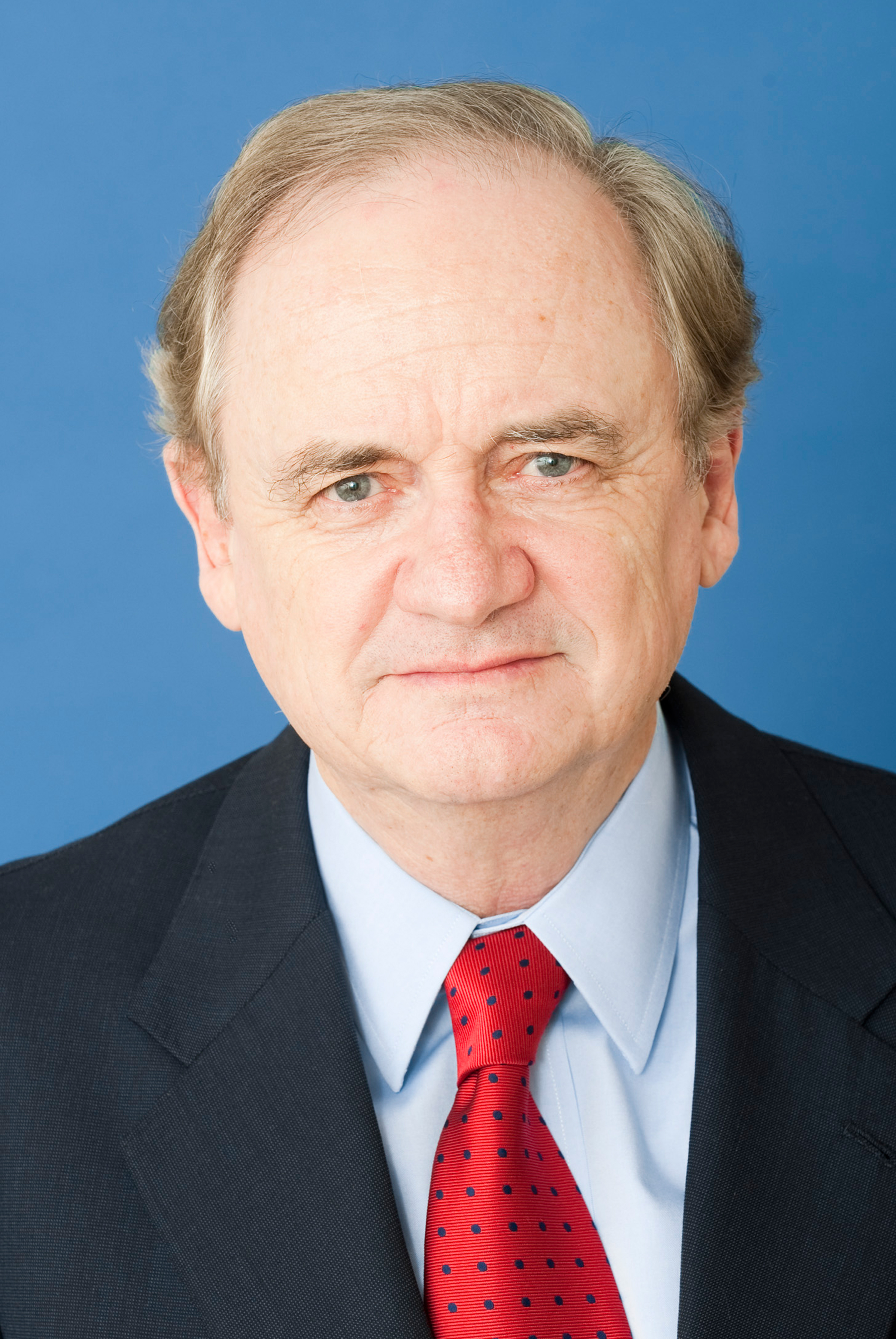
Alejandro Foxley

Former Senior Associate, International Economics Program

Foxley was previously minister of foreign affairs, senator, and minister of finance of the Republic of Chile. While minister of finance he concurrently served as a governor of the Inter-American Development Bank and the World Bank.

    Recent Work

  • Paper
    Making the Transition: From Middle-Income to Advanced Economies

      Alejandro Foxley, Fernando Sossdorf

  • Other
    Impact of The Global Financial Crisis: Predictions Gone Wrong

      Alejandro Foxley

Alejandro Foxley
Former Senior Associate, International Economics Program
Alejandro Foxley
North AmericaSouth AmericaEast AsiaSouth KoreaTaiwanCentral AsiaSoutheast AsiaEastern EuropeNorth KoreaEconomy

Carnegie does not take institutional positions on public policy issues; the views represented herein are those of the author(s) and do not necessarily reflect the views of Carnegie, its staff, or its trustees.

More Work from Carnegie Endowment for International Peace

  • A White man in a tan jacket stands with his back to the camera, plugging in an electric car to a row of green and white chargers.
    Commentary
    Emissary
    Some Countries Are Better Prepared for an Energy Crisis This Time

    As the Iran war shocks oil prices, countries that have invested in renewables, EVs, and battery development since the 2022 Russian invasion of Ukraine are seeing the value of their investments.

      • Noah  Gordon ​​​​

      Noah Gordon

  • Article
    Rewiring the South Caucasus: TRIPP and the New Geopolitics of Connectivity

    The U.S.-sponsored TRIPP deal is driving the Armenia-Azerbaijan peace process forward. But foreign and domestic hurdles remain before connectivity and economic interdependence can open up the South Caucasus.

      • Areg Kochinyan

      Thomas de Waal, Areg Kochinyan, Zaur Shiriyev

  • Commentary
    Carnegie Politika
    Moldova Floats a New Approach to Its Transnistria Conundrum

    Moldova’s reintegration plan was drawn up to demonstrate to Brussels that Chișinău is serious about the Transnistria issue—and to get the West to react.

      Vladimir Solovyov

  • A Black man pulls a trolley. He is small in the bottom center of the frame; in the background are stacks of large, colorful shipping containers and the parts of a large crane or similar piece of equipment.
    Article
    Africa’s Global Economic Edge: Advancing Strategic Sectors

    In key sectors such as critical minerals, specialty agriculture, and fintech, Africa can become a global powerhouse by investing more in manufacturing, value-add, and scaling.

      • Kholofelo Kugler

      Kholofelo Kugler, Georgia Schaefer-Brown

  • Xi walking into a room with people standing and applauding around him
    Commentary
    Emissary
    The Xi Doctrine Zeros in on “High-Quality Development” for China’s Economic Future

    In the latest Five-Year Plan, the Chinese president cements the shift to an innovation-driven economy over a consumption-driven one.

      • Damien Ma

      Damien Ma

Get more news and analysis from
Carnegie Endowment for International Peace
Carnegie global logo, stacked
1779 Massachusetts Avenue NWWashington, DC, 20036-2103Phone: 202 483 7600Fax: 202 483 1840
  • Research
  • Emissary
  • About
  • Experts
  • Donate
  • Programs
  • Events
  • Blogs
  • Podcasts
  • Contact
  • Annual Reports
  • Careers
  • Privacy
  • For Media
  • Government Resources
Get more news and analysis from
Carnegie Endowment for International Peace
© 2026 Carnegie Endowment for International Peace. All rights reserved.