

Commentary
In an interview, Naysan Rafati assesses the first week that followed the U.S. and Israeli attack on Iran.
Michael Young
Source: Getty
Better protection of U.S. forces and allies against the Iranian missile threat is reason enough to welcome the shift in U.S. missile defense policy. Improving the prospects for future progress in reducing the threat from Russia is icing on the cake.
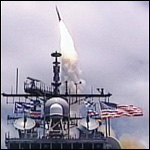
Iran's latest series of short- and medium-range ballistic missile flight tests underscores the wisdom of President Barack Obama's recent decision to shelve the deployment of a third strategic interceptor site in Europe and to accelerate the deployment of a larger number of more effective theater missile defense technologies.
The George W. Bush administration's plan for transferring a large advanced radar to the Czech Republic and installing ten strategic missile interceptors in Poland was formally proposed in 2006. It would have deployed an unproven system in Europe to countries beyond the current range of Iranian missiles, while doing nothing to counter Iran's faster growing short- and medium-range missile forces. At the same time, the proposal threatened to derail the chances of achieving deep reductions in Russia’s strategic nuclear forces.
The shift away from the Bush plan reflects President Obama's and Secretary of Defense Robert Gates' less ideological and more pragmatic approach to the issue. As Gates noted in the rollout of the decision, the Obama administration's "adaptive" approach is a straightforward response to technological advances in U.S. short- and medium-range missile defenses and an evolution in U.S. intelligence assessments about the Iranian missile program since 2006.
Gates dexterously took ownership of the Bush plan inherited from his predecessor, Donald Rumsfeld, in December 2006. Gates had been a strong supporter of strategic missile defenses since President Reagan first proposed them in 1983. Since at least April 2009, Gates has recognized that the deployment of 30-plus ground-based strategic missile interceptors in Alaska and California would be effective in protecting the United States (including the East Coast) against the primitive North Korean or Iranian ICBM threats, which could emerge some years down the road. The addition of 10 more interceptors in Poland would not appreciably add to U.S. capabilities to defend Europe or the United States from a foreign long-range missile threat. If that threat were to emerge, the ground-based mid-course system intended for Poland would be quickly overwhelmed if Iran built a larger ICBM force.
Unfortunately, Gates' corrective response for dealing with the Iranian missile threat has been sluggish. The public acknowledgements by Gates and Gen. James Cartwright, Vice Chairman of the Joint Chiefs of Staff, that Iranian long-range ballistic missiles were taking longer to emerge than anticipated by the National Intelligence Estimate of ten years earlier, first appeared last month. Yet the lengthy testing program of the Shahab-3 medium-range ballistic missile has shown for years that the system was not simply a quick stepping stone on the route to longer range systems. The absence of a successful Iranian flight test before 2009 of a multi-staged missile or space-launch vehicle had raised questions about the accuracy of the intelligence community’s 1999 prediction of an Iranian ICBM threat by 2015.
Whatever the reasons for the delay in adjusting timeline projections for an Iranian ICBM, it led to an overemphasis of distant threats to northern, western, and central Europe at the expense of more imminent threats—to NATO members, southern Europe, and to U.S. troops, friends and allies in the Middle East. The new plan's accelerated augmentation of sea-based systems and reorientation of sensor assets toward Iran’s periphery corrects this imbalance. The greater flexibility in the Obama plan suggests that future alterations in threat assessments can be more readily accommodated with less political and programmatic turbulence.
The logic of this policy shift is compelling and it calls into doubt any suggestions that Obama's course correction on missile defense is a mere capitulation to Russian demands. Such thinking is inaccurate and based on zero-sum assumptions about U.S.-Soviet relations dating back to the Cold War. The new policy will certainly lead to a reduction in the latent threat from Russian nuclear forces—a potential danger that reduces North Korea and Iran to virtual insignificance by comparison.
While Russian concerns about the "third site" plans of the Bush administration were unwarranted, these concerns were genuine and posed serious obstacles to achieving deep reductions in U.S.-Russian nuclear arsenals following the conclusion of the more modest START follow-on agreement expected later this year.
The shift in U.S. missile defense plans to protect against Iran will not necessarily persuade Russia to support increased sanctions in the UN Security Council to pressure Iran any more than it will weaken U.S. determination to stand behind Poland and the Czech Republic in the potential event of future Russian coercion. However, it will open up greater possibilities for U.S.-Russian cooperation in constructing a joint missile defense architecture as well as facilitate the rejuvenation of the long delayed joint early warning center to build confidence and avoid miscalculation. Finally, it will also mitigate the corrosive suspicions of some in Russia regarding innate Western hostility toward the Russian Federation.
Better protection of U.S. forces and allies against the Iranian missile threat is reason enough to welcome the shift in U.S. missile defense policy. Improving the prospects for future progress in reducing the threat from Russia is icing on the cake.
Greg Thielmann is a Senior Fellow with the Arms Control Association and Director of ACA's Realistic Threat Assessments Project. He most recently served as a senior professional staffer of the Senate Select Committee on Intelligence (SSCI). Prior to joining the SSCI in 2005, he was a U.S. Foreign Service Officer for 25 years, last serving as Director of the Strategic, Proliferation and Military Affairs Office in the Department of State's Bureau of Intelligence and Research.
Greg Thielmann
Carnegie does not take institutional positions on public policy issues; the views represented herein are those of the author(s) and do not necessarily reflect the views of Carnegie, its staff, or its trustees.

In an interview, Naysan Rafati assesses the first week that followed the U.S. and Israeli attack on Iran.

Michael Young
With the White House only interested in economic dealmaking, Georgia finds itself eclipsed by what Armenia and Azerbaijan can offer.

Bashir Kitachaev
If the succession process can be carried out as Khamenei intended, it will likely bring a hardliner into power.

Eric Lob
But to achieve either, it needs to retain Washington’s ear.

Alper Coşkun
At heart, to impose unconditional surrender on Hezbollah and uproot the party among its coreligionists.

Yezid Sayigh