

Commentary
In an interview, Ian Lustick and Eli Clifton discuss their new book on why a prominent ally has so much influence in America.
Michael Young
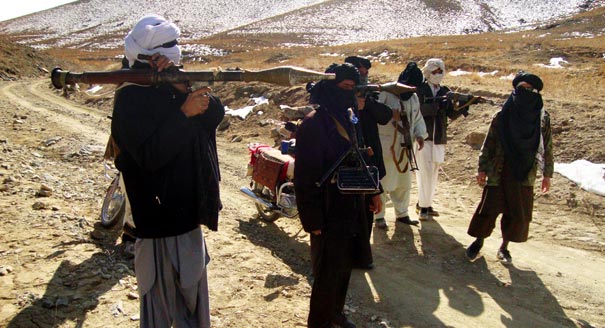
Source: Getty
Afghanistan's hybrid form of governance, which draws on a mix of formal institutions and warlord-administered informal power, may be the only viable model for Afghanistan at present.
Afghanistan’s weak central government and limited resources make the informal networks employed by local warlords a viable option for governance. The country’s former warlords, made powerful governors by President Hamid Karzai, use both formal and informal powers to achieve security objectives and deliver development in their provinces.
Based on substantial in-country research and interviews, Dipali Mukhopadhyay examines the performance of two such governors, Atta Mohammed Noor and Gul Agha Sherzai, who govern the northern province of Balkh, and the eastern province of Nangarhar, respectively.
Key points:
Mukhopadhyay concludes:
“A ‘good enough’ governor, who can demonstrate success in counternarcotics, security, and economic and infrastructural development, becomes a valuable asset in the absence of unlimited resources, troops, and political will,” writes Mukhopadhyay. “Acknowledgment of hybrid governance need not mean the abandonment of formal institutional capacity building on the part of international, intervening organizations. Rather, they must adopt more realistic expectations of formal institutions.”
For a longer version of the arguments put forward in this paper, see Warlords, Strongman Governors, and the State in Afghanistan by Dipali Mukhopadhyay, available at http://www.amazon.com/Warlords-Strongman-Governors-State-Afghanistan/dp/1107023920.
Dipali Mukhopadhyay
Carnegie does not take institutional positions on public policy issues; the views represented herein are those of the author(s) and do not necessarily reflect the views of Carnegie, its staff, or its trustees.

In an interview, Ian Lustick and Eli Clifton discuss their new book on why a prominent ally has so much influence in America.

Michael Young

Countries like Germany and India are caught between the great powers when developing AI. Racing ahead to develop AI has benefits and risks, as does depending on those great powers.


Anton Leicht, Sam Winter-Levy

Sergei Kiriyenko used Russia’s parliamentary vote to further hone his strategy of corporate mobilization that is designed to maximize votes for United Russia.

Andrey Pertsev

Before the next wave of EU enlargement takes place, the union needs to grapple with thorny questions of how power is distributed among its members.


Emil Sondaj Hansen, Ditte Brasso Sørensen

The real test may come after the leaders leave the room.



Sheena Chestnut Greitens, Oriana Skylar Mastro, Yukon Huang, …