
• Research
  • Emissary
  • About
  • Experts
Carnegie Global logoCarnegie lettermark logo
DemocracyIran
  • Donate
De-Baathification Saga Continues

Source: Getty

Article

De-Baathification Saga Continues

The saga of the banning and unbanning of alleged Baathists has cast a pall on the elections even before the campaign starts in earnest. Whatever the final decision on the banning issue, it is bound to be highly controversial.

Link Copied
Published on Feb 9, 2010
Program mobile hero image

Program

Middle East

The Middle East Program in Washington combines in-depth regional knowledge with incisive comparative analysis to provide deeply informed recommendations. With expertise in the Gulf, North Africa, Iran, and Israel/Palestine, we examine crosscutting themes of political, economic, and social change in both English and Arabic.

Learn More

Editor's Note: Read updates on the JAC ban: February 25, 2010.

In a continuation of an increasingly politicized and confusing saga, the decision of the ad hoc appeals committee that ordered the conditional unbanning of alleged former Baathists has been reversed. On February 3 the committee ruled that the banned individuals should be allowed to participate in the elections, but that all cases would be reviewed after the elections to determine whether the allegations were valid. This raised the possibility that some elected candidates would not be allowed to take their seats.

The unbanning provoked a storm of protest particularly by the predominant Shia parties, which insisted that Baathists could not be allowed to run. Prime Minister Nouri al-Maliki’s Dawa party in particular organized a number of demonstrations around Iraq to protest the decision. Responding to the outcry and to political pressures, the ad hoc committee backtracked. Claiming that it had originally misunderstood its mandate as requiring it to examine all banning cases, rather than just those of the 177 individuals who appealed the ban, it revoked the blanket unbanning and announced that it would review all appeals by February 11 to decide who is eligible to run. At the same time the election commission announced that the election campaign, originally scheduled to start on February 8, would start instead on February 12.

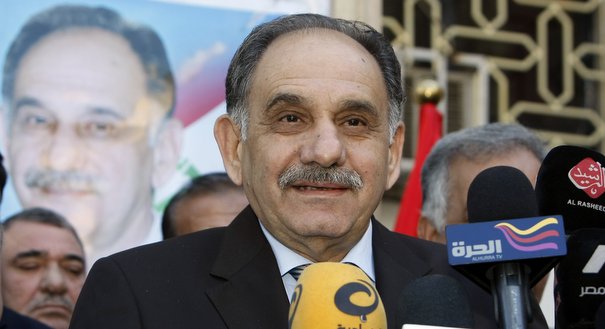
The saga of the banning and unbanning of alleged Baathists has cast a pall on the elections even before the campaign starts in earnest. The final ruling of the review committee will probably not put the issue to rest completely. It is bound to be highly controversial, no matter what it decides, particularly in the case of high profile candidates. Above all, a decision to maintain the ban on Saleh al-Mutlaq risks reviving threats of an election boycott by his allies in the Iraqi National Movement and by some Sunni parties. The decision to let him run would enrage Shia parties and possibly put Maliki at a disadvantage vis-à-vis his adversaries in the Iraqi National Alliance.

Middle EastIraqPolitical Reform

Carnegie does not take institutional positions on public policy issues; the views represented herein are those of the author(s) and do not necessarily reflect the views of Carnegie, its staff, or its trustees.

More Work from Carnegie Endowment for International Peace

  • Trump seated and gesturing while speaking
    Commentary
    Emissary
    The Iran War Is Making America Less Safe

    A conflict launched in the name of American security is producing the opposite effect.

      • Sarah Yerkes

      Sarah Yerkes

  • Commentary
    Sada
    Digital Dissent in Morocco: A Sociological Analysis of the Generation Z Movement

    From anime heroes to online gaming communities, Morocco’s Gen Z is building a new protest culture. What does this digital imagination reveal about youth politics, and how should institutions respond?

      Abdelilah Farah

  • Commentary
    Strategic Europe
    Taking the Pulse: Is it NATO’s Job to Support Trump’s War of Choice?

    Donald Trump has demanded that European allies send ships to the Strait of Hormuz while his war of choice in Iran rages on. He has constantly berated NATO while the alliance’s secretary-general has emphatically supported him.

      • Rym Momtaz

      Rym Momtaz, ed.

  • Commentary
    Carnegie Politika
    After Ilia II: What Will a New Patriarch Mean for Georgia?

    The front-runner to succeed Ilia II, Metropolitan Shio, is prone to harsh anti-Western rhetoric and frequent criticism of “liberal ideologies” that he claims threaten the Georgian state. This raises fears that under his leadership the Georgian Orthodox Church will lose its unifying role and become an instrument of ultraconservative ideology.

      Bashir Kitachaev

  • Trump with arms out, surrounded by mics
    Commentary
    Emissary
    The Problem With the Idea That Netanyahu Made Trump Attack Iran

    Going to war was the U.S. president’s decision, for which he alone is responsible.

      Daniel C. Kurtzer, Aaron David Miller

Get more news and analysis from
Carnegie Endowment for International Peace
Carnegie global logo, stacked
1779 Massachusetts Avenue NWWashington, DC, 20036-2103Phone: 202 483 7600Fax: 202 483 1840
  • Research
  • Emissary
  • About
  • Experts
  • Donate
  • Programs
  • Events
  • Blogs
  • Podcasts
  • Contact
  • Annual Reports
  • Careers
  • Privacy
  • For Media
  • Government Resources
Get more news and analysis from
Carnegie Endowment for International Peace
© 2026 Carnegie Endowment for International Peace. All rights reserved.