• Research
  • Emissary
  • About
  • Experts
Carnegie Global logoCarnegie lettermark logo
DemocracyIran
  • Donate
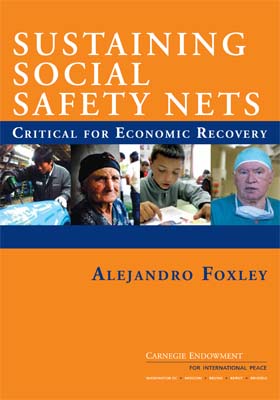
Sustaining Social Safety Nets: Critical for Economic Recovery
Report

Sustaining Social Safety Nets: Critical for Economic Recovery

As middle-income countries recovering from the global financial crisis face high unemployment and growing government deficits, existing social services will become stressed. Maintaining these safety nets is a vital part of recovery.

Link Copied
By Alejandro Foxley
Published on Mar 24, 2010

Additional Links

Full Text

The coverage and quality of basic social services—from unemployment insurance to health care and social security—will likely suffer as middle-income countries recover from the global financial crisis. Faced with high unemployment and growing government deficits, existing social services will become stressed. Yet maintaining these safety nets is a vital part of recovery without which significant segments of the middle class may slip into poverty, concludes a paper by Alejandro Foxley, former foreign and finance minister of Chile.

Foxley analyzes the provision of social services in Eastern Europe, East Asia, and Latin America and makes recommendations for how safety nets need to be restructured to protect vulnerable groups.

Lessons for policy makers

  • Don’t copy other models: It is more efficient to strengthen social services within the country’s existing institutional framework. If the system is largely public, governments need to tackle the problems of inadequate funding and low-quality services. If the system is mainly private, the challenge is to reduce costs through more competition.

  • Macroeconomics matter: Good economic policies allow countries to continue providing social services even during downturns. Significant deficits in Eastern Europe have forced governments to reduce social spending, while current account and budget surpluses in Latin America have allowed countries to maintain social support. 

  • Equality supports strong democracies: More equality will strengthen democracies, but reducing economic insecurity by expanding social safety nets is not sufficient. Countries need to enhance the skills of their workforces to lessen income gaps that widen during economic booms.

“The aftermath of the current global financial crisis will make it obvious that an active role for the state is unavoidable to cover the most vulnerable groups of the population and to mend existing social safety nets in terms of cost and accessibility,” writes Foxley.
 

About the Author

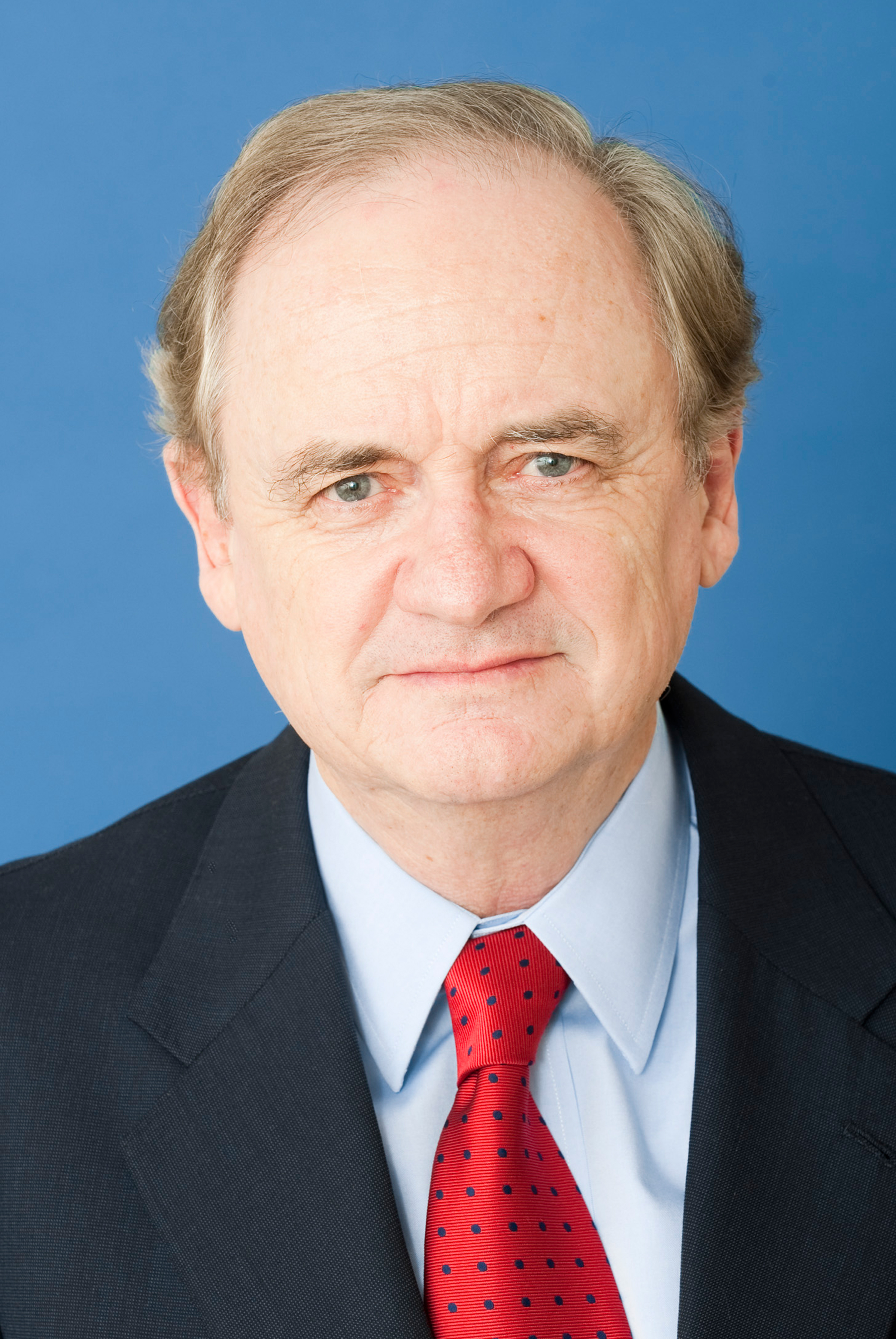
Alejandro Foxley

Former Senior Associate, International Economics Program

Foxley was previously minister of foreign affairs, senator, and minister of finance of the Republic of Chile. While minister of finance he concurrently served as a governor of the Inter-American Development Bank and the World Bank.

    Recent Work

  • Paper
    Making the Transition: From Middle-Income to Advanced Economies

      Alejandro Foxley, Fernando Sossdorf

  • Other
    Impact of The Global Financial Crisis: Predictions Gone Wrong

      Alejandro Foxley

Alejandro Foxley
Former Senior Associate, International Economics Program
Alejandro Foxley
North AmericaSouth AmericaEast AsiaEastern EuropeEconomy

Carnegie does not take institutional positions on public policy issues; the views represented herein are those of the author(s) and do not necessarily reflect the views of Carnegie, its staff, or its trustees.

More Work from Carnegie Endowment for International Peace

  • China Financial Markets
    Commentary
    China Financial Markets
    Is China’s High-Quality Investment Output Economically Viable?

    China’s rapid technological progress and its first-rate infrastructure are often cited as refuting the claim that China has been systematically overinvesting in non-productive projects for many years. In fact, as the logic of overinvestment and the many historical precedents show, the former is all-too-often consistent with the latter.

      Michael Pettis

  • Article
    India’s Press Note 3 Gamble: Opening the FDI Door to China

    On March 10, 2026, India’s Union Cabinet approved amendments to Press Note 3, a regulation that mandated government approval on all foreign direct investment (FDI) from countries sharing a land border with India. This amendment raises questions primarily about whether its stated benefits will materialize and if the risks have been adequately weighed. This piece will address the same.

      Konark Bhandari

  • Commentary
    Carnegie Politika
    What Does Nuclear Proliferation in East Asia Mean for Russia?

    Troubled by the growing salience of nuclear debates in East Asia, Moscow has responded in its usual way: with condemnation and threats. But by exacerbating insecurity, Russia is forcing South Korea and Japan to consider radical security options.

      James D.J. Brown

  • Humanoid robots follow technicians to learn job skills at the data collection area of an embodied AI robot innovation center on September 14, 2025 in Shaoxing, Zhejiang Province of China.
    Paper
    The AI Labor Debate: Three Views on the Future of Work

    AI could hollow out jobs, reshape them gradually, create entirely new ones—or do all three at once. The case for starting to act now doesn’t depend on knowing which.

      • Teddy Tawil

      Teddy Tawil

  • Commentary
    Carnegie Politika
    Russia’s Coal Industry Is Running on Borrowed Time

    Powerful lobbyists and inertia led to Russia’s coal-mining sector missing an excellent opportunity to solve its structural problems.

      Alexey Gusev

Get more news and analysis from
Carnegie Endowment for International Peace
Carnegie global logo, stacked
1779 Massachusetts Avenue NWWashington, DC, 20036-2103Phone: 202 483 7600
  • Research
  • Emissary
  • About
  • Experts
  • Donate
  • Programs
  • Events
  • Blogs
  • Podcasts
  • Contact
  • Annual Reports
  • Careers
  • Privacy
  • For Media
  • Government Resources
Get more news and analysis from
Carnegie Endowment for International Peace
© 2026 Carnegie Endowment for International Peace. All rights reserved.