• Research
  • Emissary
  • About
  • Experts
Carnegie Global logoCarnegie lettermark logo
Democracy
  • Donate
Gambit or Endgame? The New State of Arms Control

Source: Getty

Paper

Gambit or Endgame? The New State of Arms Control

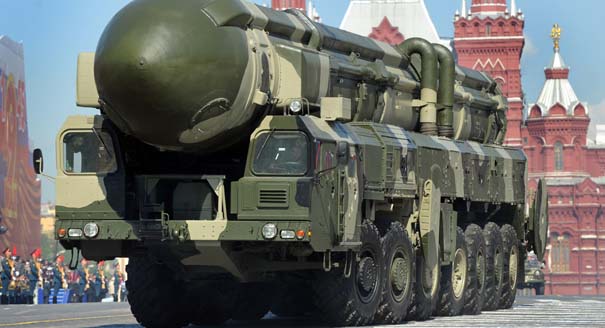
While nuclear arms control is enjoying a renaissance of late, whether that momentum dissipates or leads to further agreements will require a painstaking effort by U.S. and Russian diplomats and experts to move past Cold War prejudices and the mistakes and misunderstandings of the post-Cold War era.

Link Copied
By Alexey Arbatov
Published on Mar 29, 2011

Additional Links

Full Text
REQUIRED IMAGE

Project

U.S.-Russia Bilateral Presidential Commission

Learn More

The pursuit of nuclear arms control has enjoyed something of a renaissance recently, with the signing of the New Strategic Arms Reduction Treaty (New START) in spring 2010 in Prague. Whether that momentum will dissipate after New START or lead to further nuclear arms control agreements depends on several factors:

  1. The new U.S. and Russian nuclear doctrines. While there is always some distance between a state’s declared policy and that policy’s implementation, both documents show that, behind their more ambitious disarmament rhetoric, the United States and Russia maintain conservative nuclear policies that make radical nuclear disarmament unlikely— to say nothing of a nuclear-weapon-free world.
     
  2. The peculiarities of the recently signed and ratified New START agreement. Among these are the modest cuts stipulated by the treaty relative to its predecessors; the acrimonious ratification debates in both the U.S. and Russian legislatures; and the dim prospects for a follow-on agreement (in sharp contrast to the mood prevailing after past START agreements).
     
  3. The dynamics of obsolescence and modernization of U.S. and Russian strategic offensive forces. The United States should have little problem cutting its forces to get below New START’s limits. Russia, however, will have problems, not in reducing its numbers, but in raising them to treaty ceilings, due to their removal of obsolete weapons from service and slow deployment of new systems. Either Russia can negotiate a New START follow-on treaty with even lower ceilings or it can accelerate the development and deployment of new systems. While the former is obviously a more attractive alternative, it would require the United States and Russia to resolve many thorny arms control issues, such as ballistic missile defense, conventional strategic weapons, and tactical nuclear weapons.
     
  4. Ballistic missile defense. President Obama’s decision to modify the Bush administration’s ballistic missile defense plans in Central Europe opened the way for New START and eased Russian concerns, even if they could never have been allayed entirely. Moscow believes that U.S. ballistic missile defense programs are ultimately designed to degrade Russia’s nuclear deterrent, and it is far from clear that U.S. proposals to jointly develop such capabilities with Russia would allay those concerns—or that the idea even makes any sense.
     
  5. Russia’s perceptions of U.S. conventional strategic weapons. Russian officials are especially concerned about the U.S. Prompt Global Strike concept and do not trust American assurances that such capabilities are only directed at terrorists and rogue states. There has already been some progress made in dealing with these weapons in negotiations, and future progress on this issue will likely depend on legal agreements and confidence-building measures to scale U.S. capabilities in ways that would threaten Russia’s (or China’s) strategic deterrent.
     
  6. Joint development of ballistic missile defenses with Russia. This issue could seriously complicate Washington’s and Moscow’s strategic relations with China and India. Officials on both sides would do well to start small and proceed step-by-step, using incremental successes to build the momentum necessary to work through more difficult issues.
     
  7. Non-strategic—that is, tactical—nuclear weapons. During the Cold War, the United States and Europe relied on tactical nuclear weapons to counterbalance Warsaw Pact superiority in conventional forces in Europe; today, the situation is reversed, with Moscow relying on tactical nuclear weapons as a counterbalance not only to NATO conventional superiority but also to U.S. strategic nuclear superiority and long-range precision-guided weapons. No one now knows which weapons systems should be categorized as non-strategic, and how limits across regions could be accounted for and verified. In addition, reviving the moribund Conventional Forces in Europe (CFE) Treaty is essential to dealing with the issue of tactical nuclear weapons.

Working through these complicated factors will require painstaking effort by U.S. and Russian diplomats and experts. They will have to move past not just Cold War habits and prejudices but also the mistakes and misunderstandings of the past two decades of post–Cold War history. Commitment to this task will determine whether New START goes down in history as a mere gambit or as the first step of an endgame for U.S.-Russian security competition.

Alexey Arbatov

Alexey Arbatov is the head of the Center for International Security at the Primakov National Research Institute of World Economy and International Relations.

Alexey Arbatov
North AmericaUnited StatesCaucasusRussiaForeign PolicyNuclear Policy

Carnegie does not take institutional positions on public policy issues; the views represented herein are those of the author(s) and do not necessarily reflect the views of Carnegie, its staff, or its trustees.
More Work from Carnegie Endowment for International Peace

  • Commentary
    Carnegie Politika
    For Putin, Increasing Russia’s Nuclear Threat Matters More Than the Triad’s Modernization

    For Putin, upgrading Russia’s nuclear forces was a secondary goal. The main aim was to gain an advantage over the West, including by strengthening the nuclear threat on all fronts. That made growth in missile arsenals and a new arms race inevitable.

      Maxim Starchak

  • Hochel stading behind a dais, with a hand raised
    Commentary
    Emissary
    With the RAISE Act, New York Aligns With California on Frontier AI Laws

    The bills differ in minor but meaningful ways, but their overwhelming convergence is key.

      Alasdair Phillips-Robins, Scott Singer

  • Commentary
    Strategic Europe
    Europolis, Where Europe Ends

    A prophetic Romanian novel about a town at the mouth of the Danube carries a warning: Europe decays when it stops looking outward. In a world of increasing insularity, the EU should heed its warning.

      Thomas de Waal

  • Commentary
    Carnegie Politika
    Japan’s “Militarist Turn” and What It Means for Russia

    For a real example of political forces engaged in the militarization of society, the Russian leadership might consider looking closer to home.

      James D.J. Brown

  • Wide shot of Trump and Modi, with Trump pointing
    Commentary
    Emissary
    The Trump-Modi Trade Deal Won’t Magically Restore U.S.-India Trust

    Washington and New Delhi should be proud of their putative deal. But international politics isn’t the domain of unicorns and leprechauns, and collateral damage can’t simply be wished away.

      Evan A. Feigenbaum

Get more news and analysis from
Carnegie Endowment for International Peace
Carnegie global logo, stacked
1779 Massachusetts Avenue NWWashington, DC, 20036-2103Phone: 202 483 7600Fax: 202 483 1840
  • Research
  • Emissary
  • About
  • Experts
  • Donate
  • Programs
  • Events
  • Blogs
  • Podcasts
  • Contact
  • Annual Reports
  • Careers
  • Privacy
  • For Media
  • Government Resources
Get more news and analysis from
Carnegie Endowment for International Peace
© 2026 Carnegie Endowment for International Peace. All rights reserved.