• Research
  • Emissary
  • About
  • Experts
Carnegie Global logoCarnegie lettermark logo
DemocracyIran
  • Donate
The New Role of Central and Eastern Europe in International Democracy Support

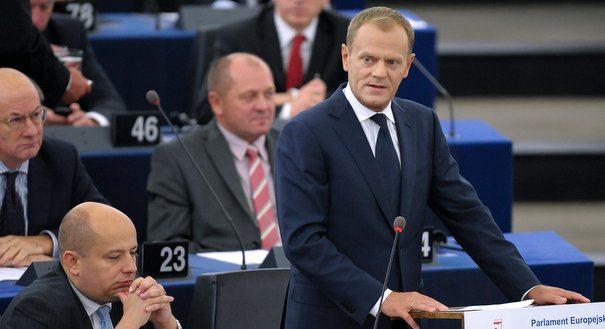
Source: Getty

Paper

The New Role of Central and Eastern Europe in International Democracy Support

Democratic actors in Central and Eastern Europe bring unique experiences and legitimacy to international democracy support and their democracy promotion efforts have the potential to make a significant contribution.

Link Copied
By Tsveta Petrova
Published on Jun 6, 2011

Additional Links

Full Text
Program mobile hero image

Program

Democracy, Conflict, and Governance

The Democracy, Conflict, and Governance Program is a leading source of independent policy research, writing, and outreach on global democracy, conflict, and governance. It analyzes and seeks to improve international efforts to reduce democratic backsliding, mitigate conflict and violence, overcome political polarization, promote gender equality, and advance pro-democratic uses of new technologies.

Learn More
Project hero Image

Project

Rising Democracies Network

The Carnegie Rising Democracies Network is a research network of leading experts on democracy and foreign policy, dedicated to examining the growing role of non-Western democracies in international democracy support and conflict issues. The Rising Democracies Network is carried out in partnership with the Robert Bosch Stiftung, and with additional support from the Ford Foundation and the UK Foreign, Commonwealth and Development Office.

Learn More

The new democracies of Central and Eastern Europe are increasingly engaging in international democracy support, especially in the former Soviet Union and the Western Balkans. They have leveraged their membership in a number of Euro-Atlantic international organizations and used their bilateral diplomatic ties with democratization laggards to motivate and pressure them to observe democratic norms and practices. They have also been supplying small but growing amounts of democracy assistance.

The democracy promotion efforts of these countries—countries that are still grappling with some domestic democracy issues of their own—have been limited in scope and inconsistent, ad hoc, and given a low priority at times. Still, these countries have very recent, in fact ongoing experience with democratization that gives them valuable expertise and perspectives that other donors do not have, and therefore special credibility in the eyes of recipients. They also tend to tailor their efforts to the needs of their recipients and work primarily in their neighborhood, where they have considerable knowledge of local sociopolitical realities and where their own experiences are highly relevant. 

The Eastern EU democracy promoters have also managed to keep the countries in the post-communist space that are not democratizing fast enough relatively high on the agenda of a number of Euro-Atlantic organizations. These efforts, however, have not yet produced the desired liberalization of neighboring autocracies. They have been important in inspiring and preparing prodemocratic forces in neighboring hybrid regimes to organize several electoral revolutions in the 2000s, but even such democratization has proven short-lived in many cases.

About the Author

Tsveta Petrova

Tsveta Petrova is a lecturer in political science at Columbia University, whose research focuses on democracy, democratization, and democracy promotion in Central and Eastern Europe.

Tsveta Petrova

Tsveta Petrova is a lecturer in political science at Columbia University, whose research focuses on democracy, democratization, and democracy promotion in Central and Eastern Europe.

Eastern EuropeEuropePolitical ReformDemocracy

Carnegie does not take institutional positions on public policy issues; the views represented herein are those of the author(s) and do not necessarily reflect the views of Carnegie, its staff, or its trustees.

More Work from Carnegie Endowment for International Peace

  • Article
    Rewiring the South Caucasus: TRIPP and the New Geopolitics of Connectivity

    The U.S.-sponsored TRIPP deal is driving the Armenia-Azerbaijan peace process forward. But foreign and domestic hurdles remain before connectivity and economic interdependence can open up the South Caucasus.

      • Areg Kochinyan

      Thomas de Waal, Areg Kochinyan, Zaur Shiriyev

  • Photo of Balen Shah taking a selfie with a group of Nepali adults and children.
    Article
    A New Generation Takes Power in Nepal

    The incoming government has swept Nepal’s election. The real work begins now.

      Amish Raj Mulmi

  • Commentary
    Strategic Europe
    Is France Shifting Rightward?

    The far right failed to win big in France’s municipal elections. But that’s not good news for the country’s left wing, which remained disunited while the broader right consolidated its momentum ahead of the 2027 presidential race.

      Catherine Fieschi

  • Commentary
    Carnegie Politika
    Moldova Floats a New Approach to Its Transnistria Conundrum

    Moldova’s reintegration plan was drawn up to demonstrate to Brussels that Chișinău is serious about the Transnistria issue—and to get the West to react.

      Vladimir Solovyov

  • Residents and protesters chant national songs and raise their fists as they gather for a civil society rally demanding the resignation of President Andry Rajoelina and paying tribute to the victims of the protests in Antananarivo, on October 13, 2025
    Article
    How Anger Over Corruption Keeps Driving Global Politics

    As public anger over corruption drives protests, election outcomes, and regime change around the world, the Donald Trump administration is disconnecting U.S. policy from this defining feature of global politics.

      • McKenzie Carrier

      Thomas Carothers, McKenzie Carrier

Get more news and analysis from
Carnegie Endowment for International Peace
Carnegie global logo, stacked
1779 Massachusetts Avenue NWWashington, DC, 20036-2103Phone: 202 483 7600Fax: 202 483 1840
  • Research
  • Emissary
  • About
  • Experts
  • Donate
  • Programs
  • Events
  • Blogs
  • Podcasts
  • Contact
  • Annual Reports
  • Careers
  • Privacy
  • For Media
  • Government Resources
Get more news and analysis from
Carnegie Endowment for International Peace
© 2026 Carnegie Endowment for International Peace. All rights reserved.