

Q&A
Stephen Tankel
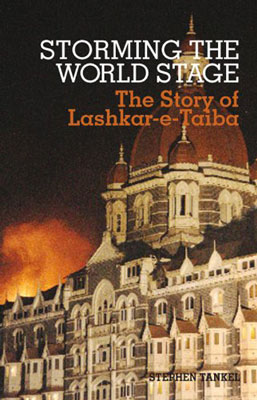
Lashkar-e-Taiba had developed from a small resistance group to the largest, most feared organization operating in Kashmir, India, and Pakistan today, posing a threat to the region and the West.
Source: Columbia University Press

The Mumbai attacks placed Lashkar-e-Taiba high on the list of the world's most fearsome terrorist groups. A complex and powerful organization that rose to prominence with Pakistani state support, Lashkar has sent scores of fighters to Iraq and Afghanistan and provides them with essential strategic and tactical help. Lashkar was formed by men with years of training in the trenches of Kashmir, and its skill in executing efficient and effective insurgencies has made the organization extremely attractive to dissidents. Nevertheless, Lashkar is afraid to associate too closely with al-Qaeda, which is closely tied to Pakistan's government, and al-Qaeda is afraid to ally itself too intimately with Lashkar, which would jeopardize its partnership with the Pakistani state.
Were the Mumbai attacks evidence of Lashkar's increasing infiltration of al-Qaeda’s domain, or were they simply the latest in a series of attacks on Pakistan’s historic rival? Stephen Tankel traces the development of Lashkar from a small resistance group to the largest, most feared organization operating in Kashmir, India, and Pakistan today. He considers the threat Lashkar now poses to Pakistan, India, and the West, and how this danger may evolve in coming decades.
Storming the World Stage is an impressive piece of detective work that provides the most comprehensive treatment so far of the ideological sources, political motivations and organizational strategies of this group. If policy makers, in India and around the world, want to understand the foe they're up against, this book is an important read.
— Sumit Ganguly, The Wall Street Journal
This is the first work of social science research on Lashkar-e-Taiba, revealing its diverse activities from jihad to social welfare, and its closeness to Pakistan's Inter-Service Intelligence (ISI). A vivid and detailed account of a major Islamist actor.
— Christophe Jaffrelot, Critique Internationale
Storming the World Stage is the definitive account of one of the most dangerous terrorist groups in the world. Stephen Tankel's research in Pakistan is prodigious and his analytical judgements are well-calibrated. Highly recommended.
— Peter Bergen, author of The Longest War: The Enduring Conflict Between America and Al-Qaeda
Former Nonresident Scholar, South Asia Program
Tankel was a nonresident scholar at the Carnegie Endowment, where his research focuses on insurgency, terrorism, and the evolution of nonstate armed groups.
Recent Work
Stephen Tankel
Stephen Tankel
Carnegie does not take institutional positions on public policy issues; the views represented herein are those of the author(s) and do not necessarily reflect the views of Carnegie, its staff, or its trustees.

A deep dive into the policy ecosystems behind battery development in China, South Korea, Japan, the European Union (including some of its member states), the United States, Canada, and India.



Milo McBride, Herbert Crowther, Darcie Draudt-Véjares, …

The Horn of Africa countries are among those facing a new security calculus.


Andrew Leber, Lesley Anne Warner

The European far right might fail to steer EU policy in the direction Russia wants, but they will create enough chaos inside Europe to benefit the Kremlin.

Dimitar Bechev

The new U.S.–Denmark–Greenland agreement will help Washington exert political, economic, and financial dominance under the guise of security. Yet, it acknowledged Copenhagen’s and Nuuk’s sovereignty on the island.

Marc Pierini

A summer of escalation in the Black Sea has hurt Ukraine economically and is exacerbating world food security. A truce is needed—as is a broader reframing of Europe’s Ukraine strategy.

Thomas de Waal