

Paper
- +4
Dmitri Trenin, Alexey Arbatov, Maria Lipman, …
Source: Getty
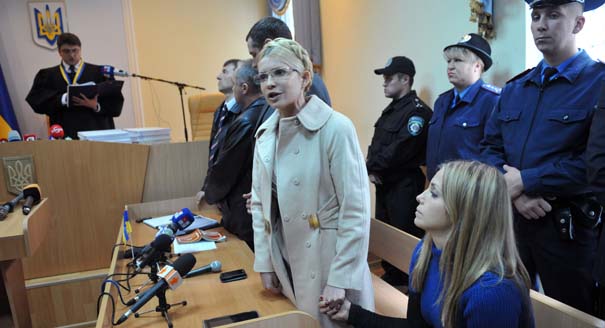
The harsh verdict for former Ukrainian Prime Minister Yulia Tymoshenko demonstrates that Ukraine’s leadership prioritizes removing the opposition’s strongest candidate before parliamentary elections above good relations with the West.
Many international observers watching the trial of former Ukrainian Prime Minister Yulia Tymoshenko believed that the Ukrainian authorities would attempt to avoid a guilty verdict due to their reliance on the aid from the United States and the European Union to counter continuing pressure from Russia. But instead a harsh verdict for the former head of the Ukrainian government was handed down: seven years in prison.
Although many have argued that the verdict is irrational, the government of Ukraine seems to have its own logic. Despite the immediate costs, the power brokers in Kiev believe that over time they will succeed in mitigating the stress caused by the verdict, and relations with the West will normalize once again. How will they be able to do it? The ruling circles in Ukraine seem to regard the answer to this question as less important than minimizing the domestic political risks associated with future parliamentary elections, which would have included Tymoshenko. The absence of the strongest opposition candidate is the best guarantee for maintaining power; more reliable than the promises of all of the friendliest countries of the West taken together.
Perhaps equally important is the way the Ukrainian authorities will use the Tymoshenko verdict to pressure Russia into renegotiating the price of gas. It remains to be seen whether Kiev will use this new weapon immediately, or whether it will prefer by using the factor of a possibility of a threat to attempt to achieve its goals, while at the same time trying to not excessively anger Moscow.
Both options are possible. The first is more likely if Kiev believes that Russia, for various international and domestic reasons, is not ready for another “gas war” and is forced to make concessions. However, it is possible that Russian Prime Minister Vladimir Putin could take a hard line, prompting a serious battle that Kiev cannot afford—Ukraine needs gas here and now.
Therefore, second option can not be excluded: after harsh declarations from both sides, they will attempt to negotiate a compromise. But even in this case, the compromise will likely shift in Ukraine’s favor, politically and perhaps economically.
Former Scholar-in-Residence, The East East: Partnership Beyond Borders Program, Moscow Center
Ryabov was chair of the Carnegie Moscow Center’s East East: Partnership Beyond Borders Program. He is also the chief editor of the journal World Economy and International Relations and a leading researcher at the Russian Academy of Sciences’ Institute of World Economy and International Relations.
Recent Work
Dmitri Trenin, Alexey Arbatov, Maria Lipman, …
Andrei Ryabov
Carnegie does not take institutional positions on public policy issues; the views represented herein are those of the author(s) and do not necessarily reflect the views of Carnegie, its staff, or its trustees.

If the Russian-speaking community in Latvia cannot articulate their interests without being seen as disloyal, they could end up embracing a pro-Kremlin agenda.

Sergejs Potapkins

Are Germany’s economic, industrial, and political struggles becoming a liability for the EU’s ability to rise to the geopolitical moment?

Rym Momtaz, ed.
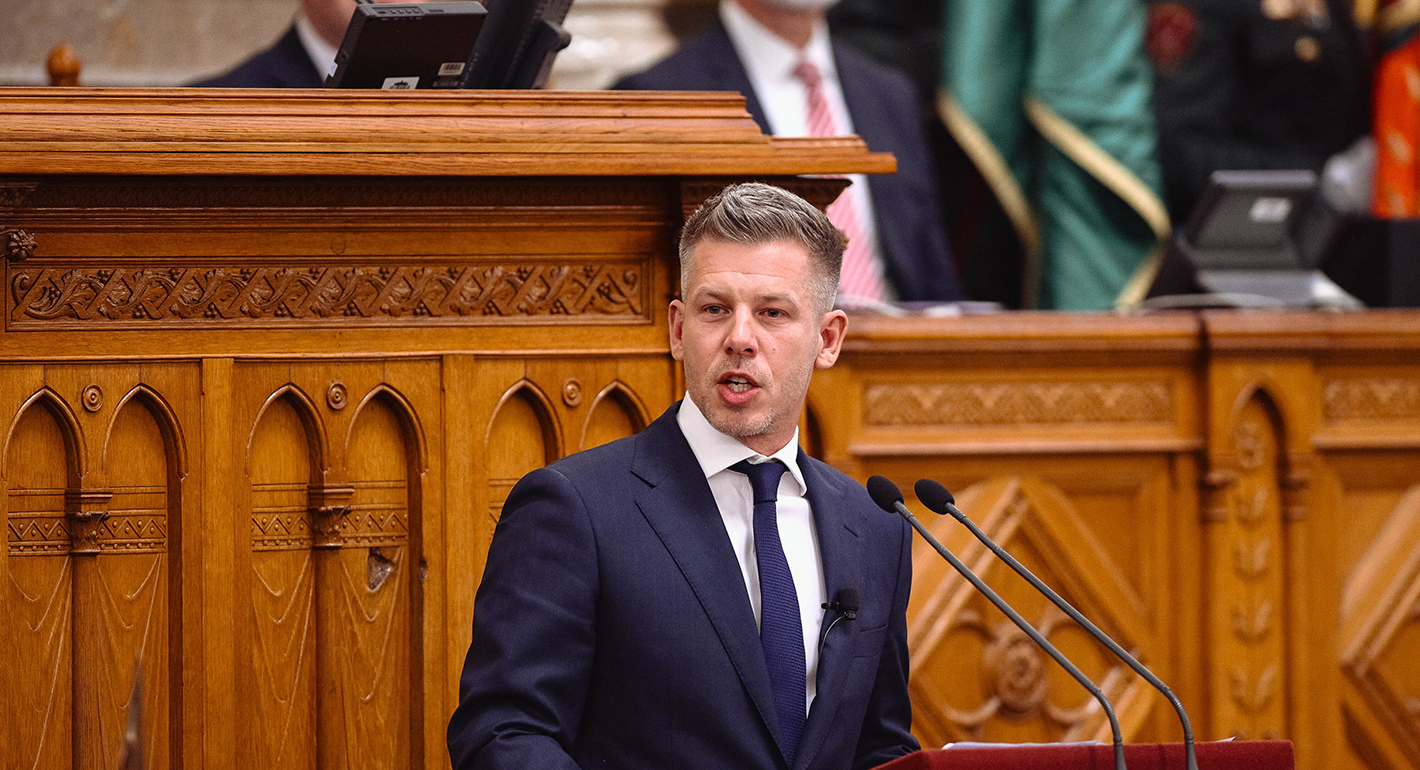
Despite myriad challenges and occasional stumbles, the new Hungarian government is moving ahead with energy and conviction to uproot years of illiberalism and corruption and rebuild Hungarian democracy.

Thomas Carothers

European Commission President Ursula von der Leyen is about to give her annual address on the state of the EU. Here’s what she won’t—but should—say.
Rym Momtaz

Radical-right parties are expected to do well in upcoming elections in four of the EU's biggest member states. If successful, they could prevent the union from addressing key challenges ahead.

Stefan Lehne